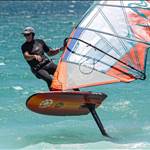
Since someone above made the assertion that Naish and Co don't know how to design foils (they aren't Engineers TM*) . Robbie N. windfoils not even bothering to wear a harness.
Warning: May contain some kite content for those allergic or sensitive to the topic. Don't watch this and bitch about the kites.
Select to expand quotePaducah said..
Since someone above made the assertion that Naish and Co don't know how to design foils (they aren't Engineers TM*) . Robbie N. windfoils not even bothering to wear a harness.
I have never used harness for some 40 years already. This was one of the reasons for me to get frp fin foil - I am getting old an weak. Foils make it easier to ride - less load from the sail due to drag reduction. And, I can use a smaller sail. Do not get me wrong: the traditional hydrofoil is a very significant engineering invention. But in my age it is harder to switch from planing to flying.
It is nearly impossible to validate design from these promotional videos. Today it is almost impossible to get wrong on the traditional hydrofoil design because it has been around for over a decade. You do not even need to know how to design it because there are some 100 hydrofoil manufacturers exist already in order to copy and paste existing designs with your own name plate.
I noticed frp king of foil to be an advantage vs a traditional foil at wind up to 10 knots. I am actually going faster with frp fin compare to a kite or windsurfing foiling at light wind. My engineering explanation is: you need a larger foil to fly and drag becomes to high. You can fly on large wing but not so fast. 7-10 knots is very common in my area and fin foil allows me to double my time on pleasant sailing.
I said about Naish and Co known to be experimenting with fly fins similar to THEVirus and we do not see Naish and Co offering these. This is why I conclude that Naish and Co could not design a fly-fin yet to be good enough for customers to buy.
Select to expand quoteXYZ said..Paducah said..
Since someone above made the assertion that Naish and Co don't know how to design foils (they aren't Engineers TM*) . Robbie N. windfoils not even bothering to wear a harness.
I have never used harness for some 40 years already. This was one of the reasons for me to get frp fin foil - I am getting old an weak. Foils make it easier to ride - less load from the sail due to drag reduction. And, I can use a smaller sail. Do not get me wrong: the traditional hydrofoil is a very significant engineering invention. But in my age it is harder to switch from planing to flying.
It is nearly impossible to validate design from these promotional videos. Today it is almost impossible to get wrong on the traditional hydrofoil design because it has been around for over a decade. You do not even need to know how to design it because there are some 100 hydrofoil manufacturers exist already in order to copy and paste existing designs with your own name plate.
I noticed frp king of foil to be an advantage vs a traditional foil at wind up to 10 knots. I am actually going faster with frp fin compare to a kite or windsurfing foiling at light wind. My engineering explanation is: you need a larger foil to fly and drag becomes to high. You can fly on large wing but not so fast. 7-10 knots is very common in my area and fin foil allows me to double my time on pleasant sailing.
I said about Naish and Co known to be experimenting with fly fins similar to THEVirus and we do not see Naish and Co offering these. This is why I conclude that Naish and Co could not design a fly-fin yet to be good enough for customers to buy.
"I am actually going faster with frp fin compare to a kite or windsurfing foiling at light wind. "
Insert Picard facepalm here...
btw, why did you decide to start posting under an alt account?
Select to expand quoteXYZ said..
I have never used harness for some 40 years already.
This alone says it all.
Just to make sure we are talking about the same Naish Co manufacturer
www.naishfoils.com/
First glance engineering notes:
1. First engineering error. Aluminum mast will corrode in sea water within a year even if used only ones. Using stainless steel screws will result in galvanic corrosion due to high difference in electrochemical potential of aluminum and SS Alloy (High Nickel content). In other words. If you get salt on the Al/SS joint you will need to take it on parts, wash it and keep it in dry place. The bolt joints will corrode even in fresh water or high humidity environment - common for where we windsurf. Naish Co suggests to wash it after every use. Washing will not help much. But if you complain Naish Co can excuse itself by telling that you did not wash it good enough.
2. Naish Co promotes the mast material as aerospace grade 6061 aluminum. Wrong. Aerospace is not using 6061. 2024 is common in aerospace. 6061 is good when you need welding joints. 6061 is the lower cost Al Alloy. The extruded profile for the mast is actually very low cost extrusion used in architecture for decorative options on buildings. This is why you can get it for some $10 per foot.
3. The wings are painted black but actually made out of fiberglass. I assume they use the least expensive E-glass with polyester matrix, which is not water prove. This is why the material needs painting. Such of material cost about $3 per pound. I think selection of dominant black in painting is for making it look like carbon.
4. Just an assumption based on apparent low cost design. The holes for the bolts are drilled, not laminated. Drilling cuts fibers resulting in reduction of the structural integrity. Other disadvantage is that drilling exposes fibers to sea water. They paint exterior but they cannot paint the holes. In correct engineering world the non-corrosive barrier needs to be installed between on the interior of the holes. Titanium inserts is a common aerospace solution.
5. The perimeter of the wing is shaped for artistic look, not for performance. They probably experimented with different shapes and picked the one that sales the most. Somehow these experienced foilers think that the wing has to look like a bird wing, regardless of hydrodynamic performance. promoted winglets bent down sounds childish from hydrodynamic prospective. It looks smooth, but simple end plates would perform much better, (but may not look like a bird.) Look it up on the Internet how people designed airplanes in 17th century - all them look like birds but did not fly well. Compare to the modern airplanes that can fly after engineers took it over from the dreamers.
6. All the mechanical connections is "Fail" on structural engineering exam. This is about all the foil designs, and Naish Co just copied.
7. The safety warning on Naish Co adds to 1 through 6 above and actually suggests you do not use these foils.
Because of this I think that promoting Naish and Co on this forum is ok. Just do not tell me that Naich and Co knows how to engineer.
Thank you for the prompt reply. I think I really touched you with critics of Naish and Co. Are you in one team?
My point here is going to school at cost of surfing pays back.
Select to expand quoteXYZ said..
Just to make sure we are talking about the same Naish Co manufacturer
www.naishfoils.com/
First glance engineering notes:
1. First engineering error. Aluminum mast will corrode in sea water within a year even if used only ones. Using stainless steel screws will result in galvanic corrosion due to high difference in electrochemical potential of aluminum and SS Alloy (High Nickel content). In other words. If you get salt on the Al/SS joint you will need to take it on parts, wash it and keep it in dry place. The bolt joints will corrode even in fresh water or high humidity environment - common for where we windsurf. Naish Co suggests to wash it after every use. Washing will not help much. But if you complain Naish Co can excuse itself by telling that you did not wash it good enough.
2. Naish Co promotes the mast material as aerospace grade 6061 aluminum. Wrong. Aerospace is not using 6061. 2024 is common in aerospace. 6061 is good when you need welding joints. 6061 is the lower cost Al Alloy. The extruded profile for the mast is actually very low cost extrusion used in architecture for decorative options on buildings. This is why you can get it for some $10 per foot.
3. The wings are painted black but actually made out of fiberglass. I assume they use the least expensive E-glass with polyester matrix, which is not water prove. This is why the material needs painting. Such of material cost about $3 per pound. I think selection of dominant black in painting is for making it look like carbon.
4. Just an assumption based on apparent low cost design. The holes for the bolts are drilled, not laminated. Drilling cuts fibers resulting in reduction of the structural integrity. Other disadvantage is that drilling exposes fibers to sea water. They paint exterior but they cannot paint the holes. In correct engineering world the non-corrosive barrier needs to be installed between on the interior of the holes. Titanium inserts is a common aerospace solution.
5. The perimeter of the wing is shaped for artistic look, not for performance. They probably experimented with different shapes and picked the one that sales the most. Somehow these experienced foilers think that the wing has to look like a bird wing, regardless of hydrodynamic performance. promoted winglets bent down sounds childish from hydrodynamic prospective. It looks smooth, but simple end plates would perform much better, (but may not look like a bird.) Look it up on the Internet how people designed airplanes in 17th century - all them look like birds but did not fly well. Compare to the modern airplanes that can fly after engineers took it over from the dreamers.
6. All the mechanical connections is "Fail" on structural engineering exam. This is about all the foil designs, and Naish Co just copied.
7. The safety warning on Naish Co adds to 1 through 6 above and actually suggests you do not use these foils.
Because of this I think that promoting Naish and Co on this forum is ok. Just do not tell me that Naich and Co knows how to engineer.
Thank you for the prompt reply. I think I really touched you with critics of Naish and Co. Are you in one team?
My point here is going to school at cost of surfing pays back.
I have been using Aluminium foils since 2015. With Zero issues of corrosion on my gear.
So your point one is of no concern to me.
while you're some what correct in point 2. My foils use 6063 and a proprietary extrusion so again this is no issue to me.
my personal foils use G10 so again point 3 is no concern.
point 4. Is just your attempt at coming up with a 4th point.
point 5 is as valuable as point 4.
Point 6, as with point 1. I have had no problem here and do not anticipate one.
I agree with Point 7, well the bit that says to stay at school. The rest is conjecture and your opinion based on What?
take some time with points 8-10
to firstly consider not all foils are equal be them Alloy or Carbon or whatever.
Select to expand quoteXYZ said..
Just to make sure we are talking about the same Naish Co manufacturer
www.naishfoils.com/
First glance engineering notes:
1. First engineering error. Aluminum mast will corrode in sea water within a year even if used only ones. Using stainless steel screws will result in galvanic corrosion due to high difference in electrochemical potential of aluminum and SS Alloy (High Nickel content). In other words. If you get salt on the Al/SS joint you will need to take it on parts, wash it and keep it in dry place. The bolt joints will corrode even in fresh water or high humidity environment - common for where we windsurf. Naish Co suggests to wash it after every use. Washing will not help much. But if you complain Naish Co can excuse itself by telling that you did not wash it good enough.
2. Naish Co promotes the mast material as aerospace grade 6061 aluminum. Wrong. Aerospace is not using 6061. 2024 is common in aerospace. 6061 is good when you need welding joints. 6061 is the lower cost Al Alloy. The extruded profile for the mast is actually very low cost extrusion used in architecture for decorative options on buildings. This is why you can get it for some $10 per foot.
3. The wings are painted black but actually made out of fiberglass. I assume they use the least expensive E-glass with polyester matrix, which is not water prove. This is why the material needs painting. Such of material cost about $3 per pound. I think selection of dominant black in painting is for making it look like carbon.
4. Just an assumption based on apparent low cost design. The holes for the bolts are drilled, not laminated. Drilling cuts fibers resulting in reduction of the structural integrity. Other disadvantage is that drilling exposes fibers to sea water. They paint exterior but they cannot paint the holes. In correct engineering world the non-corrosive barrier needs to be installed between on the interior of the holes. Titanium inserts is a common aerospace solution.
5. The perimeter of the wing is shaped for artistic look, not for performance. They probably experimented with different shapes and picked the one that sales the most. Somehow these experienced foilers think that the wing has to look like a bird wing, regardless of hydrodynamic performance. promoted winglets bent down sounds childish from hydrodynamic prospective. It looks smooth, but simple end plates would perform much better, (but may not look like a bird.) Look it up on the Internet how people designed airplanes in 17th century - all them look like birds but did not fly well. Compare to the modern airplanes that can fly after engineers took it over from the dreamers.
6. All the mechanical connections is "Fail" on structural engineering exam. This is about all the foil designs, and Naish Co just copied.
7. The safety warning on Naish Co adds to 1 through 6 above and actually suggests you do not use these foils.
Because of this I think that promoting Naish and Co on this forum is ok. Just do not tell me that Naich and Co knows how to engineer.
Thank you for the prompt reply. I think I really touched you with critics of Naish and Co. Are you in one team?
My point here is going to school at cost of surfing pays back.
Wow, oh my! .... Where to start, since each of your points is so typically detached from the reality of actual manufacturing & marketing of real product...
Re point 5
When you are only trained in using a hammer, all fasteners are subject to your training. This is why you should have strapped on a harness at some point in the last 40 yrs. before claiming to be an expert on all things. Foils not only go straight but they have to turn; and require a predictable and desirable roll and yaw behaviour. You are only considering one aspect of the wing.
Not one of the team. I fly a French foil with different design objectives. But, I have a lot of regard and respect for what Naish have done in creating an affordable, accessible and stable foil.
Select to expand quotegorgesailor said..XYZ said..
I have never used harness for some 40 years already.
This alone says it all.
Quoted for truth.
Not sure how anyone could take anything said seriously with a comment like that. We all know how much using a harness progresses ones windsurfing skillset.
Select to expand quoteXYZ said..
I have never used harness for some 40 years already.
Robby ? is that you ?? 
Select to expand quoteXYZ said..
Just to make sure we are talking about the same Naish Co manufacturer
www.naishfoils.com/
First glance engineering notes:
1. First engineering error. Aluminum mast will corrode in sea water within a year even if used only ones. Using stainless steel screws will result in galvanic corrosion due to high difference in electrochemical potential of aluminum and SS Alloy (High Nickel content). In other words. If you get salt on the Al/SS joint you will need to take it on parts, wash it and keep it in dry place. The bolt joints will corrode even in fresh water or high humidity environment - common for where we windsurf. Naish Co suggests to wash it after every use. Washing will not help much. But if you complain Naish Co can excuse itself by telling that you did not wash it good enough.
2. Naish Co promotes the mast material as aerospace grade 6061 aluminum. Wrong. Aerospace is not using 6061. 2024 is common in aerospace. 6061 is good when you need welding joints. 6061 is the lower cost Al Alloy. The extruded profile for the mast is actually very low cost extrusion used in architecture for decorative options on buildings. This is why you can get it for some $10 per foot.
3. The wings are painted black but actually made out of fiberglass. I assume they use the least expensive E-glass with polyester matrix, which is not water prove. This is why the material needs painting. Such of material cost about $3 per pound. I think selection of dominant black in painting is for making it look like carbon.
4. Just an assumption based on apparent low cost design. The holes for the bolts are drilled, not laminated. Drilling cuts fibers resulting in reduction of the structural integrity. Other disadvantage is that drilling exposes fibers to sea water. They paint exterior but they cannot paint the holes. In correct engineering world the non-corrosive barrier needs to be installed between on the interior of the holes. Titanium inserts is a common aerospace solution.
5. The perimeter of the wing is shaped for artistic look, not for performance. They probably experimented with different shapes and picked the one that sales the most. Somehow these experienced foilers think that the wing has to look like a bird wing, regardless of hydrodynamic performance. promoted winglets bent down sounds childish from hydrodynamic prospective. It looks smooth, but simple end plates would perform much better, (but may not look like a bird.) Look it up on the Internet how people designed airplanes in 17th century - all them look like birds but did not fly well. Compare to the modern airplanes that can fly after engineers took it over from the dreamers.
6. All the mechanical connections is "Fail" on structural engineering exam. This is about all the foil designs, and Naish Co just copied.
7. The safety warning on Naish Co adds to 1 through 6 above and actually suggests you do not use these foils.
Because of this I think that promoting Naish and Co on this forum is ok. Just do not tell me that Naich and Co knows how to engineer.
Thank you for the prompt reply. I think I really touched you with critics of Naish and Co. Are you in one team?
My point here is going to school at cost of surfing pays back.
Naish foils are designed by Nils Rosenblad.
Nils Rosenblad is an engineer.
Select to expand quoteXYZ said..
Just to make sure we are talking about the same Naish Co manufacturer
www.naishfoils.com/
First glance engineering notes:
1. First engineering error. Aluminum mast will corrode in sea water within a year even if used only ones. Using stainless steel screws will result in galvanic corrosion due to high difference in electrochemical potential of aluminum and SS Alloy (High Nickel content). In other words. If you get salt on the Al/SS joint you will need to take it on parts, wash it and keep it in dry place. The bolt joints will corrode even in fresh water or high humidity environment - common for where we windsurf. Naish Co suggests to wash it after every use. Washing will not help much. But if you complain Naish Co can excuse itself by telling that you did not wash it good enough.
2. Naish Co promotes the mast material as aerospace grade 6061 aluminum. Wrong. Aerospace is not using 6061. 2024 is common in aerospace. 6061 is good when you need welding joints. 6061 is the lower cost Al Alloy. The extruded profile for the mast is actually very low cost extrusion used in architecture for decorative options on buildings. This is why you can get it for some $10 per foot.
3. The wings are painted black but actually made out of fiberglass. I assume they use the least expensive E-glass with polyester matrix, which is not water prove. This is why the material needs painting. Such of material cost about $3 per pound. I think selection of dominant black in painting is for making it look like carbon.
4. Just an assumption based on apparent low cost design. The holes for the bolts are drilled, not laminated. Drilling cuts fibers resulting in reduction of the structural integrity. Other disadvantage is that drilling exposes fibers to sea water. They paint exterior but they cannot paint the holes. In correct engineering world the non-corrosive barrier needs to be installed between on the interior of the holes. Titanium inserts is a common aerospace solution.
5. The perimeter of the wing is shaped for artistic look, not for performance. They probably experimented with different shapes and picked the one that sales the most. Somehow these experienced foilers think that the wing has to look like a bird wing, regardless of hydrodynamic performance. promoted winglets bent down sounds childish from hydrodynamic prospective. It looks smooth, but simple end plates would perform much better, (but may not look like a bird.) Look it up on the Internet how people designed airplanes in 17th century - all them look like birds but did not fly well. Compare to the modern airplanes that can fly after engineers took it over from the dreamers.
6. All the mechanical connections is "Fail" on structural engineering exam. This is about all the foil designs, and Naish Co just copied.
7. The safety warning on Naish Co adds to 1 through 6 above and actually suggests you do not use these foils.
Because of this I think that promoting Naish and Co on this forum is ok. Just do not tell me that Naich and Co knows how to engineer.
Thank you for the prompt reply. I think I really touched you with critics of Naish and Co. Are you in one team?
My point here is going to school at cost of surfing pays back.
Blah, blah, blah...I guess you're hoping your diatribe makes you seem smart. 
I've been using the Naish WS1 foil for 8 months, 40+ sessions.
I pull it apart every couple of months and TefGel all the fasteners - no corrosion to date.
I reckon it's an awesome foil for it's designed use 
Select to expand quoteRAL INN said..XYZ said..
my personal foils use G10 so again point 3 is no concern.
G10 is compressed E-Glass cloth with epoxy matrix. 50% of fibers in your wind are placed in a wrong direction. Fibers are not straight. Pulltruded S-glass will be about 2 times stronger so it will allow about 30% thinner profile. Besides, it is impossible to make a part like frpgear flyfin out of G10. It is impossible to pulltrude frpgear flyfin. It is impossible to compress mould out of unidirectional material like more expensive foils made. In other words, manufacturing process to make frpgear flyfins does not exist in the composite industry yet. Engineering. Naish foils are garage DIY.
Select to expand quoteXYZ said..RAL INN said..XYZ said..
my personal foils use G10 so again point 3 is no concern.
G10 is compressed E-Glass cloth with epoxy matrix. 50% of fibers in your wind are placed in a wrong direction. Fibers are not straight. Pulltruded S-glass will be about 2 times stronger so it will allow about 30% thinner profile. Besides, it is impossible to make a part like frpgear flyfin out of G10. It is impossible to pulltrude frpgear flyfin. It is impossible to compress mould out of unidirectional material like more expensive foils made. In other words, manufacturing process to make frpgear flyfins does not exist in the composite industry yet. Engineering. Naish foils are garage DIY.
Again. I have no issues with G10 and haven't since they started making fins from it.
Select to expand quoteXYZ said..RAL INN said..XYZ said..
my personal foils use G10 so again point 3 is no concern.
G10 is compressed E-Glass cloth with epoxy matrix. 50% of fibers in your wind are placed in a wrong direction. Fibers are not straight. Pulltruded S-glass will be about 2 times stronger so it will allow about 30% thinner profile. Besides, it is impossible to make a part like frpgear flyfin out of G10. It is impossible to pulltrude frpgear flyfin. It is impossible to compress mould out of unidirectional material like more expensive foils made. In other words, manufacturing process to make frpgear flyfins does not exist in the composite industry yet. Engineering. Naish foils are garage DIY.
There is just so much wrong with what is in your posts.
Based on what youve posted i wouldnt go anywhere near frp gear.
Select to expand quotegorgesailor said..XYZ said..
I have never used harness for some 40 years already.
This alone says it all.
I actually thought it was an EYemhardcore post at first and chose to ignore it... but now I'm intrigued.
Last year I accidentally turned up at the beach without my harness and had to sail without it. Now I triple check it's in the car so I don't have to repeat the experience!
Thank you everyone for the harness suggestion. Yesterday I borrowed harness on my spot to try. It was amazing! I immediately realized why Windsurfing has become no sport any more. Now I know why I see so many overweight windsurfers. But more importantly now I know why windsurfing is degrading. When I started back in 70-th I was inspired by holding wind in my hands. With the harness it feels like seating on an ultralight vs hooked to a hand-glider if you know what I mean. Or rephrasing perhaps into your language using harness is like driving Ferrari with automatic transmission. But my most practical observation was the following. Sometimes women on the spot talk to me about how I could ride without harness. When I used the harness yesterday a man came talk to me.
Just for clarification from, perhaps, these experienced with the harness. Without the harness wind blows into my hands and I handle it with my hands. In what part of your body wind is extruding its blow when on harness and what part of the body do you guys use to handle it?
Are you saying that when you use a Harness everybody knows your gay.
but when you don't use one, everybody just thinks it.?
This guy seems to use the same marketing technique as MW sails wingsail - insult everyone's intelligence and claim experts dont know anything and then claim his product is better without any proof. I'm guessing it will be about as successful as MW's Wingsails effort was, which is to say it wont be successful at all.
Ironically we were discussing the other day that the MW Wing sail might actually be quite good for foiling
Select to expand quoteXYZ said..
Thank you everyone for the harness suggestion. Yesterday I borrowed harness on my spot to try. It was amazing! I immediately realized why Windsurfing has become no sport any more. Now I know why I see so many overweight windsurfers. But more importantly now I know why windsurfing is degrading. When I started back in 70-th I was inspired by holding wind in my hands. With the harness it feels like seating on an ultralight vs hooked to a hand-glider if you know what I mean. Or rephrasing perhaps into your language using harness is like driving Ferrari with automatic transmission. But my most practical observation was the following. Sometimes women on the spot talk to me about how I could ride without harness. When I used the harness yesterday a man came talk to me.
Just for clarification from, perhaps, these experienced with the harness. Without the harness wind blows into my hands and I handle it with my hands. In what part of your body wind is extruding its blow when on harness and what part of the body do you guys use to handle it?
When I was at school gay words was not popular. When my children were at school gay was a negative word. Now they teach my grandchildren that gay is a good word. It is ok to be on a harness today.
Depends your size, skill, and energy. Little guys with high energy and good skills can pump on to planing and foiling in 6-8 mph breezes. Big unskilled lazy guys might need 17-20 mph winds and barely plane the board.
Somebody is going to find out why masts are 85-95 cm long some day. Oh, and good luck getting on that board in deep water. #seppuku
Congratulations. You've reinvented the Harken Foiler circa 1982. But thanks for the amusement. Something to do on days the wind isn't blowing. Keep those cards and letters coming in because the forecast for the rest of the week looks pretty grim as well.
I had a few runs yesterday in 12-18 knots against a foiler on a RSX NP with a Severne 7 or 6.2 Reflex.Sail number 1064 - Sean.
I was on my best upwind setup my 135 Patrik 7m rigged full and a 50 Z fin. I was powered up on most runs.
Biggest difference was in the gybes - I'd fall off the plane and take a few seconds to get going again.
Directly across the wind I was marginally faster but only just.
Upwind he could sail a little higher and was a bit faster.
What surprised me the most was how much power they have during gybes - much easier to maintain planing though I'm not the best gyber.
That is the first time I've sruggled beating a foil across the wind for top end,I was powered up as well.
Select to expand quotepetermac33 said..
I had a few runs yesterday in 12-18 knots against a foiler on a RSX NP with a Severne 7 or 6.2 Reflex.Sail number 1064 - Sean.
I was on my best upwind setup my 135 Patrik 7m rigged full and a 50 Z fin. I was powered up on most runs.
Biggest difference was in the gybes - I'd fall off the plane and take a few seconds to get going again.
Directly across the wind I was marginally faster but only just.
Upwind he could sail a little higher and was a bit faster.
What surprised me the most was how much power they have during gybes - much easier to maintain planing though I'm not the best gyber.
That is the first time I've sruggled beating a foil across the wind for top end,I was powered up as well.
Pete
Sean was on a 7 yesterday and a jp135,start race set
as you know foiling here is pretty new as such most of the guys including me are beginners.
Sean and Darryl are a step ahead of the game but still only in the 2nd year of foiling.
Give it some time and the true potential should be realised.


Select to expand quotepetermac33 said..
I had a few runs yesterday in 12-18 knots against a foiler on a RSX NP with a Severne 7 or 6.2 Reflex.Sail number 1064 - Sean.
I was on my best upwind setup my 135 Patrik 7m rigged full and a 50 Z fin. I was powered up on most runs.
Biggest difference was in the gybes - I'd fall off the plane and take a few seconds to get going again.
Directly across the wind I was marginally faster but only just.
Upwind he could sail a little higher and was a bit faster.
What surprised me the most was how much power they have during gybes - much easier to maintain planing though I'm not the best gyber.
That is the first time I've sruggled beating a foil across the wind for top end,I was powered up as well.
Was good fun having some drag races with you yesterday pete, surprised you were on a 7.0m thought you were on a 7.8m
Some great little battles going across the wind and I was surprised to be keeping close to you a bit of the time, I was very overpowered though for reaching, I think I would have been able to go even faster across the wind with my NP F4 foil but will have to find out another time
Great photos by the way Snides 
So Sean NP f4 vs SB race, I'm going to guess SB is the upwind king? Since the nationals I've extended the fuselage of my F4 and it's definitely better upwind but I still can't quite match Glen for angle, same speed. Not entirely sure if it's purely the foil or a power/weight thing. Off the wind the extended F4 is super quick and seems quite a bit faster then the SB, once again though could be a weight difference thing.
Interested to hear your thoughts between the two....although they both have new models in the wild in this arms race ??
Select to expand quoteCJW said..
So Sean NP f4 vs SB race, I'm going to guess SB is the upwind king? Since the nationals I've extended the fuselage of my F4 and it's definitely better upwind but I still can't quite match Glen for angle, same speed. Not entirely sure if it's purely the foil or a power/weight thing. Off the wind the extended F4 is super quick and seems quite a bit faster then the SB, once again though could be a weight difference thing.
Interested to hear your thoughts between the two....although they both have new models in the wild in this arms race ??
Well not talking about the new models coming, the NP F4 is far more of a all round foil, quite good at most things, where as the starboard race combo is extremely specialized to coarse racing, it's excessive lift and stability lets you lock in a really good vmg upwind and if you push it hard you will also have a higher average vmg downwind than the slippery F4 too
I still love using both foils hence why I haven't sold one or the other, I choose the one that will suit the day and what I feel like doing at the time
Sounds like you guys are going through a standard racer building progression.
This applies to any equipment based Race sport.
we start getting equipment we think is the winning gear then bust our balls trying to go fast.
then we notice that racing is not just about going fast but winning at the slowest possible speed.
So then control takes over the focus and then as a group race times improve. I say as a group because it is rare for the consistent winner to improve much beyond those pushing them to improve.
But eventually, when there is enough pushing going on, the need to "race" pushes past the control phase into the race for being faster stage and equipment gets tuned to speed again.
Then it's back to the Racers winning and the rest being the rest.