Select to expand quote
boardsurfr said..
This whole discussions reminds me very much of the "smaller is better" trend in windsurfing maybe a couple of decades ago. Sure, the pictures of world class wave sailor in Hawaii were exciting. But the effect was that any board large enough to float you was "uncool", as was any sail 6 m or larger. So many people at regular spots simply ended sitting up on the beach waiting for wind, and many got frustrated and gave up on windsurfing completely.
Some of the trends in windfoil gear seem to follow a similar trend - promoting design changes that benefit a small, but vocal and highly visible group of very skilled experts. The "mast foot closer to the straps" idea mimics what we've seen in freestyle windsurf boards. Fantastic for PWA and EFPT competitors doing double and triple "power" moves. But for more average sailors, what was once a fantastic multi-use board (the ~ 2012 Skate 110) has now become an expert-only board. But at least Fanatic has bucked some of the trends in other products, like the rather long Blasts for windsurfing, and much-loved (but not flashy) Stingrays for windfoiling.
As someone has predicted here a while ago, the vast majority of windfoilers for whom longer board length translates to "excessive swing weight" have transitioned to winging, which gets rid of the "mast foot" and "excessive swing weight" problems completely. I have yet to see a windfoiler who matches the carving abilities of a decent winger, and the "wings are slower" argument is becoming a thing of the past as winger's skills improve and they transition to high aspect foils.
Winging can exceed all performance metrics relative to windfoiling and I still won't switch. I am fascinated by this new discipline and want to be the best windfoiler I can be.
Bringing the foil and sail closer together can make windfoiling easier in some ways.
It is a seperate detail from board length and volume so having a compressed geometry does not mandate a tiny board.
I ride a board that is 7' and 143 liters. With the foil placed forward and the sail moved aft it is very well mannered uphauling and in displacement mode.
I have a choice in how close the foil and sail are to each other. As I have shrunk that distance (now at 24"- 610mm uni to front bolt) the turning, carving, take off and upwind performance has increased. It is also easier to control the pitch as the sail loads change. So I have a very user friendly set up that takes off early and can turn fast and hard. Yes it took some adjusting too.
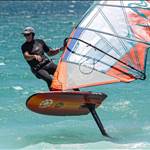
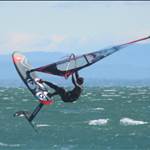
Simons board is actually conservative for his skill level, he can uphaul it and slog it in if the wind dies. I think Simons carving abilities are above the average wingers.
I get your point boardsurfr. The smaller is better mentatlity of windsurfing drove me away years ago, windfoiling brought me back.
I think these developments discussed here can be used to make windfoiling more fun for the average Joe, if they are applied to a higher volume board. I want to learn from the best and apply what is relevant to create user friendly gear.
All the research efforts are going into winging. If we don't experiment and create the gear we want, it may not happen.
Cheers to the trail blazers!