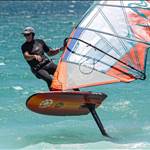
Select to expand quote
SA_AL said..This is taken from Windsurfing magazine that professionals providing some perspective on fast foiling.
Full discussion in the link
www.windsurf.co.uk/fast-foiling-pwa-top-guns/ "The most important thing for me is to be stable. If you are not stable and comfortable you can go fast for a few seconds, but then you will crash or have to shut down. For this I think using long harness lines is one of the key things that helps. The equipment has to be stable and the sail is also important. This is why we are using different sails for foiling also. The foil sails are more stable than a regular slalom sail. In the Israel PWA event, when it was windy enough for my 6.2 sail, I just used my normal 6.2 on the foil. I used it with the same settings as in fin windsurfing. But sometimes I use the lower clew, that is the only difference, as well as the long harness lines. When you are unstable you go up and down and it is much harder to sail in the same direction, plus you will not reach your top speed."
I agree, the pros know how to go fast, but they are on foil boards 90-100 cm wide "at the tail", and that makes long lines necessary due to the geometry. Last Thursday I had 3/4-1 mile runs back and forth in 8-10 knots, with stable level flights and good speed, using the 23.5" lines on a narrow tailed slalom board. I was close to up right in the lulls and when pumping the foil in flight, and when the gusts hit me I leaned out pulling the sail over and got a nice increase in speed. All that without having to use my arms to hold the sail at the correct sheeted out position.
With longer lines I would have been using my arms to sheet out in the gusts and sheet in in the lulls, and that gets tiring after 2+ hrs, because when the winds are that light I have to go out to the middle of the bay and avoid going back to shore because of the long slog back.
So you and anyone else can tell me long lines are important in foiling, but it will always be in reference to a wide tailed foil board.