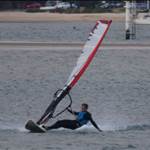
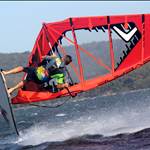
Ill vote for Windsurfer Lt
  (not that RSX is much more exciting but still...)


Select to expand quoteChris249 said..Rob11 said..windsufering said..
Hopefully the council will come to their senses and vote for the Windsurfer Lt
When you convince Froome to race on this:
and Usain Bolt to run 100m on sand track
Ill vote for Windsurfer Lt (not that RSX is much more exciting but still...)
Actually, the LT is actually probably closer in performance to the fastest windsurfer than Froome's bike is to the fastest bicycles. Froome's bike is about half the speed, or a bit less, of the fastest bicycle. The Olympic track bikes are slower still. The cycling historian and multiple British champion Michael Henderson actually rode the actual bike that set the hour record in 1893 and said it actually felt eerily like his own high-tech machine on the track.
I don't want the LT in the Games but the fact is that much Olympic kit is heavily restricted. And track hasn't changed too much in its basics yet it's the top-rated sport in the Olympics. If new stuff was better in the Olympics then MTB would probably be the top sport in the Games, and it's certainly not.
PS - there's lots of young adults out there who love simple old steel bikes and have no interest in windsurfing. Maybe we should learn the lessons from that?
This thread is heading in the same direction as its predecessor, down the path of personal bias and opinion. Which is healthy for those who want to share their stoke but limits discussion.
The problem I see with the Olympics in general, is that it is antiquated, run by self serving older men, relying on advertising revenue to promote MANY out dated sports. While I'm all for preserving heritage, I am often fascinated (as a sports trainer) that Olympic athletes will dedicate so much time and effort in pursuit of excellence in sports that have no transference (or financial benefit) once that Olympic cycle is over. I commend the dedication of an Olympic Shot Putter as an example, that is a lot of training for so few opportunities.
Perhaps a look at the mega-data that Youtube can offer may be more insightful into what people want to view in sport (if viewing popularity and participation rates are your gauge for what should be at the Olympics).
If preserving the "heritage" sports is what you are after I'm not convinced the economic demands of the Olympics will be met in the future.
Evolve or go extinct I say.
Select to expand quoteChris249 said..Rob11 said..windsufering said..
Hopefully the council will come to their senses and vote for the Windsurfer Lt
When you convince Froome to race on this:
and Usain Bolt to run 100m on sand track
Ill vote for Windsurfer Lt (not that RSX is much more exciting but still...)
Actually, the LT is actually probably closer in performance to the fastest windsurfer than Froome's bike is to the fastest bicycles. Froome's bike is about half the speed, or a bit less, of the fastest bicycle. The Olympic track bikes are slower still.
Wrong.
the Olympic track bikes are the the most aero bikes out there that conform to UCI regs and there's no frame out there with half the drag of his road dogma. I'm assuming you mean drag and not speed. If your talking about speed there no bike out there that's 50% faster.
Even going from the most aero bike setup to and standard road set up your probably only going to gain a couple of minutes over 40km working on 40km taking your everyday pro about 45-50mins
The LT is never going to be doing 20knots.
Select to expand quoteBen1973 said..Chris249 said..Rob11 said..windsufering said..
Hopefully the council will come to their senses and vote for the Windsurfer Lt
When you convince Froome to race on this:
and Usain Bolt to run 100m on sand track
Ill vote for Windsurfer Lt (not that RSX is much more exciting but still...)
Actually, the LT is actually probably closer in performance to the fastest windsurfer than Froome's bike is to the fastest bicycles. Froome's bike is about half the speed, or a bit less, of the fastest bicycle. The Olympic track bikes are slower still.
Wrong.
the Olympic track bikes are the the most aero bikes out there that conform to UCI regs and there's no frame out there with half the drag of his road dogma. I'm assuming you mean drag and not speed. If your talking about speed there no bike out there that's 50% faster.
Even going from the most aero bike setup to and standard road set up your probably only going to gain a couple of minutes over 40km working on 40km taking your everyday pro about 45-50mins
The LT is never going to be doing 20knots.
Depends whether bike means UCI bike or two wheeled streamlined human powered conveyance. Record for a fully faired recumbent is about twice that of a top level pro sprinter and about 70 percent on the hour record. Unfaired recumbents, though, are only marginally faster than a UCI bike. If you mean anything 95% of the people here call a bike, you are correct. To further your point, interest in the hour record exploded when the UCI dispensed with the nonsense of the "Merckx" record and allowed modern equipment to be used in attempts.
Select to expand quoteChris249 said..cammd said..RichardG said..
The Windsurfer LT is probably the fastest growing sailing class in Australia. It makes sense for the LT to replace the RSX which is a dying class. Put the RSX out of its misery which is a like a fish dying slowly gasping for air on the harbour wall. Its time !
333 competitors at the RSX Europeans in April, not sure that's as a sign of a dying class. In fact Richard if you look at the stats you will see RSX class has delivered on many levels for Olympic sailing competition, equality in gender participation , engagement of less developed countries in the sport of sailing. In many ways it could be seen as one of the most successful of the Olympic classes.
Yep, well said. I've never been a huge fan of the RSX concept but it's still getting pretty damn good numbers. The LT and SA would cop an absolute wall of abuse from various quarters if the LT was selected. Having been in classes that have been selected for the Games and classes that have been dumped, I'm quite happy with the LT being well out of the Five Ring Circus.
It would be interesting if a foil gets selected, if it was one a design and development gets frozen 5 years out of from its Olympic debut will it be copping abuse for being so "outdated". Foils have only been around for a couple of seasons, you would have to think much will change in 4 or 5 years.
Select to expand quotePaducah said..Ben1973 said..Chris249 said..Rob11 said..windsufering said..
Hopefully the council will come to their senses and vote for the Windsurfer Lt
When you convince Froome to race on this:
and Usain Bolt to run 100m on sand track
Ill vote for Windsurfer Lt (not that RSX is much more exciting but still...)
Actually, the LT is actually probably closer in performance to the fastest windsurfer than Froome's bike is to the fastest bicycles. Froome's bike is about half the speed, or a bit less, of the fastest bicycle. The Olympic track bikes are slower still.
Wrong.
the Olympic track bikes are the the most aero bikes out there that conform to UCI regs and there's no frame out there with half the drag of his road dogma. I'm assuming you mean drag and not speed. If your talking about speed there no bike out there that's 50% faster.
Even going from the most aero bike setup to and standard road set up your probably only going to gain a couple of minutes over 40km working on 40km taking your everyday pro about 45-50mins
The LT is never going to be doing 20knots.
Depends whether bike means UCI bike or two wheeled streamlined human powered conveyance. Record for a fully faired recumbent is about twice that of a top level pro sprinter and about 70 percent on the hour record. Unfaired recumbents, though, are only marginally faster than a UCI bike. If you mean anything 95% of the people here call a bike, you are correct. To further your point, interest in the hour record exploded when the UCI dispensed with the nonsense of the "Merckx" record and allowed modern equipment to be used in attempts.
But no cyclist cares about the 'new hour' the athletes hour is the one that matters. Non cyclist don't see the difference. If your interested in the hour record read Graham Obree book he wrote about when he tried to break it.
Have to point out the difference between the bike being faster and the bike and rider combined being faster. Stick a faired recumbent and a modern aero bike in the tunnel and there's not much between them. Get someone to ride them up a steep hill and the recumbent will loose, on the flat the recumbent will win and downhill it will probably crash.
A recumbent wouldn't win a grand tour even if the UCI allowed it. I've raced both and I can tell you there is nothing worse than riding a recumbent up a hill.
I'm only young, and perhaps a bit naive on this matter ... but i think i still have some valid points...
As far as I've seen, the new LT has some numbers in younger groms, as they are a great learning platform, but most of it's numbers are in those who stopped windsurfing for a ... while... and come back to the sport on gear they are more used to. there are a few having a go at it for something different too. But as a racing class... and i cannot say i have sailed an LT, but i have used soft sails before... and in light wind... due to their more 'floppy' nature they are certainly not pumpable, and don't have the greatest shape as they require wind to fill them out... meaning you have to lean the sail to leeward to fill it with gravity... this also means you can't hook in for stability or any sort of 'locking in' in light winds...
as far as higher wind.... i have in past found soft sails to be extremely twitchy and back-fill in the luff very easily. not to mention a strapless board with a tiny fin.... which means even in strong winds it will be railing on it's center board upwind... in 15 knts there is enough chop to loose grip and end up in the drink. Also... a 6.0 m sail??? Most of my windsurfing and almost all of my racing has been done on a techno293, more recently a techno293 plus, I'm only 72kg and hold down an 8.5 in 25 to < 30 knts of wind and it's still pumpable enough in light wind, twin cam... holds it shape in no wind at all. techno gear as far as big picture is reasonably cheap.. and fast... i have sent a techno to 23knts.. a few friends of mine have made them go even faster... The LT just doesn't have a wind range that is exciting to me... RS:X is still a strong class, I have seen them going pretty darn fast and still sailable in the lighter stuff... And the foils have come along way... and im sure will continue to be developed.. I vote RS:X should stay, until the foils are without doubt ready and more exiting.
If you said to all the guys and girls who will be racing they could use what every they want BUT they could only have one board and 2sails and they had to decide now I wonder what they would take? It would have to be something that could be sailed in pretty much anything so I'm guessing a 7 and 8.something meter race sails, The boards a bit trickier, maybe a 120litre slalom board with a foil assuming you could use it with a regular fin as well if it's blowing.
Select to expand quoteGoofyRyder-2206 said..
I'm only young, and perhaps a bit naive on this matter... but i think i still have some valid points...
As far as I've seen, the new LT has some numbers in younger groms, as they are a great learning platform, but most of it's numbers are in those who stopped windsurfing for a ... while... and come back to the sport on gear they are more used to. there are a few having a go at it for something different too. But as a racing class... and i cannot say i have sailed an LT, but i have used soft sails before... and in light wind... due to their more 'floppy' nature they are certainly not pumpable, and don't have the greatest shape as they require wind to fill them out... meaning you have to lean the sail to leeward to fill it with gravity... this also means you can't hook in for stability or any sort of 'locking in' in light winds...
as far as higher wind.... i have in past found soft sails to be extremely twitchy and back-fill in the luff very easily. not to mention a strapless board with a tiny fin.... which means even in strong winds it will be railing on it's center board upwind... in 15 knts there is enough chop to loose grip and end up in the drink. Also... a 6.0 m sail??? Most of my windsurfing and almost all of my racing has been done on a techno293, more recently a techno293 plus, I'm only 72kg and hold down an 8.5 in 25 to < 30 knts of wind and it's still pumpable enough in light wind, twin cam... holds it shape in no wind at all. techno gear as far as big picture is reasonably cheap.. and fast... i have sent a techno to 23knts.. a few friends of mine have made them go even faster... The LT just doesn't have a wind range that is exciting to me... RS:X is still a strong class, I have seen them going pretty darn fast and still sailable in the lighter stuff... And the foils have come along way... and im sure will continue to be developed.. I vote RS:X should stay, until the foils are without doubt ready and more exiting.
Spot on young fella, you have wisdom far beyond your years ! You and your generation should be listened to as you guys are the future olympians,. Steptoe and Son are not coping with becoming old and irrelavent and just wish the were back in the 80's.
Select to expand quoteKA360 said..GoofyRyder-2206 said..
I'm only young, and perhaps a bit naive on this matter... but i think i still have some valid points...
As far as I've seen, the new LT has some numbers in younger groms, as they are a great learning platform, but most of it's numbers are in those who stopped windsurfing for a ... while... and come back to the sport on gear they are more used to. there are a few having a go at it for something different too. But as a racing class... and i cannot say i have sailed an LT, but i have used soft sails before... and in light wind... due to their more 'floppy' nature they are certainly not pumpable, and don't have the greatest shape as they require wind to fill them out... meaning you have to lean the sail to leeward to fill it with gravity... this also means you can't hook in for stability or any sort of 'locking in' in light winds...
as far as higher wind.... i have in past found soft sails to be extremely twitchy and back-fill in the luff very easily. not to mention a strapless board with a tiny fin.... which means even in strong winds it will be railing on it's center board upwind... in 15 knts there is enough chop to loose grip and end up in the drink. Also... a 6.0 m sail??? Most of my windsurfing and almost all of my racing has been done on a techno293, more recently a techno293 plus, I'm only 72kg and hold down an 8.5 in 25 to < 30 knts of wind and it's still pumpable enough in light wind, twin cam... holds it shape in no wind at all. techno gear as far as big picture is reasonably cheap.. and fast... i have sent a techno to 23knts.. a few friends of mine have made them go even faster... The LT just doesn't have a wind range that is exciting to me... RS:X is still a strong class, I have seen them going pretty darn fast and still sailable in the lighter stuff... And the foils have come along way... and im sure will continue to be developed.. I vote RS:X should stay, until the foils are without doubt ready and more exiting.
Spot on young fella, you have wisdom far beyond your years ! You and your generation should be listened to as you guys are the future olympians,. Steptoe and Son are not coping with becoming old and irrelavent and just wish the were back in the 80's.
+1
Select to expand quoteBen1973 said..
If you said to all the guys and girls who will be racing they could use what every they want BUT they could only have one board and 2sails and they had to decide now I wonder what they would take? It would have to be something that could be sailed in pretty much anything so I'm guessing a 7 and 8.something meter race sails, The boards a bit trickier, maybe a 120litre slalom board with a foil assuming you could use it with a regular fin as well if it's blowing.
I think if you asked the current Olympic racers that question they would opt for an RSX, one board two sails, a training sail and a regatta sail.
Select to expand quoteBen1973 said..Paducah said..Ben1973 said..Chris249 said..Rob11 said..windsufering said..
Hopefully the council will come to their senses and vote for the Windsurfer Lt
When you convince Froome to race on this:
and Usain Bolt to run 100m on sand track
Ill vote for Windsurfer Lt (not that RSX is much more exciting but still...)
Actually, the LT is actually probably closer in performance to the fastest windsurfer than Froome's bike is to the fastest bicycles. Froome's bike is about half the speed, or a bit less, of the fastest bicycle. The Olympic track bikes are slower still.
Wrong.
the Olympic track bikes are the the most aero bikes out there that conform to UCI regs and there's no frame out there with half the drag of his road dogma. I'm assuming you mean drag and not speed. If your talking about speed there no bike out there that's 50% faster.
Even going from the most aero bike setup to and standard road set up your probably only going to gain a couple of minutes over 40km working on 40km taking your everyday pro about 45-50mins
The LT is never going to be doing 20knots.
Depends whether bike means UCI bike or two wheeled streamlined human powered conveyance. Record for a fully faired recumbent is about twice that of a top level pro sprinter and about 70 percent on the hour record. Unfaired recumbents, though, are only marginally faster than a UCI bike. If you mean anything 95% of the people here call a bike, you are correct. To further your point, interest in the hour record exploded when the UCI dispensed with the nonsense of the "Merckx" record and allowed modern equipment to be used in attempts.
But no cyclist cares about the 'new hour' the athletes hour is the one that matters. Non cyclist don't see the difference. If your interested in the hour record read Graham Obree book he wrote about when he tried to break it.
Have to point out the difference between the bike being faster and the bike and rider combined being faster. Stick a faired recumbent and a modern aero bike in the tunnel and there's not much between them. Get someone to ride them up a steep hill and the recumbent will loose, on the flat the recumbent will win and downhill it will probably crash.
A recumbent wouldn't win a grand tour even if the UCI allowed it. I've raced both and I can tell you there is nothing worse than riding a recumbent up a hill.
Seriously? Any serious cyclist has paid plenty of attention. There have 19 attempts since the rule change five years ago. Bradley Wiggins made his attempt in front of a full house in London. The "athlete's hour" is as much nostalgia as anything else - like how well the old Campy stuff shifted when, in fact, the Japanese kit at the time beat the pants off it. No disrespect to the Canibal, he was the class of his era although we overlook his three doping suspensions.
Not sure why a recumbent winning a Grand Tour is important. A Pinarello Dogma will never win either a WC in either cross or mtb and likely not in ITT. Does that mean it sucks or that it's optimized for the course it encounters? There are reasons the UCI banned recumbents in the 30s not the least of which is that they were faster on many routes than traditional diamond frames. The UCI has rarely been accused of being a forward looking institution. Ask the aforementioned Mr. Obree and C. Boardman.
Back to the topic at hand - I, for one, would prefer that the Olympics showcase the pointy end of the sport. I'm not aware of any other sport that decided that they needed to roll back the equipment to a standard from at least 30 or more years prior. Foiled boards have an amazing range and unlike previous Olympic boards don't as strongly favor a particular athletic build. Select to expand quoteBen1973 said..
But no cyclist cares about the 'new hour' the athletes hour is the one that matters. Non cyclist don't see the difference. If your interested in the hour record read Graham Obree book he wrote about when he tried to break it.
Have to point out the difference between the bike being faster and the bike and rider combined being faster. Stick a faired recumbent and a modern aero bike in the tunnel and there's not much between them. Get someone to ride them up a steep hill and the recumbent will loose, on the flat the recumbent will win and downhill it will probably crash.
A recumbent wouldn't win a grand tour even if the UCI allowed it. I've raced both and I can tell you there is nothing worse than riding a recumbent up a hill.
Seriously? You mean other than the 19 professionals who've taken a whack at it in the last five years when the rules were changed and just about every one live streamed? Wiggo's go at it was done at a suboptimal location in London so he could do it in front of a crowd. The "athlete's hour" is more about nostalgia. Merckx used every technological trick in the book he could at the time for his attempt. His bike was so light it wouldn't comply with current UCI regs. Had disk wheels been a proven thing like they were for Moser a few years later, I have no doubt he would have used them. After all, this is a man who was suspended three times for doping. He was not adverse to seeking every advantage.
Not sure why a recumbent winning a grand tour is relevant. A Pinarello Dogma isn't likely to win a WC cross, mtb or ITT race either. Horses for courses. There are reasons that the UCI banned them in the 30s including that they were beating the existing traditional diamond frames in some races. The UCI was never a forward thinking organization (ask Mr. Obree about that) and in a time when even tourists had gears for years, racers were forced to do grand tours on fixies.
Back to the topic at hand - I, and many of us, would prefer that the Olympics showcase the pointy end of the sport. I'm not aware of another Olympic discipline that decided to roll back the technology its athletes use by over 30+ years. Foiled boards perform over a very wide range of wind conditions and, as well, don't necessarily favor a particular body type. Sailing, unlike most sports, tends to focus excessively at times on the "one design" aspect. I can't imagine that skiing, cycling or even running would require a simple standard piece of kit from a single manufacturer.
Select to expand quotecammd said..Ben1973 said..
If you said to all the guys and girls who will be racing they could use what every they want BUT they could only have one board and 2sails and they had to decide now I wonder what they would take? It would have to be something that could be sailed in pretty much anything so I'm guessing a 7 and 8.something meter race sails, The boards a bit trickier, maybe a 120litre slalom board with a foil assuming you could use it with a regular fin as well if it's blowing.
I think if you asked the current Olympic racers that question they would opt for an RSX, one board two sails, a training sail and a regatta sail.
I think you should listen to what Dorian actually says at 0:31. A lot of RS:X guys and gals have seriously committed to foiling even as they train for 2020.
That video is pretty awesome but its an advertisement, a lot of RSX guys and girls could mean 20 or it could mean 200, either way as good as the video looks its an add its not a documentary.
Select to expand quotePaducah said..
Back to the topic at hand - I, and many of us, would prefer that the Olympics showcase the pointy end of the sport. I'm not aware of another Olympic discipline that decided to roll back the technology its athletes use by over 30+ years. Foiled boards perform over a very wide range of wind conditions and, as well, don't necessarily favor a particular body type. Sailing, unlike most sports, tends to focus excessively at times on the "one design" aspect. I can't imagine that skiing, cycling or even running would require a simple standard piece of kit from a single manufacturer.
I think there are some good points in there, a greater variation in body type is a real advantage, that is one aspect you would think is very much against the LT submission.
If it changes I would like to see foils get selected over the other submissions.
One design vs box rule, not sure on that one, I can see good arguments on both sides. I think maybe box rule should be given a go within approved equipment that is available to the general market and allow manufacturers to sponsor sailors. That would drive development and put cash into the sport.
Ill vote for Windsurfer Lt (not that RSX is much more exciting but still...)
Select to expand quoteBen1973 said..
A recumbent wouldn't win a grand tour even if the UCI allowed it. I've raced both and I can tell you there is nothing worse than riding a recumbent up a hill.
The UCI won't make you ride a recumbent up a hill. There's nothing stopping anyone from changing the bike before they hit the bottom of the hill, just as people switched from TT bikes to road bikes at the bottom of the hill in stage 1 of the Giro, and regularly do it in the last stage of Paris Nice (IIRC). If you got a guy on a 'bent in a flat stage he'd probably be able have the rest of the peleton thrown out for exceeding the time limit so he'd win anyway!
Fact is, other Olympic sports have major restrictions on the gear they use.
Select to expand quoteGoofyRyder-2206 said..
I'm only young, and perhaps a bit naive on this matter... but i think i still have some valid points...
As far as I've seen, the new LT has some numbers in younger groms, as they are a great learning platform, but most of it's numbers are in those who stopped windsurfing for a ... while... and come back to the sport on gear they are more used to. there are a few having a go at it for something different too. But as a racing class... and i cannot say i have sailed an LT, but i have used soft sails before... and in light wind... due to their more 'floppy' nature they are certainly not pumpable, and don't have the greatest shape as they require wind to fill them out... meaning you have to lean the sail to leeward to fill it with gravity... this also means you can't hook in for stability or any sort of 'locking in' in light winds...
as far as higher wind.... i have in past found soft sails to be extremely twitchy and back-fill in the luff very easily. not to mention a strapless board with a tiny fin.... which means even in strong winds it will be railing on it's center board upwind... in 15 knts there is enough chop to loose grip and end up in the drink. Also... a 6.0 m sail??? Most of my windsurfing and almost all of my racing has been done on a techno293, more recently a techno293 plus, I'm only 72kg and hold down an 8.5 in 25 to < 30 knts of wind and it's still pumpable enough in light wind, twin cam... holds it shape in no wind at all. techno gear as far as big picture is reasonably cheap.. and fast... i have sent a techno to 23knts.. a few friends of mine have made them go even faster... The LT just doesn't have a wind range that is exciting to me... RS:X is still a strong class, I have seen them going pretty darn fast and still sailable in the lighter stuff... And the foils have come along way... and im sure will continue to be developed.. I vote RS:X should stay, until the foils are without doubt ready and more exiting.
problem is there are a lot of people making negative comments about the LT rig that have never used one.
for clarity. the rig is most certainly pumpable and the good sailors are most certainly able to lock in in light winds.
if your soft sail is twitchy then look at how it;s rigged.
strapless is a lot of fun to sail. tiny fin is works no problems.. used to be with racboard class the fin was even smaller.
in strong winds the board does not rail on it;s centreboard as the centreboard is retractable.
the small 6m sails works very well because of the items you suggest make it not work.
honestly if you think sailing an LT in 30 knots is not exciting then you obviously haven;t sailed one. oh wait you haven't sailed one.
so everything you said is based on what? a guess, a hunch, something someone else said who had also never sailed an LT like half of the people commenting in this thread.?
not to sound narky but basing opinions on experience still counts for something once you leave kindy.
Select to expand quoteGoofyRyder-2206 said..
I'm only young, and perhaps a bit naive on this matter... but i think i still have some valid points...
As far as I've seen, the new LT has some numbers in younger groms, as they are a great learning platform, but most of it's numbers are in those who stopped windsurfing for a ... while... and come back to the sport on gear they are more used to. there are a few having a go at it for something different too. But as a racing class... and i cannot say i have sailed an LT, but i have used soft sails before... and in light wind... due to their more 'floppy' nature they are certainly not pumpable, and don't have the greatest shape as they require wind to fill them out... meaning you have to lean the sail to leeward to fill it with gravity... this also means you can't hook in for stability or any sort of 'locking in' in light winds...
as far as higher wind.... i have in past found soft sails to be extremely twitchy and back-fill in the luff very easily. not to mention a strapless board with a tiny fin.... which means even in strong winds it will be railing on it's center board upwind... in 15 knts there is enough chop to loose grip and end up in the drink. Also... a 6.0 m sail??? Most of my windsurfing and almost all of my racing has been done on a techno293, more recently a techno293 plus, I'm only 72kg and hold down an 8.5 in 25 to < 30 knts of wind and it's still pumpable enough in light wind, twin cam... holds it shape in no wind at all. techno gear as far as big picture is reasonably cheap.. and fast... i have sent a techno to 23knts.. a few friends of mine have made them go even faster... The LT just doesn't have a wind range that is exciting to me... RS:X is still a strong class, I have seen them going pretty darn fast and still sailable in the lighter stuff... And the foils have come along way... and im sure will continue to be developed.. I vote RS:X should stay, until the foils are without doubt ready and more exiting.
Sorry, but any decent sailor can get an LT upwind in chop and 15 knots without ending up in the drink. And it is completely wrong to say that a soft sail is not pumpable. I'm NOT saying the LT should be in the Games or replace the Techno, but your "facts" are not facts.
If you prefer the Techno or RSX (or anything else) it's great; it's all down to personal taste. For example I love the feeling of standing on the rail of an LT with the board railing; for my personal taste I love the fact that you really need to work on balance because you can't just lock into the straps. If other people like locking into straps, that's great.
The LT rig can be twitchier than a cambered rig, but personally I like that. It's like the way lots of people prefer manual cars or hardtail mountain bikes. To some of us, having to manually respond a bit to the gusts is part of the thrill, just like some we like manually moving a board around a wave or bunny-hopping a bike over a log.
Yes, the sail is small but that means the rig is light. Just like some people like a really light board, some people like a really light rig. The point is that all windsurfers are great - just different types of great. Good luck with your Techno.
Ill vote for Windsurfer Lt (not that RSX is much more exciting but still...)
Select to expand quoteBelly25 said..Chris249 said..Rob11 said..windsufering said..
Hopefully the council will come to their senses and vote for the Windsurfer Lt
When you convince Froome to race on this:
and Usain Bolt to run 100m on sand track
Ill vote for Windsurfer Lt (not that RSX is much more exciting but still...)
Actually, the LT is actually probably closer in performance to the fastest windsurfer than Froome's bike is to the fastest bicycles. Froome's bike is about half the speed, or a bit less, of the fastest bicycle. The Olympic track bikes are slower still. The cycling historian and multiple British champion Michael Henderson actually rode the actual bike that set the hour record in 1893 and said it actually felt eerily like his own high-tech machine on the track.
I don't want the LT in the Games but the fact is that much Olympic kit is heavily restricted. And track hasn't changed too much in its basics yet it's the top-rated sport in the Olympics. If new stuff was better in the Olympics then MTB would probably be the top sport in the Games, and it's certainly not.
PS - there's lots of young adults out there who love simple old steel bikes and have no interest in windsurfing. Maybe we should learn the lessons from that?
This thread is heading in the same direction as its predecessor, down the path of personal bias and opinion. Which is healthy for those who want to share their stoke but limits discussion.
The problem I see with the Olympics in general, is that it is antiquated, run by self serving older men, relying on advertising revenue to promote MANY out dated sports. While I'm all for preserving heritage, I am often fascinated (as a sports trainer) that Olympic athletes will dedicate so much time and effort in pursuit of excellence in sports that have no transference (or financial benefit) once that Olympic cycle is over. I commend the dedication of an Olympic Shot Putter as an example, that is a lot of training for so few opportunities.
Perhaps a look at the mega-data that Youtube can offer may be more insightful into what people want to view in sport (if viewing popularity and participation rates are your gauge for what should be at the Olympics).
If preserving the "heritage" sports is what you are after I'm not convinced the economic demands of the Olympics will be met in the future.
Evolve or go extinct I say.
Some of the "personal bias and opinion" is actually driven by data such as rankings numbers in various types of sport, analysis of the numerical data on TV ratings as contained in the IOC OPC reports and stuff like that.
Many of the top rating sports are actually the "heritage" sports like running, swimming and gymnastics. The fact is that many more people watch people do 6 knots in a straight line down a flat water pool than watch skiffs or RSXs doing 20knots+ jumping over ocean swells. More people watch kayaks go in a straight line down flat water than watch kayaks go down the whitewater rapids. "Extreme" MTBing doesn't rate particularly well.
There is just no data that supports any belief that extreme Olympic sports attract more viewers. Most people want to watch people running or swimming on a flat surface in their lanes.
Select to expand quoteChris249 said..
Sailing promotes one design classes because the cost of the development classes was so incredibly high that many countries can't afford it. If countries cannot afford to compete, they have no reason to vote to keep a sport in the Games. The fact that the Laser and RSX are by far the most popular classes, and that the 470 is more popular than the much more modern 49er, shows that most sailors and most countries aren't really all that interested in the ultimate performance - just like cyclists.
Do you think a box rule could work if restricted to approved gear?
Select to expand quoteGestalt said..GoofyRyder-2206 said..
I'm only young, and perhaps a bit naive on this matter... but i think i still have some valid points...
As far as I've seen, the new LT has some numbers in younger groms, as they are a great learning platform, but most of it's numbers are in those who stopped windsurfing for a ... while... and come back to the sport on gear they are more used to. there are a few having a go at it for something different too. But as a racing class... and i cannot say i have sailed an LT, but i have used soft sails before... and in light wind... due to their more 'floppy' nature they are certainly not pumpable, and don't have the greatest shape as they require wind to fill them out... meaning you have to lean the sail to leeward to fill it with gravity... this also means you can't hook in for stability or any sort of 'locking in' in light winds...
as far as higher wind.... i have in past found soft sails to be extremely twitchy and back-fill in the luff very easily. not to mention a strapless board with a tiny fin.... which means even in strong winds it will be railing on it's center board upwind... in 15 knts there is enough chop to loose grip and end up in the drink. Also... a 6.0 m sail??? Most of my windsurfing and almost all of my racing has been done on a techno293, more recently a techno293 plus, I'm only 72kg and hold down an 8.5 in 25 to < 30 knts of wind and it's still pumpable enough in light wind, twin cam... holds it shape in no wind at all. techno gear as far as big picture is reasonably cheap.. and fast... i have sent a techno to 23knts.. a few friends of mine have made them go even faster... The LT just doesn't have a wind range that is exciting to me... RS:X is still a strong class, I have seen them going pretty darn fast and still sailable in the lighter stuff... And the foils have come along way... and im sure will continue to be developed.. I vote RS:X should stay, until the foils are without doubt ready and more exiting.
problem is there are a lot of people making negative comments about the LT rig that have never used one.
for clarity. the rig is most certainly pumpable and the good sailors are most certainly able to lock in in light winds.
if your soft sail is twitchy then look at how it;s rigged.
strapless is a lot of fun to sail. tiny fin is works no problems.. used to be with racboard class the fin was even smaller.
in strong winds the board does not rail on it;s centreboard as the centreboard is retractable.
the small 6m sails works very well because of the items you suggest make it not work.
honestly if you think sailing an LT in 30 knots is not exciting then you obviously haven;t sailed one. oh wait you haven't sailed one.
so everything you said is based on what? a guess, a hunch, something someone else said who had also never sailed an LT like half of the people commenting in this thread.?
not to sound narky but basing opinions on experience still counts for something once you leave kindy.
Not trying to bash the gear :) I think it's really cool and all... but i think for racing it's more of a fun or introductory class.
There is no problem with smaller fins, I now sail a race board with a small fin (38cm).. quite a step down from the 50cm fin I used to use in a techno+, point of that statement was that the board isn't gonna point to any useful degree going upwind on just the fin. It would require the dagger-board to be down. same a race board. meaning if you want to be competitive on the upwind in strong winds, it has to be down and inevitably the board will rail... and not to say strapless isn't fun. but simply less practical for a board on it's rail.
The sail maybe still pumpable, and I agree having not sailed on the equipment i wouldn't know to what degree, but I am sure that the RS:X sails and the Techno sails which i have used, would have a greater return for energy in. the more modern sails when pumped in a more downward fashion twist a lot in the head whilst keeping a tight leech, meaning that when the sail flexes it produces mostly forward thrust. the LT sails as far as I've seen hold a much more scoop-like sail shape even at the top. so for large circular scooping pumps they will work well, but you'd reach 'terminal velocity' pretty quickly, the shorter sharper pumps that are so effective with more modern designed sails allow the wind to continue to flow directly over the foil allowing the board to keep accelerating until the hull drag - not sail drag from large circular pumps stops the board accelerating. On top of this.... the sail is also small. as you mentioned, the old race boards do have small fins. But I've yet to meet a raceboard sailor with a small fin that doesn't carry at least an 8.5. big sails will still work with small fins, but only going downwind, the smaller fin just creates a center of effort behind that of the large sails - and due to the large difference in strength of the efforts the board will point downwind.
So again, not saying the gear is bad. just saying there is gear that is better for the purpose of Olympic racing.
And no, my opinion is not based on a guess, hunch or anyone else's opinion. It is just a reasoned approach to the ability of gear i havn't sailed based on past experiences of gear i'd consider to be similar design as well as observations I've made whilst sitting on a start line next to one and happily and easily pumping over and away from it.
also, just so you know; "not to sound narky but basing opinions on experience still counts for something once you leave kindy. "
sounds very snarky... I guess your grand-kids didn't tell you that. *not to be an asshole or anything* .
Select to expand quotecammd said..Chris249 said..
Sailing promotes one design classes because the cost of the development classes was so incredibly high that many countries can't afford it. If countries cannot afford to compete, they have no reason to vote to keep a sport in the Games. The fact that the Laser and RSX are by far the most popular classes, and that the 470 is more popular than the much more modern 49er, shows that most sailors and most countries aren't really all that interested in the ultimate performance - just like cyclists.
Do you think a box rule could work if restricted to approved gear?
Well, first issue is the cost of just approving stuff. I think each frame design in cycling, for example, costs about $16000 to get approval.
Second issue is whether there are going to be expensive legal battles about whether some gear should be approved, and how available the approved gear has to be. The British built bikes that were allegedly available for sale to the general public as the rules required - but they would cost over $100,000k and they wouldn't tell you when you could get one.
The British cycling team was funded at about $10 mill per year. I think sailing isn't too far behind. So they can throw a lot of money at a sport, just as they did with the Europe dinghy mast in 2000 which would, in today's values, have cost them something like $35,000 for one mast for an 11 foot boat. So if the Brits spend $35,000 developing a set of super foils and then say $6,000 getting them approved, then they whack a profit margin in and say "they are for sale to the general public at $60,000" then what do the smaller nations say? How do the Kiwis feel if the British foils they cannot afford are quicker?
But one thing that the approval process in cycling and other sports does seem to show is that the equipment rules in sailing are in many ways pretty open. If sailing had developed like road and track cycling, for example, arguably the main Olympic sailing class would be something like the Finn dinghy. Instead, sailing has opened up to designs like the Nacra 17 and 49er.
Select to expand quoteGoofyRyder-2206 said..
not to say strapless isn't fun. but simply less practical for a board on it's rail.
Well, the point of the LT is to have fun, so being fun IS being practical.
The sail maybe still pumpable, and I agree having not sailed on the equipment i wouldn't know to what degree, but I am sure that the RS:X sails and the Techno sails which i have used, would have a greater return for energy in.
You are right, the other sails give more return for energy. That is arguably a good thing because it means that pumping is less effective and therefore you have to concentrate more on other details. In the IMCO, for example, pumping worked pretty well so you could often ignore windshifts and it was a bit of a straight-line pumpfest for many sailors. In the LT, pumping harder normally gives less of a speed advantage so you still work shifts a lot even when pumping.
I've yet to meet a raceboard sailor with a small fin that doesn't carry at least an 8.5. big sails will still work with small fins, but only going downwind, the smaller fin just creates a center of effort behind that of the large sails - and due to the large difference in strength of the efforts the board will point downwind.
Depends on the location of the sail's centre of effort. You may have it the wrong way around, however - the fin creates the centre of lateral resistance not the centre of effort. The big fin goes fast but slows tacking down, which changes tactics a lot. Horses for courses.
So again, not saying the gear is bad. just saying there is gear that is better for the purpose of Olympic racing.
Agree with your last line! Good sailing.
www.facebook.com/groups/7041592283/
Scroll down the above facebook page to see letter from Dorian to World Sailing Council
Select to expand quoteChris249 said..GoofyRyder-2206 said..
not to say strapless isn't fun. but simply less practical for a board on it's rail.
Well, the point of the LT is to have fun, so being fun IS being practical.
The sail maybe still pumpable, and I agree having not sailed on the equipment i wouldn't know to what degree, but I am sure that the RS:X sails and the Techno sails which i have used, would have a greater return for energy in.
You are right, the other sails give more return for energy. That is arguably a good thing because it means that pumping is less effective and therefore you have to concentrate more on other details. In the IMCO, for example, pumping worked pretty well so you could often ignore windshifts and it was a bit of a straight-line pumpfest for many sailors. In the LT, pumping harder normally gives less of a speed advantage so you still work shifts a lot even when pumping.
I've yet to meet a raceboard sailor with a small fin that doesn't carry at least an 8.5. big sails will still work with small fins, but only going downwind, the smaller fin just creates a center of effort behind that of the large sails - and due to the large difference in strength of the efforts the board will point downwind.
Depends on the location of the sail's centre of effort. You may have it the wrong way around, however - the fin creates the centre of lateral resistance not the centre of effort. The big fin goes fast but slows tacking down, which changes tactics a lot. Horses for courses.
So again, not saying the gear is bad. just saying there is gear that is better for the purpose of Olympic racing.
Agree with your last line! Good sailing.
Can see your way of thinking about this, :)
yes the fin creates a center of lateral resistance... - this is just an opposing center of effort.. agree with the tacking statement, have sailed a few board with big fins now.. they definitely tack slower... but after sailing my race board for a little bit now i find it tacks ridiculously slow... might be because i still only have an 8.5 to use on it... but i think it's more to do with water line length.. not to mention the whopper of a center board it has underneath when tacking.
how does the LT go with catapults... no back footstraps would surely allow a few more 'cannonballs' if you miss-timed a big bit of chop?
all part of the fun i guess :P
Select to expand quoteGoofyRyder-2206 said..Chris249 said..GoofyRyder-2206 said..
not to say strapless isn't fun. but simply less practical for a board on it's rail.
Well, the point of the LT is to have fun, so being fun IS being practical.
The sail maybe still pumpable, and I agree having not sailed on the equipment i wouldn't know to what degree, but I am sure that the RS:X sails and the Techno sails which i have used, would have a greater return for energy in.
You are right, the other sails give more return for energy. That is arguably a good thing because it means that pumping is less effective and therefore you have to concentrate more on other details. In the IMCO, for example, pumping worked pretty well so you could often ignore windshifts and it was a bit of a straight-line pumpfest for many sailors. In the LT, pumping harder normally gives less of a speed advantage so you still work shifts a lot even when pumping.
I've yet to meet a raceboard sailor with a small fin that doesn't carry at least an 8.5. big sails will still work with small fins, but only going downwind, the smaller fin just creates a center of effort behind that of the large sails - and due to the large difference in strength of the efforts the board will point downwind.
Depends on the location of the sail's centre of effort. You may have it the wrong way around, however - the fin creates the centre of lateral resistance not the centre of effort. The big fin goes fast but slows tacking down, which changes tactics a lot. Horses for courses.
So again, not saying the gear is bad. just saying there is gear that is better for the purpose of Olympic racing.
Agree with your last line! Good sailing.
Can see your way of thinking about this, :)
yes the fin creates a center of lateral resistance... - this is just an opposing center of effort.. agree with the tacking statement, have sailed a few board with big fins now.. they definitely tack slower... but after sailing my race board for a little bit now i find it tacks ridiculously slow... might be because i still only have an 8.5 to use on it... but i think it's more to do with water line length.. not to mention the whopper of a center board it has underneath when tacking.
how does the LT go with catapults... no back footstraps would surely allow a few more 'cannonballs' if you miss-timed a big bit of chop?
all part of the fun i guess :P
No broken ankles
btw ask your grand pa what it was like to sail in 100 + fleets regularly in Aust
Sailors in South Africa making their way to the offshore startline. I think it would be good to dump the RSX and put the LT in for a while and then adopt a foiling class alongside it as well when the foilers have a one design class matured and in place. Two windsurfing classes in the long run would be great. Freestyle and slalom in the LT would add a new dimension as would the marathon on top of usual course racing.


Select to expand quotewindsufering said..GoofyRyder-2206 said..Chris249 said..GoofyRyder-2206 said..
not to say strapless isn't fun. but simply less practical for a board on it's rail.
Well, the point of the LT is to have fun, so being fun IS being practical.
The sail maybe still pumpable, and I agree having not sailed on the equipment i wouldn't know to what degree, but I am sure that the RS:X sails and the Techno sails which i have used, would have a greater return for energy in.
You are right, the other sails give more return for energy. That is arguably a good thing because it means that pumping is less effective and therefore you have to concentrate more on other details. In the IMCO, for example, pumping worked pretty well so you could often ignore windshifts and it was a bit of a straight-line pumpfest for many sailors. In the LT, pumping harder normally gives less of a speed advantage so you still work shifts a lot even when pumping.
I've yet to meet a raceboard sailor with a small fin that doesn't carry at least an 8.5. big sails will still work with small fins, but only going downwind, the smaller fin just creates a center of effort behind that of the large sails - and due to the large difference in strength of the efforts the board will point downwind.
Depends on the location of the sail's centre of effort. You may have it the wrong way around, however - the fin creates the centre of lateral resistance not the centre of effort. The big fin goes fast but slows tacking down, which changes tactics a lot. Horses for courses.
So again, not saying the gear is bad. just saying there is gear that is better for the purpose of Olympic racing.
Agree with your last line! Good sailing.
Can see your way of thinking about this, :)
yes the fin creates a center of lateral resistance... - this is just an opposing center of effort.. agree with the tacking statement, have sailed a few board with big fins now.. they definitely tack slower... but after sailing my race board for a little bit now i find it tacks ridiculously slow... might be because i still only have an 8.5 to use on it... but i think it's more to do with water line length.. not to mention the whopper of a center board it has underneath when tacking.
how does the LT go with catapults... no back footstraps would surely allow a few more 'cannonballs' if you miss-timed a big bit of chop?
all part of the fun i guess :P
No broken ankles
btw ask your grand pa what it was like to sail in 100 + fleets regularly in Aust
None of my grandparent ever sailed unfortunately... I can appreciate that back in the day they were the newest and coolest toys to be fleet racing in... but times have changed.