Select to expand quote
Basher said..
I'll see if I can find time to watch that, but we are in danger of talking at cross purposes here. If you are foiling then that is fundamentally different from fin windsurfing.
A foil generates huge upward lift that means the windfoiler has a very different sailing stance from the fin windsurfer.
Foil sails, as a result, are generally more high aspect and cut with a tight leach. The race courses usually sailed by foilers are also different, often with more downwind work (as per the IQfoil class).
Even for downwind slalom, we foil in lighter wind but still at great speed, meaning the apparent wind angles we set our sails to are totally different. On a broad reach in light wind you stay fully sheeted in on a foil board, so there is less need for sail twist. That's a massive discussion in itself.
With all due respect, please watch the video, you might update your thinking about foiling and this topic a bit. What you've said here and elsewhere suggests to me that, while you bring a wealth of knowledge and experience, certain thoughts you have about foiling are a bit outdated. While it's true that at the beginner end of the pool, there are some important differences in stance, the more one progresses, imho, the more things begin to converge again. For an example, beginners are taught to keep over the board, as you say to, to counter the lift. More advanced windsurfers, however, easily get their weight outboard.
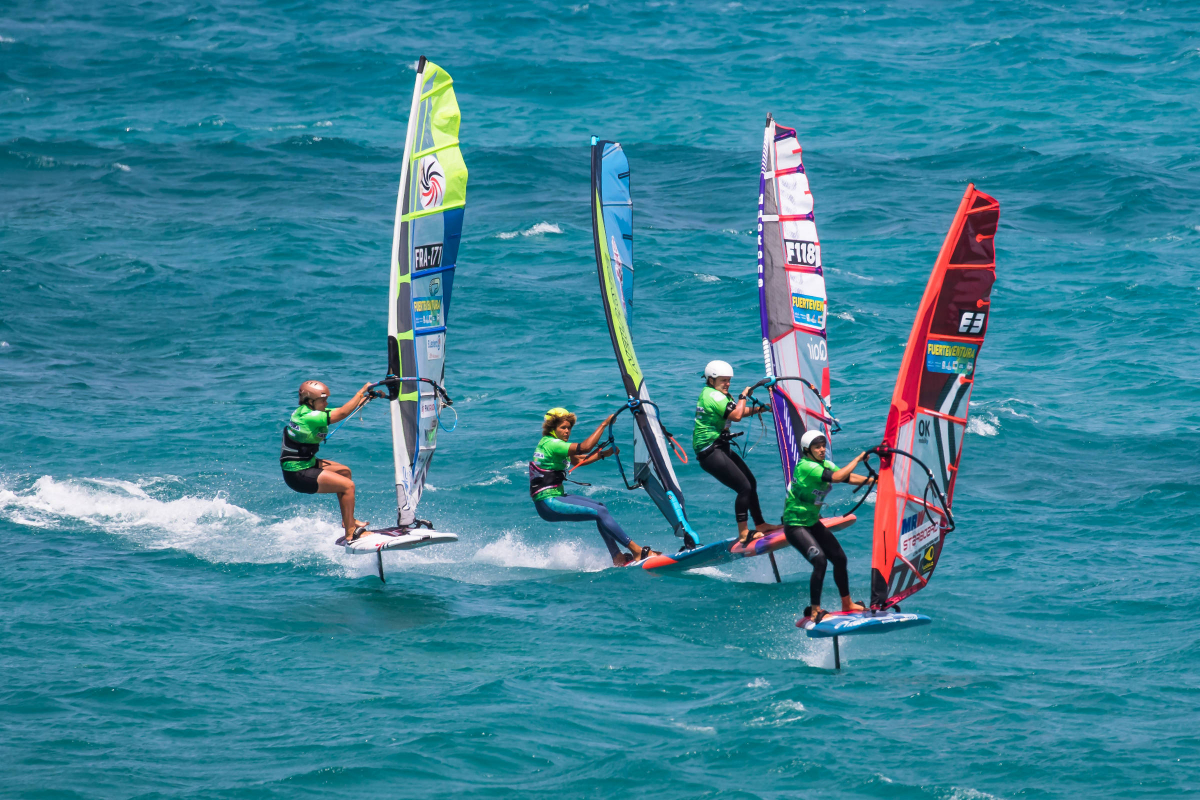
As for sails, etc., if you don't want to listen to Patrik's explanation, take a look at these ladies and see how similar (and outboard) the foil sails are set to the slalom sail. The foilers are taking the same exact marks as Sarah-Quita (so much for us doing different courses). Looking at the top of Justine Lemeteyer's sail, as Jerry Lee Lewis once said, "there's a whole lot of shaking going on."

Berowne posted a great video of Will McMillan in light air and, at the end, you can see something very similar to the classic 7 stance that most fin windsurfers would recognize. Even in light air (pretty much not a white cap in sight), you can see a substantial amount of twist in his sail, too. Here's a screen grab