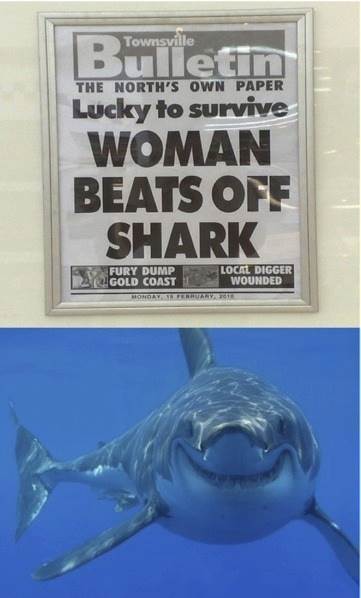
There have been 12 fatal shark attacks over the past 13 years in WA, eight of which were in the last five years. Here are the figures for the 50 years prior to that, for perspective:
* 1997 - Werner Schonhofer - Disappeared while windsurfing off Geraldton.
* 1995 - Dave Weir - Abalone diving near Hopetoun (ironically, the same day the process to conserve white pointers began)
* 1967 - Robert Bartle - Bitten in two off Jurien Bay.
* 1948 - Arthur Strahan - Disappeared while swimming at Lancelin
Chances of being eaten used to be pretty slim. But not lately, and if reading forums and other comments is anything to go by, popular opinion says that's because there are more people in the water now, and more seals, and more whales. Well yes, but there's something else too, there are more white pointers...and even that's not the real issue. The problem as I see it is that they're coming of age.
* After at least 150 years of indiscriminate killing by humans white pointers became a protected species about 17 years ago.
* They reach maturity around 15 years of age, when they are around 3 metres in size and it's thought that they live about 30 to 40 years.
* Their diet doesn't include marine mammals until they reach around 3 metres. This is because the lack of mineralisation in their jaw cartilage compromises strength - the jaws damage easily when too much pressure is applied on too firm a target, such as a seal. This, according to researchers, means it's unlikely that juveniles are responsible for attacks on people.
So here is my take on it. The first pups born since protection began would have reached maturity a couple of years ago. Others born sooner than that will have enjoyed their juvenile years in a safer environment than the one their parents survived and will have reached maturity several years ago. The parents will either be dead of old age or sickness or cannibalism by now, or they're still alive and simply getting older, and maybe bigger.
Anyway, these young adults will be testing out the new and exciting flavours of bigger prey than they are used to, because they can. Some might even be taste testing the buffet and spitting out what they don't like... And next year there will be more reaching maturity and doing the same thing, and the year after, and the year after and on it will go. And factor in that these now mature sharks will also be busy getting together and making baby sharks.
It's not hard to see what another 15 years will bring.
During the late 1800's and early 1900's not all that many people were swimming in the Indian Ocean off the lower half of WA. None were surfing or scuba diving. Those things didn't take off until around the mid 1900's, when white pointer numbers were already very low. For well over a hundred years a busy whaling industry had been destroying not only whales, but anything that dared compete for the valuable carcasses being towed to busy processing plants. And back then most people who were in the water were there because they'd fallen off a boat.
This recent trend is unique to anything we've ever seen before, and it will get exponentially worse. It's not a freak rush of isolated incidents that will settle back down into what was accepted as normal for so long. This is the start of the new normal if something isn't done.
I found the following comment in the discussion here:
www.theinertia.com/surf/to-know-what-living-is-life-death-and-sharks-in-west-australia/"Where do you draw the line on culling? I don't know but if we can successfully manage the fish stocks we eat surely we can mange the ones that eat
us."

 If safety is what we are all about...