czareka said..Hi everyone,I've been closely watching the parawing scene develop lately, and there is a trend that is starting to pick up.More and more, we see boards being labeled as "
parawing boards", but in reality, many of them are just rebranded mid-length boards.
Simply changing a name or making a standard shape a bit narrower doesn't mean it will actually work for the specific demands of a parawing. A label doesn't change the physics, and the market needs a more systematic approach to what actually makes a board work.
To get on foil with a parawing, you aren't just looking for a "
narrower" board; you are looking for a very specific type of hydrodynamics designed from the ground up. Based on technical deep divesfromexperts like
Gav (Hydrofoil), Foilrat, and many others across international forums, I believe we can define a set of requirements for any board to be truly parawing certified.
The most critical part of this design is the
Forward Volume Distribution. When you are standing on the board, generating power and pumping the foil to get that initial lift, you need the buoyancy right under your feet and shifted forward. This is the only way to stop the nose from
pearling or diving when you apply high pressure during the start. If a board lacks this forward float, the nose will just sink the moment you try to build speed.
Equally important is the Narrow Tail with a
Sharp V exit. A skinny tail is essential to reduce drag, but the deep V at the back is what allows you to sink the tail just enough to pop the nose up the second the foil starts to engage. Without this specific tail shape, the board stays glued to the surface, making it much harder to initiate the flight.
Then we have the hull design. A true parawing shape must have IMO a
Continuous V-Hull with zero flat spots. Flat surfaces act like giant suction cups on the water. The design should start as a
mild V at the nose and progressively become deeper and sharper as it moves toward the tail. This breaks the surface tension and allows the board to track perfectly straight without sticking to the surface.
A critical detail that many manufacturers overlook and a major red flag in rebranded boards, is how the foil tracks are installed. The industry standard is often to create a flat section on the hull to mount the tracks, which destroys the bottom curve and the V-shape. On a truly optimized system, the foil tracks are installed with a very precise angle (rake) without ruining the hull's curve. This precise rake angle is of fundamental importance for early takeoff and board aerodynamics in flight mode.
In terms of construction, we have to look at the balance of weight and safety. While lightness is vital for high-frequency pumping, pure hollow boards have a major downside: if the shell is breached, they fill with water and sink. A better systematic approach issemi-hollow construction. This gives you the extreme lightness needed to minimize swing weight, but because it still contains a core, it maintains buoyancy. Even in a serious accident, the board won't drown; it stays afloat and can be used as alife raft, which is a huge peace of mind when you are far out.
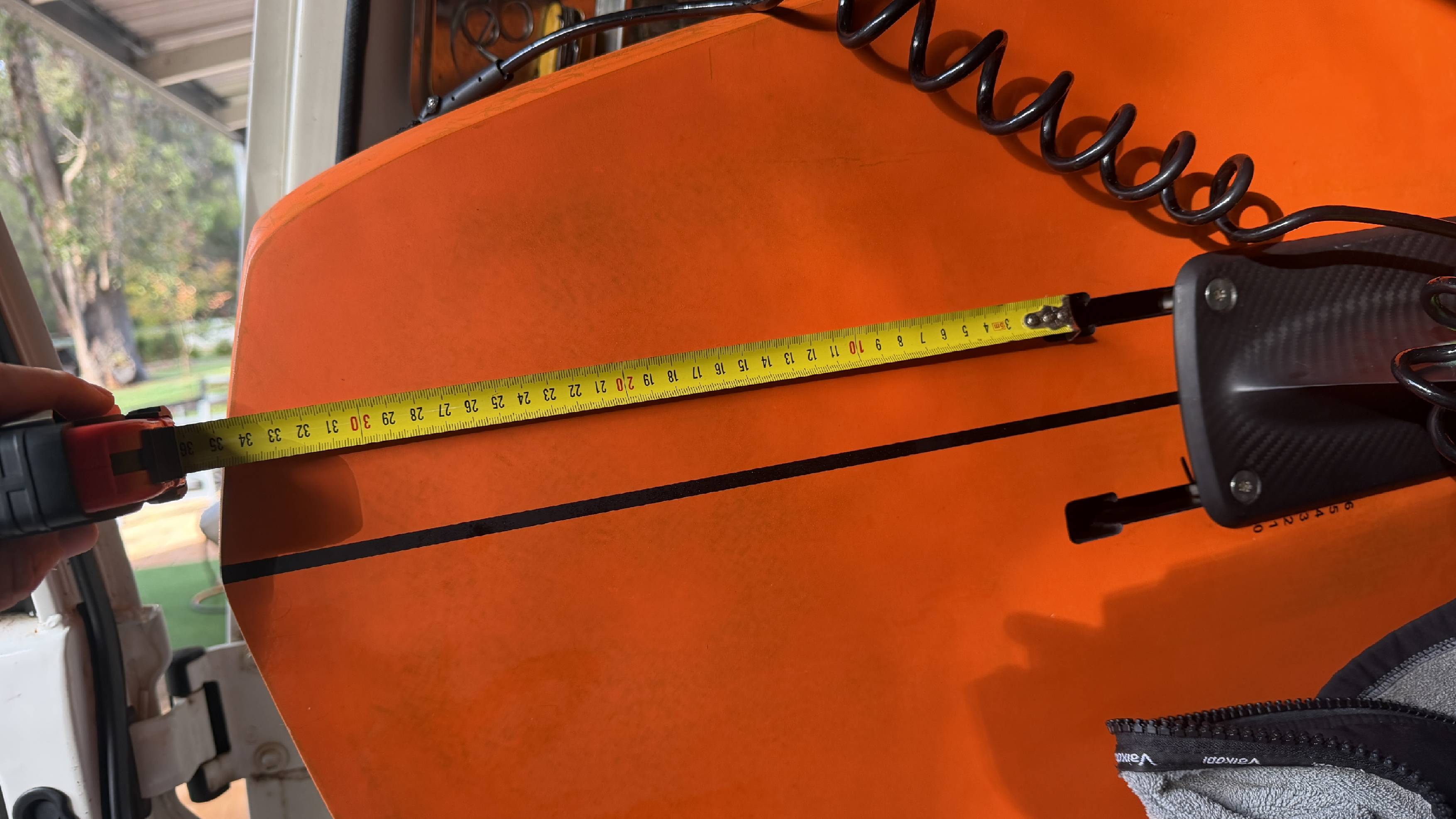
To finish the design, the hardware needs to be optimized for weight. Short, well-positioned foil tracks are far superior to heavy, long tracks for parawinging. You also want a Recessed Mast Track to bring your feet closer to the foil head for better leverage, and Progressive Rails that are rounded at the front but transition intorazor-sharp edges at the tail for clean water separation.
A Real-World Example IMO is my
Skywalker Vuelo 85L (6'0). It's a board that actually follows this entire design philosophy rather than just being a marketing rebrand. It implements the
semi-hollow Airex core(!) technology, the continuous V-flow with no flat spots around the tracks, and the specific forward volume that keeps the nose up during the pump.
If you are looking for a dedicated parawing board,
here is a checklist:* Forward Float: The volume must be biased toward the front to prevent the nose from diving during the start. This is the foundation of a good parawing board.
* Narrow Tail and Sharp V: You need a skinny tail for speed and a sharp V-exit to allow the board to "tilt" and release from the water.
* Total V-Shape: Look for a continuous V from nose to tail. If you see flat spots on the bottom, especially around the tracks, it will likely act like a suction cup.
* Weight and Safety: Look forsemi-hollow construction and short, well-positioned tracks. It's about the balance between lightness and the ability to stay afloat in an emergency.
* Stiffness: Full carbon[/b]is a must. Any flex in the board is lost energy during your pump.
I'm
curious to hear from others. Have you tried one of those renamed
mid-length boards?


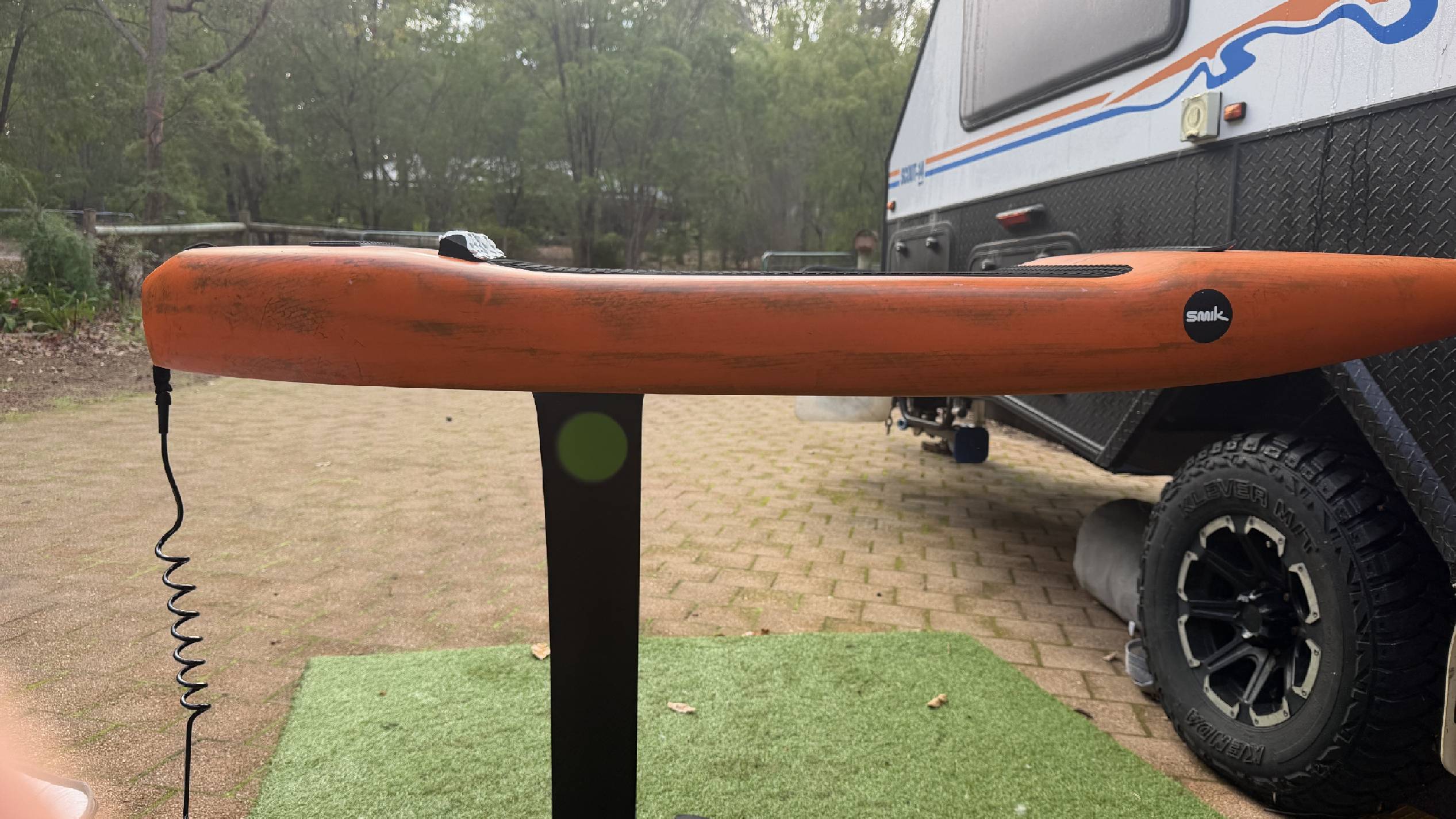
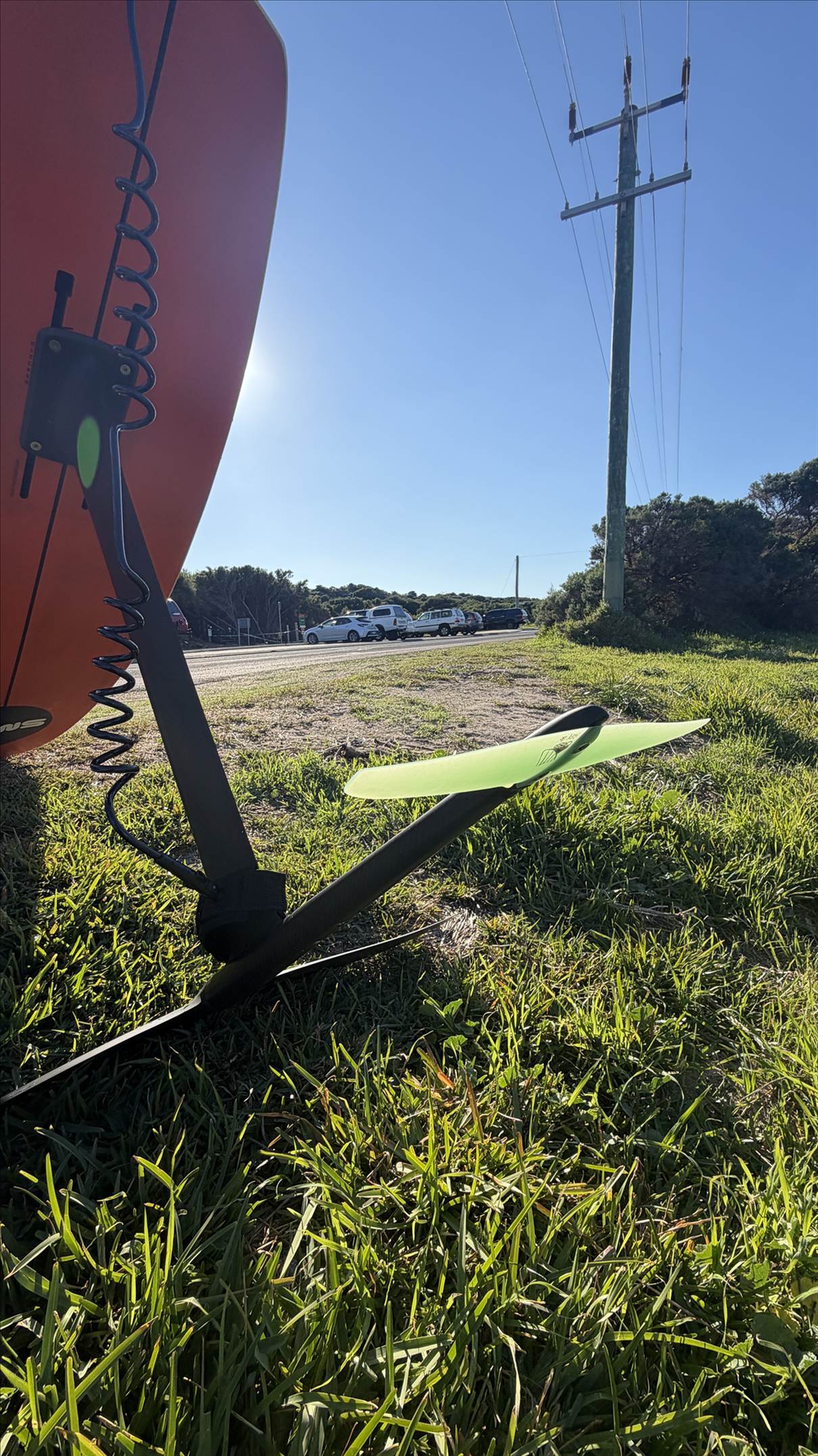
Way over complex. Ride what you have. Pretty sure mine goes against all the "must haves" above.