Select to expand quote
sailquik said..
Yep. But isn't the change in apparent wind as you go up the sail more to do with the surface induced boundary layer anyhow?
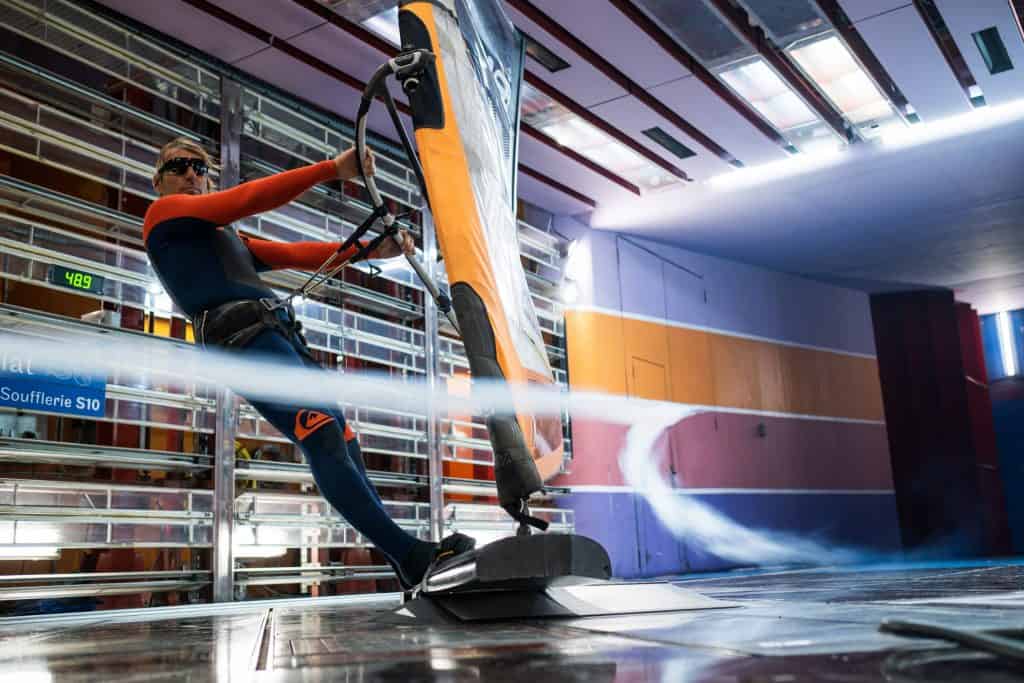
The changing apparent wind angle with height is the combination of board velocity and variation of true wind strength with height. Unless you build a very wide wind tunnel you can't have board velocity. Like flying the sail on the beach with the mast foot in the sand. ( though I had a go at the apparent wind geometry once, the variation in apparent wind with height is there but not enough to explain the amount of twist in sails. )
A wind tunnel would be good for looking at completely new formats, but in the long run you can't beat trial and error. The small soft sails used on wind surfers evolve pretty quickly, get the pro to try something, send it back to the loft, try again an hour later, don't even have to wait for the glue to dry.
The F1 guys don't spare the expense when building windtunnels, to get around the boundary layer build up that would play havoc with low down aerodynamics they put a conveyer belt on the floor!
Even so they only test 60% models to keep the size down. One technical hurdle to overcome was that the downforce's equal and opposite was pulling the conveyer belt up off the rollers. There's a big vacuum pump now holding them down.
www.auto123.com/en/news/f1-technique-explaining-the-formula-1-wind-tunnels/35966/