Quantifying the difference of drag between a 15.5mm and 19mm mast, here is how I did it, please let me know if you think the calculation is incorrect!
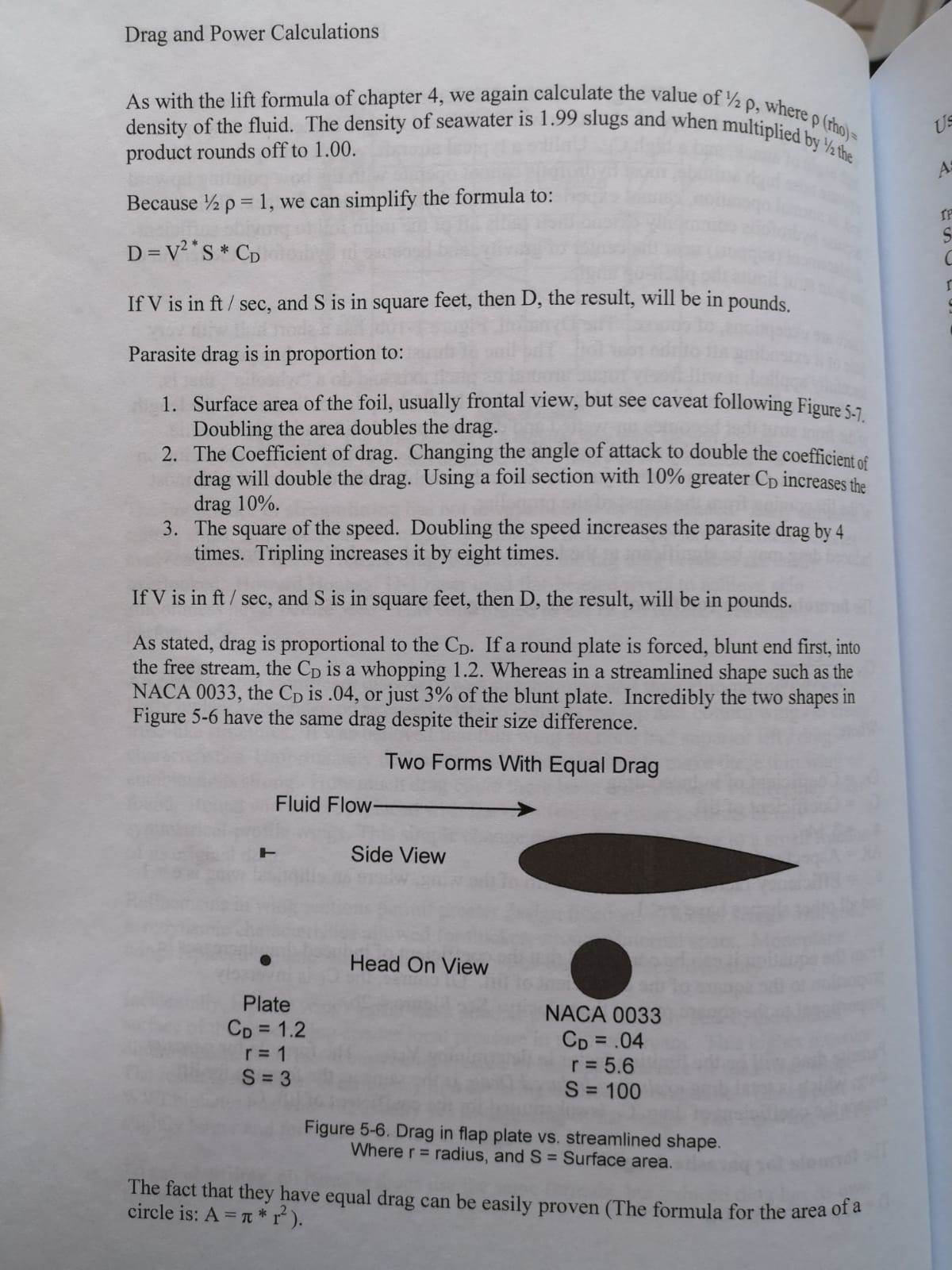
The drag of the whole setup is D = V^2 * S * Cd. Assuming we just swap masts with similar profiles, there is no change in lift, and we have the same speed V and coefficient of drag Cd, so the difference is the change of surface area, seen from the front of the foil.
Taking a photo from the front of the foil and measuring surfaces in cm^2 with sketchandcalc website (Takuma kujira 1210, aluminum mast 75, 178 tail), I get :
Half mast : 35 (5 if almost all out, to 60 if almost fully immersed)
Front wing : 144
Fuse and tail : 26
Total : 205 cm^2
If 15.5mm thickness gives 35 cm^2, 19mm gives 43 cm^2 (cross-multiplication). The total surface would then be 213 cm^2, meaning a 3.9% drag increase (0.6% if almost all out, to 6.1% if almost fully immersed).
What if the front wing gets smaller? With the 980, same process I get 4.1% drag increase (0.6% if almost all out, to 6.4% if almost fully immersed).
I hope the calculation is correct, and I hope it helps other people out there to have a proper framework on drag difference between 16 and 19mm masts!