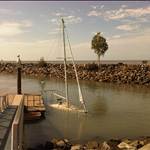
. 1770 was the first place cook landed on the Queensland coast, in the year 1770 hence the name. en.m.wikipedia.org/wiki/Seventeen_Seventy,_Queensland
. 1770 was the first place cook landed on the Queensland coast, in the year 1770 hence the name. en.m.wikipedia.org/wiki/Seventeen_Seventy,_Queensland
. 1770 was the first place cook landed on the Queensland coast, in the year 1770 hence the name. en.m.wikipedia.org/wiki/Seventeen_Seventy,_Queensland
Very sad. Im not going to say anything because at the time of the accident I don't know why it flipped, what the wind conditions were, what the sea state was, how much sail was up, what it's heading was or who was steering with what experience.
Select to expand quoteTrek said..
Very sad. Im not going to say anything because at the time of the accident I don't know why it flipped, what the wind conditions were, what the sea state was, how much sail was up, what it's heading was or who was steering with what experience.
That's what we have to remember. We don't know the facts so we can't make assumptions, thankfully no one has been disrespectful at all yet. I think anyway. Just asking questions that will soon hopefully be answered publicly with the survivors who know the facts.
Regards,
Mick
. 1770 was the first place cook landed on the Queensland coast, in the year 1770 hence the name. en.m.wikipedia.org/wiki/Seventeen_Seventy,_Queensland
Terrible news, We can all make judgements and views on what, why and how.
Wouldnt of been a nice ride down but not out of the league of that size cat.
Problem with cats is no feedback, reef by numbers only. Overpowering is very easy to do. Maybe too much sail, wind shift or gust as leeward hull drops off the back of swell... takes seconds to happen, tripping over the boards, burying a bow. Many things could of prevented it, but it happened.
Having shorthanded a 46 cat to NZ and got caught in a squeeze/depression 6 days out, 45-50kn and 12mtr seas... and getting through relatively undamaged... 3 days of my life I'll never forget. But cats can do it..
I feel for the poor families that now have had their lives changed forever.
We can blame the sailer, the weather, the boat.... but we all could end up in a situation similar, it's mother nature and we will never harness it. We can only do our best to handle the conditions, the boat, the crew when it happens.
Rest In Peace our fellow sailors, and wish the families all the best through this tragic event.
Select to expand quoteCabron said..
Terrible news, We can all make judgements and views on what, why and how.
Wouldnt of been a nice ride down but not out of the league of that size cat.
Problem with cats is no feedback, reef by numbers only. Overpowering is very easy to do. Maybe too much sail, wind shift or gust as leeward hull drops off the back of swell... takes seconds to happen, tripping over the boards, burying a bow. Many things could of prevented it, but it happened.
Having shorthanded a 46 cat to NZ and got caught in a squeeze/depression 6 days out, 45-50kn and 12mtr seas... and getting through relatively undamaged... 3 days of my life I'll never forget. But cats can do it..
I feel for the poor families that now have had their lives changed forever.
We can blame the sailer, the weather, the boat.... but we all could end up in a situation similar, it's mother nature and we will never harness it. We can only do our best to handle the conditions, the boat, the crew when it happens.
Rest In Peace our fellow sailors, and wish the families all the best through this tragic event.
Amen
Regards Don
Select to expand quoteCabron said..
Terrible news, We can all make judgements and views on what, why and how.
Wouldnt of been a nice ride down but not out of the league of that size cat.
Problem with cats is no feedback, reef by numbers only. Overpowering is very easy to do. Maybe too much sail, wind shift or gust as leeward hull drops off the back of swell... takes seconds to happen, tripping over the boards, burying a bow. Many things could of prevented it, but it happened.
Having shorthanded a 46 cat to NZ and got caught in a squeeze/depression 6 days out, 45-50kn and 12mtr seas... and getting through relatively undamaged... 3 days of my life I'll never forget. But cats can do it..
I feel for the poor families that now have had their lives changed forever.
We can blame the sailer, the weather, the boat.... but we all could end up in a situation similar, it's mother nature and we will never harness it. We can only do our best to handle the conditions, the boat, the crew when it happens.
Rest In Peace our fellow sailors, and wish the families all the best through this tragic event.
Nicely put Cabron.
I used to sail on a 80's era Crowther, which was around that time they were so concerned over cats pitchpoling the designs started to become more and more extreme, with fuller bow sections and mast's being moved further and further back. The mainsail on this thing was tiny, the spinnaker poles were twice as long as the boom (massive kites). The sheerline looked a bit odd with the pulpit 10' off the water, the pushpit about 6'. The whole boat looked like it was half sunk by the stern, but when fully powered up you could see how it all came together and worked.
Those lunatic solo French on their big circumnavigating tri's have 'dump' pull cords at each helm position and in the centre of the cockpit that instantly depower the sail plain, a brilliant and simple idea. Unfortunately these boats use hydraulic sheeting, and the pull cord is a hydraulic release, so not something you can simply retro-fit to your average cruising multihull.
I don't think it is right to show the name of the vessel in the news clip .
That poor young girl will be haunted by the sights of the deceased.
RIP .
Select to expand quoteCabron said..
Terrible news, We can all make judgements and views on what, why and how.
Wouldnt of been a nice ride down but not out of the league of that size cat.
Problem with cats is no feedback, reef by numbers only. Overpowering is very easy to do. Maybe too much sail, wind shift or gust as leeward hull drops off the back of swell... takes seconds to happen, tripping over the boards, burying a bow. Many things could of prevented it, but it happened.
Having shorthanded a 46 cat to NZ and got caught in a squeeze/depression 6 days out, 45-50kn and 12mtr seas... and getting through relatively undamaged... 3 days of my life I'll never forget. But cats can do it..
I feel for the poor families that now have had their lives changed forever.
We can blame the sailer, the weather, the boat.... but we all could end up in a situation similar, it's mother nature and we will never harness it. We can only do our best to handle the conditions, the boat, the crew when it happens.
Rest In Peace our fellow sailors, and wish the families all the best through this tragic event.
Well said.
Unfortunately we are all experts from the comfort of our keyboards. Only those on board know what happened and the facts will be known in due course.
Thoughts go out to the families, stay safe fellow seabreezers.
No one here knows what happened, could have been as easy as new helmsman bears away to dodge a whale and puts the boat at 90 apparent.
SurferShane, a detailed a very good analysis there of what the weather might have been like , you obviously know your weather and that location. A good reminder to check the synoptics!, something I have became lazy with, so thanks.
I sailed through that area last week going North, a nice NW'er turned into a solid and gusty NW'er in that very location, fortunately it only cost me a blown out clew on the first reef.
My condolences for the whole family and the survivors who I hope will be able to mentally heal, and to the rescuers who I understand a large part of were volunteers, best wishes to them.
How ridiculous is this after the deaths and pleas by emergency services? I just watched this cat try to sail from the protection of Pittwater into the Hawkesbury - Broken Bay wind tunnel with wind gusts similar yesterdays tragedy.
First attempt it got blown back down Pittwater. Went again without reducing mainsail only to return shortly later.
In comparison, the mono left behind them under fluro storm trisail.
I know I have learnt some hard lessons, but I do try to avoid acts of stupidly.


Select to expand quotesurfershaneA said..
How ridiculous is this after the deaths and pleas by emergency services. I just watched this cat try to sail from the protection of Pittwater into the Hawkesbury - Broken Bay wind tunnel with wind gusts similar yesterdays tragedy.
First attempt it got blown back down Pittwater. Went again without reducing mainsail only to return shortly later.
In comparison, the mono left behind them under fluro storm trisail.
I know I have learnt some hard lessons, but I do try to avoid acts of stupidly.
Too much money not enough sense.
It's gonna blow its tits off soon. You should have seen the boats going from Mooloolaba to the sandy straits yesterday. I was at Mooloolaba and there was I sh!t you not 30-40 boats coming out. It's just flat calm up here. Have heard the wide bay bar was a parking lot. Right know it's just flat calm, up here in Rodds Bay. Not a breath of wind.
Regards
Mick.
I was going across broken bay around the time they were supposed to arrive. There was no swell and the wind was only around 18kn. So it must have been very local.
However for sure they should have had only one board down and of course reefed early.
Select to expand quoteFelixdeCat said..
I was going across broken bay around the time they were supposed to arrive. There was no swell and the wind was only around 18kn. So it must have been very local.
However for sure they should have had only one board down and of course reefed early.
Hi Felix
I don't know much about cats but I assume you would only have the windward board down
Regards Don
Select to expand quoteDonk107 said..FelixdeCat said..
I was going across broken bay around the time they were supposed to arrive. There was no swell and the wind was only around 18kn. So it must have been very local.
However for sure they should have had only one board down and of course reefed early.
Hi Felix
I don't know much about cats but I assume you would only have the windward board down
Regards Don
Hi Don
Yes exactly. The idea being that if the windward hull should lift due to a gust, there will be zero foils in water, the boat will accordingly slide rather than flip, giving critical seconds to depower, adjust, continue.
new thread or not? Dons question was leading me towards depowering and how others do it.
After this sad event, I began thinking "about what if's"" with my own 30ft cat and looking at ways to understand different scenarios with my own sailing.
Can I ask your guys thoughts on how to depower quickly, particularly in relation to cats, as I think there's some experience amongst us from some of the above posts.
Shaggy you mentioned how your Pogo has a similar sail area, just without the matching lead, which is an interesting take on it.
Well my mast is also over 12m, on a 9.3m WL, 6m beam. It does provide for spritely sailing, and Im very aware of the rigs power, especially now having a fat head laminate main that has a higher degree of roach in the sail.
So given that the boat is very much 'mainsail driven', if I cant sail out of something and needed to dump quickly, it's been the traveller that is uncleated and dumped. I've found with the mainsheet needing 8:1 purchase, the blocks make it too slow to ease out, and the traveller is more effective. (Sorry for not having a photo, but the traveller has pulley on each side of the cockpit like most mono's, but has is a continuous line, meaning you can grab it anywhere in the cockpit which has been useful). 'There is definitely a challenge in learning when the boat is getting loaded up, it hunkers down, you have to watch the lee bow, and everything just gets quick. Its something im still learning and admit I haven't pushed it anywhere close getting the boat really roaring.
I think that although this arrangement works, it's probably just about at the working limit of this size boat for family sailing, in terms of the loads needed. For example, I don't know if my wife or kids could release it if need be when fully underload which could be an issue.
I have sailed on other cats where the traveller is on winches, and also where it gets cleated off on each side, both of which take some time to undo if you needed to.
A 38ft cat design in the news has the jib sheets coming through deck clutches, then to self tailing winches. We have them for halliards, but wouldn't consider running the sheets through clutches, possibly so the winches can then be freed up. When both used together, I'd expect it may take some time to release?
My cat has a conservative rig and is designed to surf sideways in a large enough sea, although John Passmore managed to flip one in a Force 12 gale off Scotland. https://htcca.co.uk/ht-experiences/#top
You need to scroll down the link to his description.
The rigger who replaced my standing rigging in Hastings (Vic) said that he's replaced masts and rigging on three cats. 'They sail down the protected side to the bottom of Wilson's Promontory then hit the big winds. Basically the rig accelerates faster than the boat can, and takes off'. Because a cat won't heel to lose power, you need to make the standing rigging and chainplates stronger - but the rigging has to have a lower breaking strain than the chainplates, 'because you're better replacing a shroud than repairing a chainplate that's been pulled out of the hull'. Another good reason to check the weather when planning your next passage...
Crusty, Cats have long (wide) travellers, so letting it go should help ease pressure on your main, but I think other issues also come into play (team please correct me if I'm wrong!).
I. Easing the traveller won't allow the boom to lift, so it won't release much air from that high roach main of yours.
ii. If you're got good speed up, the apparent wind will have moved forward. As you ease the traveller and slow down, the apparent wind will move aft- effectively reducing the benefit of easing the traveller, and keeping the sail powered.
If the above points are correct, i'd taking three actions at once when you want to de-power - release the traveller, turn into wind, and ease the main even if it's a slower process than you'd like. A bit of all three actions will likely have a more effective cumulative effect than any one response.
Good on you Crusty, I was wondering the same thing!
I have tendencies like a cat with the wide traveller and big fat headed roach, but I am no expert on helming cat rigs.
However what Bushdog said clicked with me, and that is using the mainsheet to twist off the main.
This is the key to control for us, if I'm short handed we will have the spinnaker sheets locked off (I know that sounds nuts) , the traveller fully down, and we just play the mainsheet in the big gusts. I can go from no steering at all (you can turn the helm to any position, you have zero effect on the boat heading) to go-kart style precision all being determined by the position of the mainsheet. As the mainsheet is a 3:1 purchase it is slow to respond as you are frantically easing, but it is still the only way to get the boat back under control, that big fat headed roach just loves catching the wind as the apparent moves forrard when the gust hits and when you slow down.
Easing the kite helps, but without mainsheet we're history So, its traveller down and mainsheet mainsheet mainsheet.
We also need the outhaul and cunningham hard on to get the main as flat as possible and to bring the draft as far forward as I can, that also makes a big difference to heel.
Interesting topic, and a good one! Love to hear from the other multi guys on their thoughts.
Cheers.
SB
Just out of interest, I often hear riggers talk about how the mainsheet is your coarse power control, and the traveller is your fine control.
That was the complete opposite of how I thought it worked.
But it makes sense. If it was a plane, the mainsheet is controlling the shape of your aerofoil, hence determing the amount of power available.
The traveller determines how much of that power you use. (Until you run out of traveller that is!)
You might use 10% or 100%, but the amount of power on hand is definitely determined by the mainsheet.
Hmmm...I know this sounds a bit nerdy and unscientific, but I like tech drawing, so I drew a little pogo in 3d and put a pivot point where my CB (centre of bouyancy) sits, and the centre and direction of force of the sails (90 deg to the camber chord).
By playing with wind strength and angles you can roughly understand the heel forces on the boat and see how the hull wants to pivot and heel around the CB.
If I think of a catamaran looking at fresh winds, it kinda looks like:
Reef early on the mainsail. With no backstay/runners to flatten the middle of the sail, too much potential power after full ease of main and traveller, reefing early is the only option left. Headsail, or kite, that's different. I would reef the main and carry a bigger headsail longer. You can always dump a headsail or kite by throwing off the sheet, and it will aboslutely depower instantly, so I'd be conservative on the main and reef it early and often, and carry the fordeck sails bigger and longer to offset the loss of power on the main.
Hi all
Something that is very basic but worth remembering is that when you are using a self tailing winch, when you have sheeted in to bring the end of the sheet back on itself (counter clockwise) so if you or someone else need to release it in a hurry (happens a fair bit down here) you can just pull it out of the self tailer instead of having to unwrap it
Regards Don
Shaggy on the wind rush forum the fast guys agree , the mainsheet provides shape the traveller sets power BUT only after using the downhaul. Slim belly for gusts and fat for lulls. If it's too much for the downhaul then ease the traveller.
sounds like I might have been doing a couple of things half right after all.?!
Sometimes its hard to say what you do on the boat, you just react and hope your instinct was right.
The different behaviours of sailing mostly monos, then the tri and now the cat make me question myself sometimes though.
Good point Bushdog about rigging being the weakest link, although as Im sure as with your cat, we are already running oversize cable, turnbuckles etc to the norm. My mast section is one size over, so I think any rig failure may actually end up being a chainplate letting go. Interesting thing to stew on....
Too early to think that hard Shaggy regarding centre of effort, and buoyancy, but that's dedication. On that though, a comment on one of the cat youtubes I saw 2 weeks ago highlighted something I thought interesting, that sails infront of the mast are lifting and pulling the boat up and forward/along , yet the main behind obviously tends to drive it down and forward.
That sounds a pretty simplistic way of thinking and we all get the concept of how a boat works, but getting back to strong wind and safety it shows that there's more 'value' in headsail area
Don that's a simple habit to get into, I cant promise though.
Probably should leave the winch handle out first.
Tragic. Wrong place wrong time dead center of the Hunter Valley's wind tunnel on what otherwise seemed like a fair day's sailing?
www.theaustralian.com.au/nocookies?a=A.flavipes
The inquest will be interesting as far as factors like the stability ratio of the particular design go? After being hit by these sorts of fronts myself, it is also a reinforcement to always check the barometric predictions and current maps?
(My sincere apologies if this is far too much information for the prolific posters who own this site from one who has not applied for initiation into the inner circle of brackish keyboard warriors!)


Yeah I have often wondered why cruising cats couldn't rely more on a masthead rig style with smaller main and bigger head sails. It would be less racy but surely easier to tack, point and handle in gusty conditions.