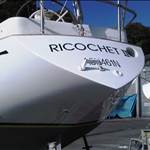
last I heard lady Jane was heading to NZ as its closer and climate at the moment better for C.F
repairs . Someone is going there to help with the repairs
In regards to MASTREP reporting, can someone tell me if I have to switch the AIS on when I enter the ASRR zone, MASTREP area or 3 miles of the first port of entry. Do I have to transmit SP,DR,FR in the PR?
Thank you.
Select to expand quoteLadyJane said..
In regards to MASTREP reporting, can someone tell me if I have to switch the AIS on when I enter the ASRR zone, MASTREP area or 3 miles of the first port of entry. Do I have to transmit SP,DR,FR in the PR?
Thank you.
www.amsa.gov.au/forms-and-publications/Publications/Mastrep.pdf
quick copy and paste below LJ
The Modernised Australian Ship Tracking and Reporting System (MASTREP) as described in Marine Order 63 Vessel Reporting Systems, effective 1 January 2016, is used to track the location of vessels. Under this system: • positional reporting for vessels is sourced from the vessel’s Automatic Identification System (AIS); • Sailing Plans, Deviation Reports and Final Reports are not required; • communications with vessels continue to be available through Inmarsat, HF, satellite telephony and other means; • Special Reports are required to support AMSA’s role in shipping oversight and incident reporting management. MASTREP is operated by the Australian Maritime Safety Authority (AMSA) as part of the services offered by the Joint Rescue Coordination Centre (JRCC Australia). JRCC Australia is staffed 24 hours per day. Benefits of MASTREP MASTREP is designed to minimise the reporting requirements on vessels using International Marine Organization (IMO) mandated AIS technology to provide positional advice to AMSA. It: • increases the timeliness and accuracy of data collected from a much larger number of vessels plying the waters within the Australian Search and Rescue Region (SRR); • provides AMSA with the capability to significantly improve its pollution, marine casualty and search and rescue (SAR) incident responses through faster and more effective management of incidents and resources; • ensures that only the closest vessels will be requested to assist in a SAR incident reducing the need for vessels to steam long distances from their intended voyage plan. MASTREP Coverage Area The area of coverage is identical for both MASTREP and the SRR. Coordinates of this area are: The coast of the Antarctic continent in longitude 75°E thence: 6°00’S 75°00’E 9°37’S 141°01’06”E 2°00’S 78°00’E 9°08’S 143°53’E 2°00’S 92°00’E 9°24’S 144°13’E 12°00’S 107°00’E 12°00’S 144°00’E 12°00’S 123°20’E 12°00’S 155°00’E 9°20’S 126°50’E 14°00’S 155°00’E 7°00’S 135°00’E 14°00’S 161°15’E 9°50’S 139°40’E 17°40’S 163°00’E 9°50’S 141°00’E thence to the coast of the Antarctic continent in longitude 163° 00’E Antarctica Indonesia Papua New Guinea New Zealand 100o 120o 140o 160o 80o 0o 20o 40o 60o Transmitting Position Reports MASTREP uses Position Reports, which must be transmitted by AIS in accordance with the International Convention for the Safety of Life at Sea (SOLAS), Chapter 5, Regulation 19.2.4. Position Reports must include the following information: i. identity; ii. type; iii. position; iv. course; v. speed; vi. navigational status; vii. safety related information. The Master of a vessel must report any malfunction of the vessel’s AIS equipment to JRCC Australia in accordance with Section 186 of the Navigation Act 2012. Australian Mandatory Reporting Requirements MASTREP Reporting Marine Order 63 makes the provision of Position Reports mandatory for: • foreign vessels from the arrival at its first port in Australia until its departure from its final port in Australia; and • all regulated Australian vessels whilst in the MASTREP area. Domestic commercial vessels fitted with Global Maritime Distress and Safety System (GMDSS) and AIS technology are also encouraged to participate in the system as MASTREP assists AMSA in carrying out SAR activities. REEFREP Reporting Marine Order 63 states the requirements to report to REEFVTS. Participation in MASTREP does not remove the continued obligation of mandatory reporting to REEFVTS. Further information on the system is published in the Great Barrier Reef & Torres Strait Vessel Traffic Service (REEFVTS) User Guide which can be obtained from AMSA’s website: www.amsa.gov.au. Marine Incident Reporting All Marine Incidents are to be reported to AMSA using form ‘AMSA 18’ and form ‘AMSA 19’. Copies of these forms can be obtained from the AMSA website www.amsa.gov.au. Examples of incidents include the loss, death or serious injury of a person, the loss of or damage to a vessel, equipment failure, a collision or a pollution event. Reports should be made in accordance to the requirements of the Navigation Act 2012, Marine Orders, and the Occupational Health and Safety (Maritime Industry) Act 1993, as applicable. Non-Mandatory Reporting Masters wishing to send information to JRCC Australia or the Maritime Assistance Service, other than that which is mandated to be reported under the relevant legislation identified in the Marine Incident Reporting section, should complete an Information Report using the standard international ship reporting format as set out IMO Resolution A.851 (20)*. Examples of non-mandatory reports include notification of navigational hazards, vessel defects or deficiencies, or other limitations which could adversely affect navigation. Special Report Types Special Report Types include those for Dangerous Goods (DG), Harmful Substances (HS), and Marine Pollutants (MP). Special Reports should follow the guidelines for reporting as set out in IMO Resolution A.851 (20), as amended by IMO Resolution MEPC.138 (53)* as amended from time to time. See Table 1 on page 4 for report format requirements. Further Information Further information or advice on MASTREP and Australian mandatory reporting procedures are available from: • Australian Maritime Safety Authority (JRCC Australia) Telephone: (02) 6230 6880 (International +61 2 6230 6880) Email: rccaus@amsa.gov.au Postal Address: GPO Box 2181 Canberra City ACT 2601 Australia • AMSA offices in major ports. See www.amsa.gov.au • AMSA website: www.amsa.gov.au *As amended from time to time 2 1 What constitutes a marine incident is prescribed in subsection 14(1) of the Navigation Act 2012 2 Additional Flag or Coastal State reporting requirements may apply Are you in the MASTREP Area? Are you an Australian flagged vessel? Are you required to submit Special Reports in accordance with IMO Resolution A.851 (20)*? Follow the guidelines for reporting incidents involving dangerous goods, harmful substances and/or marine pollutants as set out in IMO Resolution A.851 (20), as amended by IMO Resolution MEPC.138 (53)*. Visit: www.amsa.gov.au/vessels/ship-safety/incidentreporting/ Harmful Substances Dangerous Goods Marine Pollutants Refer to reporting requirements for an owner and master in Section 185 and 186 of the Navigation Act 2012 and Marine Order 31 (Vessel surveys and Certification) 2015. Visit: www.amsa.gov.au/vessels/ ship-safety/incident-reporting/ Fitting and Operation of AIS The master of the vessel must ensure the AIS is operated in accordance with Regulation 19.2.4 of Chapter V of SOLAS. For INMARSAT Communications Vessels participating in MASTREP may log in and use LES codes 312 for IOR and 212 for POR. Masters are requested to use SAC 1243 for messages. Reporting to AMSA is not required2 Australian Mandatory Reporting Requirements Yes No Do you need to report a marine incident?1 No further action is required Yes Yes No No Yes No Example of an Information Report4 ID System Identifier and Message Type MASTREP/IR// A Ship Name/Callsign/IMO Number A/HESPERUS/BDBD/8502458// B Date/Time of Event B/050200UTC// C Position – Lat/Long C/3900S/14500E// I Next Port of Destination and ETA (UTC) I/ADELAIDE/080200UTC// X Remarks X/SIGHTED SEMI-SUBMERGED CONTAINER// 3 Maritime Assistance Service 4 Complete the Information Report using the standard international ship reporting format as set out in IMO Resolution A.851 (20)* Non-Mandatory Reporting Do you have information you want to submit to JRCC Australia/ MAS3 ? Yes *As amended from time to time 3 4 Table 1 Message Format Fields DG Report HS Report MP Report A Ship Name/Callsign/IMO number B Date/time of position C Position E Course F Speed L Route M Coast Radio Stations monitored/Inmarsat numbers N Nominated daily reporting time P P2 UN number or numbers P4 Names of manufacturers of goods/substances, if appropriate, when known, or consignee or consignor P P1 Correct technical name or names of goods P3 IMO hazard class or classes P5 Types of packages including identification marks. Specify whether portable tank or tank vehicle, or whether vehicle or freight container or other cargo transport unit containing packages. Include official registration marks and numbers assigned to the unit. P6 An estimate of the quantity and likely condition of the goods P P1 Type of oil or the correct technical name of the noxious liquid substances on board P3 Pollution category (A, B, C or D), for noxious liquid substances P5 Quantity Q Q1 An assessment of the defects and damage Q2 The ability of the ship to transfer cargo and ballast or fuel R R2 UN number or numbers R4 Names of manufacturers of goods/substances, if appropriate, where they are known, or consignee or consignor R R1 Correct technical name or names of goods R3 IMO hazard class or classes R5 Types of packages including identification marks. Specify whether portable tank or tank vehicle, or whether vehicle or freight container or other cargo transport unit containing packages. Include official registration marks and numbers assigned to the unit. R6 An estimate of the quantity and likely condition of the goods R7 Whether lost goods floated or sank R8 Whether loss is continuing R9 Cause of loss R R1 Type of oil or the correct technical name of the noxious liquid discharged into the sea R3 Pollution category (A, B, C or D), for noxious liquid substances R5 An estimate of the quantity of the substances R6 Whether lost substances floated or sank R7 Whether loss is continuing R8 Cause of loss R9 Estimate of movement of the discharge or lost substances, giving current conditions if known R10 Estimate of the surface area of the spill if possible S Prevailing weather conditions T Name, address, telephone number and email address (if applicable) of the ship’s owner and representative (charterer, manager or operator of the ship or their agent) U Ship size and type. Details of length, breadth, tonnage etc. X X1 Action being taken with regard to the discharge and the movement of the ship X2 Assistance or salvage efforts which have been requested or which have been provided by others X3 The Master of an assisting or salvaging ship should report the particulars of the action undertaken or planned
Select to expand quote
<div class="maincontainer">
<div class="submenucontainer">
<div class="css-menu">SEARCH AND RESCUESearch and rescue in AustraliaAMSA Search and RescueDistress beaconsDistress and safety communicationsTraining and educationNational SAR CouncilIncident reportingForms, fact sheets and publications
<div class="contentcontainer">
<div class="breadcrumbs">Home Search and rescue Search and rescue in Australia Arrangements in AustraliaThe Modernised Australian Ship Tracking and Reporting System (MASTREP)
The Modernised Australian Ship Tracking and Reporting System (MASTREP)The Modernised Australian Ship Tracking and Reporting System (MASTREP) is a Ship Reporting System designed to contribute to safety of life at sea and is operated by the Australian Maritime Safety Authority (AMSA) through AMSA Search and Rescue in Canberra. Participation in MASTREP is mandatory for certain vessels but others are encouraged to participate.The International Convention on Maritime Search and Rescue (SAR) was opened for signature in 1979 and, by becoming a signatory to the SAR Convention, Australia has accepted SAR responsibility for the Australian Search and Rescue Region (SRR), shown below. The MASTREP system is used to track the location of vessels in the SRR and allows Australia to meet its obligations under Chapter 5 of the Annex to the SAR Convention as it relates to Ship Reporting Systems.MASTREP provides positional data on vessels transiting Australia’s region via AIS technology which ensures that only the closest vessels are requested to assist in a SAR incident, reducing the need for vessels to steam long distances from their intended voyage plan. The Search and Rescue Officers conducting such operations in the Australian region routinely use this facet of MASTREP. Given the expansiveness of Australia’s Search and Rescue Region, merchantmen are often the only resources available that can quickly respond to an incident.  Concept of OperationsMASTREP uses Position Reports, which must be transmitted by AIS in accordance with the International Convention for the Safety of Life at Sea (SOLAS), Chapter 5, Regulation 19.2.4.Position reporting is automated and the data is fed in to the system using AIS – either collected terrestrially or by satellite. Positional data is updated at time intervals between five minutes and five hours depending on the location and source. There is no requirement in MASTREP to transmit Sail Plans (SP), Deviation Reports (DR) or Final Reports (FR).No positive SAR watch is maintained in MASTREP. MASTREP is a passive ship reporting system and does not involve shore to vessel communications.ParticipationThe Commonwealth of Australia Navigation Act 2012 and Marine Orders Part 63 makes the provision of Position Reports mandatory for certain vessels. The following vessels must report to MASTREP: foreign vessels from the arrival at its first port in Australia until its departure from its final port in Australia; andall regulated Australian vessels whilst in the MASTREP area.Voluntary ParticipationVessels participating in MASTREP transmit positional data to AMSA Australia. This enables vessels in the vicinity of search and rescue incidents to be determined. To assist AMSA in achieving its purpose, Masters are strongly encouraged to report to MASTREP voluntarily even where it is not mandated. Such participation will enhance the safety of reporting vessels and that of others operating in the Australian SRR.Domestic commercial vessels fitted with Global Maritime Distress and Safety System (GMDSS) and AIS technology are also encouraged to participate in the system.
<div>back to top
<div class="footercontainer">
<div> 

 Copyright · Accessibility · Site Map · Privacy
Where are you know our little french frog 
Balancing on one hull

Fist page of PDF
MASTREP Ship Reporting for the Australian Area The Modernised Australian Ship Tracking and Reporting System (MASTREP) as described in Marine Order 63 Vessel Reporting Systems, effective 1 January 2016, is used to track the location of vessels. Under this system: • positional reporting for vessels is sourced from the vessel’s Automatic Identification System (AIS); • Sailing Plans, Deviation Reports and Final Reports are not required; • communications with vessels continue to be available through Inmarsat, HF, satellite telephony and other means; • Special Reports are required to support AMSA’s role in shipping oversight and incident reporting management. MASTREP is operated by the Australian Maritime Safety Authority (AMSA) as part of the services offered by the Joint Rescue Coordination Centre (JRCC Australia). JRCC Australia is staffed 24 hours per day. Benefits of MASTREP MASTREP is designed to minimise the reporting requirements on vessels using International Marine Organization (IMO) mandated AIS technology to provide positional advice to AMSA. It: • increases the timeliness and accuracy of data collected from a much larger number of vessels plying the waters within the Australian Search and Rescue Region (SRR); • provides AMSA with the capability to significantly improve its pollution, marine casualty and search and rescue (SAR) incident responses through faster and more effective management of incidents and resources; • ensures that only the closest vessels will be requested to assist in a SAR incident reducing the need for vessels to steam long distances from their intended voyage plan. MASTREP Coverage Area The area of coverage is identical for both MASTREP and the SRR. Coordinates of this area are: The coast of the Antarctic continent in longitude 75°E thence: 6°00’S 75°00’E 9°37’S 141°01’06”E 2°00’S 78°00’E 9°08’S 143°53’E 2°00’S 92°00’E 9°24’S 144°13’E 12°00’S 107°00’E 12°00’S 144°00’E 12°00’S 123°20’E 12°00’S 155°00’E 9°20’S 126°50’E 14°00’S 155°00’E 7°00’S 135°00’E 14°00’S 161°15’E 9°50’S 139°40’E 17°40’S 163°00’E 9°50’S 141°00’E thence to the coast of the
second page
Transmitting Position Reports MASTREP uses Position Reports, which must be transmitted by AIS in accordance with the International Convention for the Safety of Life at Sea (SOLAS), Chapter 5, Regulation 19.2.4. Position Reports must include the following information: i. identity; ii. type; iii. position; iv. course; v. speed; vi. navigational status; vii. safety related information. The Master of a vessel must report any malfunction of the vessel’s AIS equipment to JRCC Australia in accordance with Section 186 of the Navigation Act 2012. Australian Mandatory Reporting Requirements MASTREP Reporting Marine Order 63 makes the provision of Position Reports mandatory for: • foreign vessels from the arrival at its first port in Australia until its departure from its final port in Australia; and • all regulated Australian vessels whilst in the MASTREP area. Domestic commercial vessels fitted with Global Maritime Distress and Safety System (GMDSS) and AIS technology are also encouraged to participate in the system as MASTREP assists AMSA in carrying out SAR activities. REEFREP Reporting Marine Order 63 states the requirements to report to REEFVTS. Participation in MASTREP does not remove the continued obligation of mandatory reporting to REEFVTS. Further information on the system is published in the Great Barrier Reef & Torres Strait Vessel Traffic Service (REEFVTS) User Guide which can be obtained from AMSA’s website: www.amsa.gov.au. Marine Incident Reporting All Marine Incidents are to be reported to AMSA using form ‘AMSA 18’ and form ‘AMSA 19’. Copies of these forms can be obtained from the AMSA website www.amsa.gov.au. Examples of incidents include the loss, death or serious injury of a person, the loss of or damage to a vessel, equipment failure, a collision or a pollution event. Reports should be made in accordance to the requirements of the Navigation Act 2012, Marine Orders, and the Occupational Health and Safety (Maritime Industry) Act 1993, as applicable. Non-Mandatory Reporting Masters wishing to send information to JRCC Australia or the Maritime Assistance Service, other than that which is mandated to be reported under the relevant legislation identified in the Marine Incident Reporting section, should complete an Information Report using the standard international ship reporting format as set out IMO Resolution A.851 (20)*. Examples of non-mandatory reports include notification of navigational hazards, vessel defects or deficiencies, or other limitations which could adversely affect navigation. Special Report Types Special Report Types include those for Dangerous Goods (DG), Harmful Substances (HS), and Marine Pollutants (MP). Special Reports should follow the guidelines for reporting as set out in IMO Resolution A.851 (20), as amended by IMO Resolution MEPC.138 (53)* as amended from time to time. See Table 1 on page 4 for report format requirements. Further Information Further information or advice on MASTREP and Australian mandatory reporting procedures are available from: • Australian Maritime Safety Authority (JRCC Australia) Telephone: (02) 6230 6880 (International +61 2 6230 6880) Email: rccaus@amsa.gov.au Postal Address: GPO Box 2181 Canberra City ACT 2601 Australia • AMSA offices in major ports. See www.amsa.gov.au • AMSA website: www.amsa.gov.au *As amended from time to time
Third page
you in the MASTREP Area? Are you an Australian flagged vessel? Are you required to submit Special Reports in accordance with IMO Resolution A.851 (20)*? Follow the guidelines for reporting incidents involving dangerous goods, harmful substances and/or marine pollutants as set out in IMO Resolution A.851 (20), as amended by IMO Resolution MEPC.138 (53)*. Visit: www.amsa.gov.au/vessels/ship-safety/incidentreporting/ Harmful Substances Dangerous Goods Marine Pollutants Refer to reporting requirements for an owner and master in Section 185 and 186 of the Navigation Act 2012 and Marine Order 31 (Vessel surveys and Certification) 2015. Visit: www.amsa.gov.au/vessels/ ship-safety/incident-reporting/ Fitting and Operation of AIS The master of the vessel must ensure the AIS is operated in accordance with Regulation 19.2.4 of Chapter V of SOLAS. For INMARSAT Communications Vessels participating in MASTREP may log in and use LES codes 312 for IOR and 212 for POR. Masters are requested to use SAC 1243 for messages. Reporting to AMSA is not required2 Australian Mandatory Reporting Requirements Yes No Do you need to report a marine incident?1 No further action is required Yes Yes No No Yes No Example of an Information Report4 ID System Identifier and Message Type MASTREP/IR// A Ship Name/Callsign/IMO Number A/HESPERUS/BDBD/8502458// B Date/Time of Event B/050200UTC// C Position – Lat/Long C/3900S/14500E// I Next Port of Destination and ETA (UTC) I/ADELAIDE/080200UTC// X Remarks X/SIGHTED SEMI-SUBMERGED CONTAINER// 3 Maritime Assistance Service 4 Complete the Information Report using the standard international ship reporting format as set out in IMO Resolution A.851 (20)* Non-Mandatory Reporting Do you have information you want to submit to JRCC Australia/ MAS3 ? Yes *
Fourth page of PFD
Table 1 Message Format Fields DG Report HS Report MP Report A Ship Name/Callsign/IMO number B Date/time of position C Position E Course F Speed L Route M Coast Radio Stations monitored/Inmarsat numbers N Nominated daily reporting time P P2 UN number or numbers P4 Names of manufacturers of goods/substances, if appropriate, when known, or consignee or consignor P P1 Correct technical name or names of goods P3 IMO hazard class or classes P5 Types of packages including identification marks. Specify whether portable tank or tank vehicle, or whether vehicle or freight container or other cargo transport unit containing packages. Include official registration marks and numbers assigned to the unit. P6 An estimate of the quantity and likely condition of the goods P P1 Type of oil or the correct technical name of the noxious liquid substances on board P3 Pollution category (A, B, C or D), for noxious liquid substances P5 Quantity Q Q1 An assessment of the defects and damage Q2 The ability of the ship to transfer cargo and ballast or fuel R R2 UN number or numbers R4 Names of manufacturers of goods/substances, if appropriate, where they are known, or consignee or consignor R R1 Correct technical name or names of goods R3 IMO hazard class or classes R5 Types of packages including identification marks. Specify whether portable tank or tank vehicle, or whether vehicle or freight container or other cargo transport unit containing packages. Include official registration marks and numbers assigned to the unit. R6 An estimate of the quantity and likely condition of the goods R7 Whether lost goods floated or sank R8 Whether loss is continuing R9 Cause of loss R R1 Type of oil or the correct technical name of the noxious liquid discharged into the sea R3 Pollution category (A, B, C or D), for noxious liquid substances R5 An estimate of the quantity of the substances R6 Whether lost substances floated or sank R7 Whether loss is continuing R8 Cause of loss R9 Estimate of movement of the discharge or lost substances, giving current conditions if known R10 Estimate of the surface area of the spill if possible S Prevailing weather conditions T Name, address, telephone number and email address (if applicable) of the ship’s owner and representative (charterer, manager or operator of the ship or their agent) U Ship size and type. Details of length, breadth, tonnage etc. X X1 Action being taken with regard to the discharge and the movement of the ship X2 Assistance or salvage efforts which have been requested or which have been provided by others X3 The Master of an assisting or salvaging ship should report the particulars of the action undertaken or planned
Short answer LJ. Under SOLAS reg 19.2.4, you are not required to have AIS, thus you are not required to participate in MASTREP.
Thats my understanding, though I could be wrong?
Heres an arrival guide for yachts into Australia
www.border.gov.au/Trav/Ente/Avia/Maritime/Requirements-for-yachts-and-pleasure-craft/Information-for-yachts-travelling-to-Australia-arrival-(arrival)
If if you can't download it, it just says First Port of Arrival must have Boder Protection/Immigration/Agriculture processing facilities. Fly the yellow flag, and don't go ashore until cleared.
Most importantly though, send details prior to arrival
Give 96 hours notice by either:
Sending an email to yachtreport@border.gov.au
Sending a fax to +61 2 6275 5078
Phone us on +61 2 6246 1325
You need to provide:
the name of your craft
the craft's country and port of registration
your intended first port of arrival
your estimated arrival time
the last four ports you visited
the details of people on board including name, date of birth, nationality and passport number
details of any illness or disease recently encountered
If you have any animals on board
if you have any firearms on board
To be sure I wasn't giving you a bum steer (Australian for incorrect information), I double checked and phoned AMSA.
No requirement AIS or MASTREP.
You could if you like provide a passage plan to Marine Rescue.
Make sure you send prior arrival details to Border Force (above post).
On top of the info FreeRad just gave, the requirement to notify your arrival is at least 96 hours, but notification can be given up to 3 months out. So do it before you leave NZ (or Fiji), then you can radio your actual arrival approaching an inbound port (if entering QLD they are Cairns, Bundaberg and Brisbane. I don't think Gladstone can be used for rec boats).
Someone else may be able to give you the ports for NSW.
Thank you all for the infos, good effort HGO2 but I fell asleep half way through. TKX FR, customs was my next question.
Log 2 hours ago. Pos:S25* 2' 16 1861". E172* 52' 51 0938".
SOG 15.5kts. SOW 14kts.
Set: N 1.5kts. Sea state: moderate. Wind: W19kts. Waves: NNW. Clouds: 5 oct hight. Temp: 16 C. Weather Radar: something is brewing to the SW.
BS: good. Fuel: 3/4. Water: 870L. Wine: 8btls out of 12. Running out of sugar, plenty of honey.
Sails: asymmetric on the pole to port and small sollent sail . main 2 reefs.
Hoping to pass Burnt Pine before Saturday morning as the winds will come from W/SW, exactly what I did not want.
Still happy as pig in ****.
TKX for keeping in touch, Cheers
LJ
You mean to say you even started to read all that.. Bigger effort then I was going to do
Lady Jane, Whatever the entry requirements are (see above), make sure you get it right. If you do not get it right, Australian Customs and Quarantine can and usually will fine you big time.
They seem to be particularly fussy about coming in at your declared time of arrival. Further, if you arrive late in the week (Thursday or Friday) they have a nasty habit of putting your clearance off until Saturday or Sunday so they can charge you the weekend overtime double hourly rate.
Australia has fallen out of favour as a destination for international yachts because of the rapacious practices of Aus customs and quarantine.
Take note and be warned.
LJ, Coffs Harbour is a port of entry. My friends who arrived from the USA were happy with the way they were treated there by customs staff. Coffs Harbour also has no river mouth bar to cross which is a bonus. The marina was recently badly damaged by an East Coast Low, but you can anchor in the harbour.
I'm not too far away from there, and have friends who will make you welcome too.
Select to expand quoteMcNaughtical said..
LJ, Coffs Harbour is a port of entry. My friends who arrived from the USA were happy with the way they were treated there by customs staff. Coffs Harbour also has no river mouth bar to cross which is a bonus. The marina was recently badly damaged by an East Coast Low, but you can anchor in the harbour.
I'm not too far away from there, and have friends who will make you welcome too.
Coffs Harbour was already on my mind and now definitely first port of entry. Can't wait to meet you and your friends from USA, also boofheads HGO2 and FR and the others if I can. I have been doing good speed all night and should be able to clear Norfolk in time if this goes on. Changed the sails to storm, due for some food and a nap before the NW 25kts arrives.
Love you
LJ
There is a problem with Coffs Harbour!!!
The Marina is closed due to storm damage.
Maybe someone in Coffs Harbour can state what the situation is.
Select to expand quoteLooseChange said..HG02 said..
wood winds LJ
A clarinet perhaps? Or an Oboe?

Select to expand quotenswsailor said..
There is a problem with Coffs Harbour!!!
The Marina is closed due to storm damage.
Maybe someone in Coffs Harbour can state what the situation is.
There is a brief description of the situation in Coffs in this eBay ad.
www.ebay.com.au/itm/391496360875?_trksid=p2060353.m1438.l2649&ssPageName=STRK%3AMEBIDX%3AIT
Select to expand quoteRamona said..nswsailor said..
There is a problem with Coffs Harbour!!!
The Marina is closed due to storm damage.
Maybe someone in Coffs Harbour can state what the situation is.
There is a brief description of the situation in Coffs in this eBay ad.
www.ebay.com.au/itm/391496360875?_trksid=p2060353.m1438.l2649&ssPageName=STRK%3AMEBIDX%3AIT
aquis does not operate out of Coffs Marina,this is where you need to moor your yacht for clearance in Coffs Harbour. www.border.gov.au/Trav/Ente/Avia/Maritime/Ports-of-entry/Ports-of-entry-new-south-wales
I meant you don't clear in at the marina, just to clarify that, not that the aquis offices wasn't at the marina, sorry for any confusion that may have been caused by my previous post
Lady Jane, where are you? Strong headwinds North of NZ. Hope you are in port and not getting blown back to Fiji.
I heard from her a couple of days ago. She has plans now to fly home with her dad from NZ. She said to say thank you to everyone on here who has been so friendly and helpful.
Select to expand quoteMcNaughtical said..
I heard from her a couple of days ago. She has plans now to fly home with her dad from NZ. She said to say thank you to everyone on here who has been so friendly and helpful.
McNaught- Does that mean she is safe in NZ?