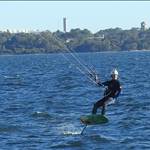
My Garmin watch rates the exercise intensity for kite foiling sessions between 1.8 and 2.8 Maintaining. Jumps, lots of tacks and big waves pushes it to the higher end.
Wing foiling ranks 3.0 Impacting to 5.0 Overreaching. Light wind pushes it up to 5.0, which is the maximum, as does waves and tack attempts. Riding the wing in steady winds feels effortless but the Garmin tells me it's around 3.0
My average kite foiling session is 1-1.5 hours and the average wing session is 2-2.5 hours.
The kite sessions are generally shorter because I'm better at it and the speeds are higher. I can do a bit of a coast run and a heap of stuff in an hour. It might take me an hour on the wing to do half the upwind distance I do with a kite.
I do longer sessions on the wing, because it's relatively new, and there's a heap of micro-things to learn. Riding and gybing and stuff is easy. Getting the right combination of speed and trim to get an extended wave glide is quite complicated. Crashing on a wing takes a lot longer to reset and get going than riding a strapped kite foil board.
64 years, 1200 kitefoil hours, 160 wingfoil hours.
I do some dumbbell weight training most mornings, mostly to counter the muscle loss that comes with aging. I kite or wing foil almost every day, or go for a walk with the missus. I am an "exercise" sceptic. I think consistent pleasant activity that is fun is more than good enough to maintain health. I have a low opinion of the claims of the commercial exercise industry. All that go hard/push your limits thing just sets you up to fail.
I wore Apple watches for a while. I gave up after the third one died. It wasn't water problems, they just died. Battery life on an Apple watch is poor, and the touch screen is useless with wet fingers. My Garmin has long battery life and I have been using the same watch constantly since May 2016. That's about 1600 on/in water hours and about 500 paragliding hours.
I don't use any apps as such. I just record the session on the Garmin and download it each night or so. I can view the sessions on the web site and see all the speed and distance figures and stuff. I have it configured to show time and speed and duration on the water.
Most of the numbers displayed in apps are just wrong. You get lots of speed transients and errors and variations, especially with a watch strapped to your wrist under a wettie. It's far better to view the speed graph and eyeball the speed ranges and ignore the stray peaks. You can count the gybes and crashes.

PS If you decide you need more gear get a big foil. It will make it less likely you'll get stuck on the surface when the wind drops a little bit, which it will. There's almost no downside to a big foil except for dropping in to bigger faster waves.