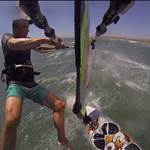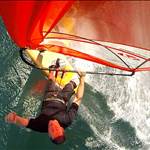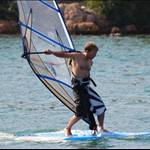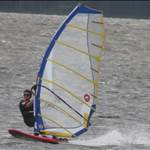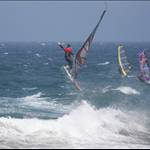
Funny, only this morning I was thinking about my first foray in the waves.
a few things I learned:
1> get an
instructional dvd . I recommend Serious About Waves 2 and Pro Secrets - Real World Waves.
2> build up gradually. Find a spot that has
small waves so you get the feel for sailing in 3D

. Aim for a sandy spot with plenty of beach downwind (you don't want to wash up on the rocks when you inevitably get munched). If you've never sailed in swell, hold off on the waves and try this first. Try to choose a spot with
side/side-on winds. Onshore winds make it very difficult to get through the break!
3> buy a
cheap wavesail and a
strong board. When you're learning the ropes gear damage is inevitable so don't go straight out and buy the latest or greatest unless you've got a money tree in the backyard. I ripped my sail in the shorebreak the first time I hit real waves and was super glad i'd only paid $60 for it!
4>
talk to locals when you arrive at a new spot. Find out where to launch, if there are rips or any other features to be aware of.
5>
know the rules. Right of way is critical at popular wave spots. Give way to upwind sailors or the sailor who is already on the wave. Wave riding has right of way over jumping. But if you're riding, try to give room to outgoing sailors if they're about to get munched.
6> use a
waist harness. Seat harnesses are fine for blasting back and forth but you need the maneuverability of a waist harness for wave sailing.
7>
hit oncoming whitewater straight on. It's amazing how much whitewater you can clear if you hit them perpendicular. Pre-jump white water (at least kick the back of the board down to lift the nose above the white wall) and try to be in the straps but not in the harness.
8>
pre-empt the wave's effect on the wind. While sailing out in side-on conditions you tend to be in a wind shadow as you approach the wave face. As soon as you sail over the back of the wave you're back in the wind and combined with the effective forward angle of your rig (cos you're sailing "down") you will get powered up. In cross-off the opposite is true and you will find yourself pumping the sail to maintain speed over the back of the wave (in the wind shadow).
9>
loosen footstraps. You don't want to get your feet stuck in the straps while you're getting rag dolled so make sure they're not too tight! Looser straps also help you to jam your feet in further to get your foot across the board for more effective turning.
10>
raise your boom. A higher boom gives you a more upright stance that is conducive to the quick changes in body position required for wave sailing. It also helps you to use your weight to apply the necessary down-force to engage the front of the rail for your bottom turns.
Lengthen your harness lines at the same time
11> while
swimming in the break, always keep your
mast pointing out to sea. Make it the first thing you do when you fall in (if you can't waterstart before the next wave). It will save you a lot of $ on broken masts.
12>
don't go out in conditions you wouldn't swim in. Cos there's a good chace you will have to at some point.