Select to expand quote
ginger pom said..
I'll have a bit of a play.. I do drop it if it's rough.
It was cribby who originally made me change.
I'll measure where I have it and come back
Cribby is correct Ginger pom
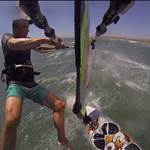
There is nothing wrong with setting your boom slightly higher or lower around the average chest to chin region. It's knowing when to move it up or down to get the desired result, unless you want it specifically low for example for advanced wave riding and tricks like a pro as Joel mentioned about Ricardo.
In general higher for light wind where more mast foot pressure and slightly more upright stance is used. This also results in less leeward mast bend being produced as the boom is gripping it higher up and hence a slightly tighter leech for better light wind power.
Set lower for rougher overpowered conditions where your stance is less upright and further out from the rig. Thus you get maximum leverage over it and the mast bends to leeward more, the leech is more active and opens up spilling excess power. Moving boom down to the lower clew eyelet also helps open up the leech in heavy conditions to help make the sail more manageble.
Either way you may need to adjust harness line length slightly and or mast foot position, adjustable lines are good for experimenting and using between differant sized sails. Sails these day have a much wider wind range of use if you take the time to play around with your boom height, harness line length, downhaul, outhaul. The trick is learning the effect all these variables have and how and when to adjust them to get the desired effect or change the feel of the rig.
Re going upwind you want to be leaning forward applying lots of mast foot pressure, hence the higher boom, back leg straight, front bent, more leeward rail engaged for extra bight and tracking. As some would say "Truckin upwind".