N1GEL
> 9 months ago, 30 Nov 2014
N1GEL
> 9 months ago, 30 Nov 2014
NSW
861 posts


SA
4177 posts

WA
12802 posts

NSW
1844 posts

VIC
6166 posts


WA
1045 posts

WA
4017 posts

NSW
8292 posts
NSW
8292 posts

 ) but feel I need that much just to try and get powered up and over 25kts.. Could that just be the bigger drag because I'm on a slower freemove 75cms wide board and they are on slaloms? Yesterday I was fighting the rig to get upwind and yet only got c < 28kts off the breeze.. ( board PB is 29.05 with me)
VIC
6166 posts
The speed readout at the end of the run is nice too, but I still have a strong urge to look at the display the moment I pull up for some reason! . If you are doing gybes and sailing straight back, depending on the threshold Genie setting, you can hear you top speed after every run before you accelerate through the Genie threshold again. I am pretty sure you would hear the genie pretty clearly with external helmet mounting as well.
VIC
6166 posts
) but feel I need that much just to try and get powered up and over 25kts.. Could that just be the bigger drag because I'm on a slower freemove 75cms wide board and they are on slaloms? Yesterday I was fighting the rig to get upwind and yet only got c < 28kts off the breeze.. ( board PB is 29.05 with me) Then take a smaller sail and go faster!
NSW
861 posts
NSW
8292 posts
) but feel I need that much just to try and get powered up and over 25kts.. Could that just be the bigger drag because I'm on a slower freemove 75cms wide board and they are on slaloms? Yesterday I was fighting the rig to get upwind and yet only got c < 28kts off the breeze.. ( board PB is 29.05 with me) Then take a smaller sail and go faster! Planning too ( although I'll keep it for Coal Pt chop)... meantime I've told Milsy he can use the freemove for a session to show me it's top possible speed while I use his Falcon .. I haven't seen his answer yet but I think I know what it will be  as he tried it one day and wasn't impressed..
WA
4017 posts
Planning to ( although I'll keep it for Coal Pt chop)... meantime I've told Milsy he can use the freemove for a session to show me it's top possible speed while I use his Falcon .. I haven't seen his answer yet but I think I know what it will be as he tried it one day and wasn't impressed..
WA
4017 posts
The speed readout at the end of the run is nice too, but I still have a strong urge to look at the display the moment I pull up for some reason! . If you are doing gybes and sailing straight back, depending on the threshold Genie setting, you can hear you top speed after every run before you accelerate through the Genie threshold again. I am pretty sure you would hear the genie pretty clearly with external helmet mounting as well.
VIC
6166 posts
Planning to ( although I'll keep it for Coal Pt chop)... meantime I've told Milsy he can use the freemove for a session to show me it's top possible speed while I use his Falcon .. I haven't seen his answer yet but I think I know what it will be as he tried it one day and wasn't impressed... I am sure some of the local girls would have been using normal production boards. (All boards used must be registered production boards, but what I am saying is that some designers may bias their smaller boards more towards their smaller female sailors).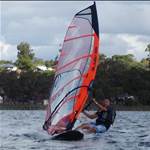
WA
230 posts
WA
4017 posts
NSW
861 posts
WA
12802 posts
WA
230 posts
WA
4017 posts
NSW
8292 posts
..Only problem with following a faster sailor is your sailing in their bumpy wake..

9.3k