Select to expand quote
K888 said..
So let's quantify using a Luderitz-esque 500m (roughly 50 knots) over 20 seconds with a 1 cm error at the start and a 1 cm error at the end, totalling 2 cm of error (using the concept of start + finish lines). That 2 cm error is essentially spread over the whole 20 seconds, thus equating to 1 mm/s which is roughly 0.002 knots for a 500m at 50 knots. You can use the same back-of-an-envelope calculation for everyday 10 second runs which would be 2 mm/s (around 0.004 knots) of error, regardless of the sailor's speed.
For your Luderitz example, the numbers you give are correct. That's because the official records use end points (gates).
For just about everything else in speedsurfing, speeds are calculated differently, by summing up the speeds over all the data points. If you look at alphas as an example, the end points have to be within 50 meters for a 500 meter run. So the end point speed is generally less than one tenth of the summed-up point-to-point speed. Even a 10-second speed run often contains some curvature, so end point speed is lower.
When using summed up point data, the likely error for RTK data goes up. For example, a 20 second run at 10 Hz has 200 points, each with an average 1 cm error. The total error would be 200 cm, but some of that will cancel out. Simplistic Gaussian error propagation would estimate the error to be 14 cm (square root of 200), but that's also wrong, since we are dealing with directional data (the errors in the direction of travel can cancel out, but position errors perpendicular to the direction of travel do not).
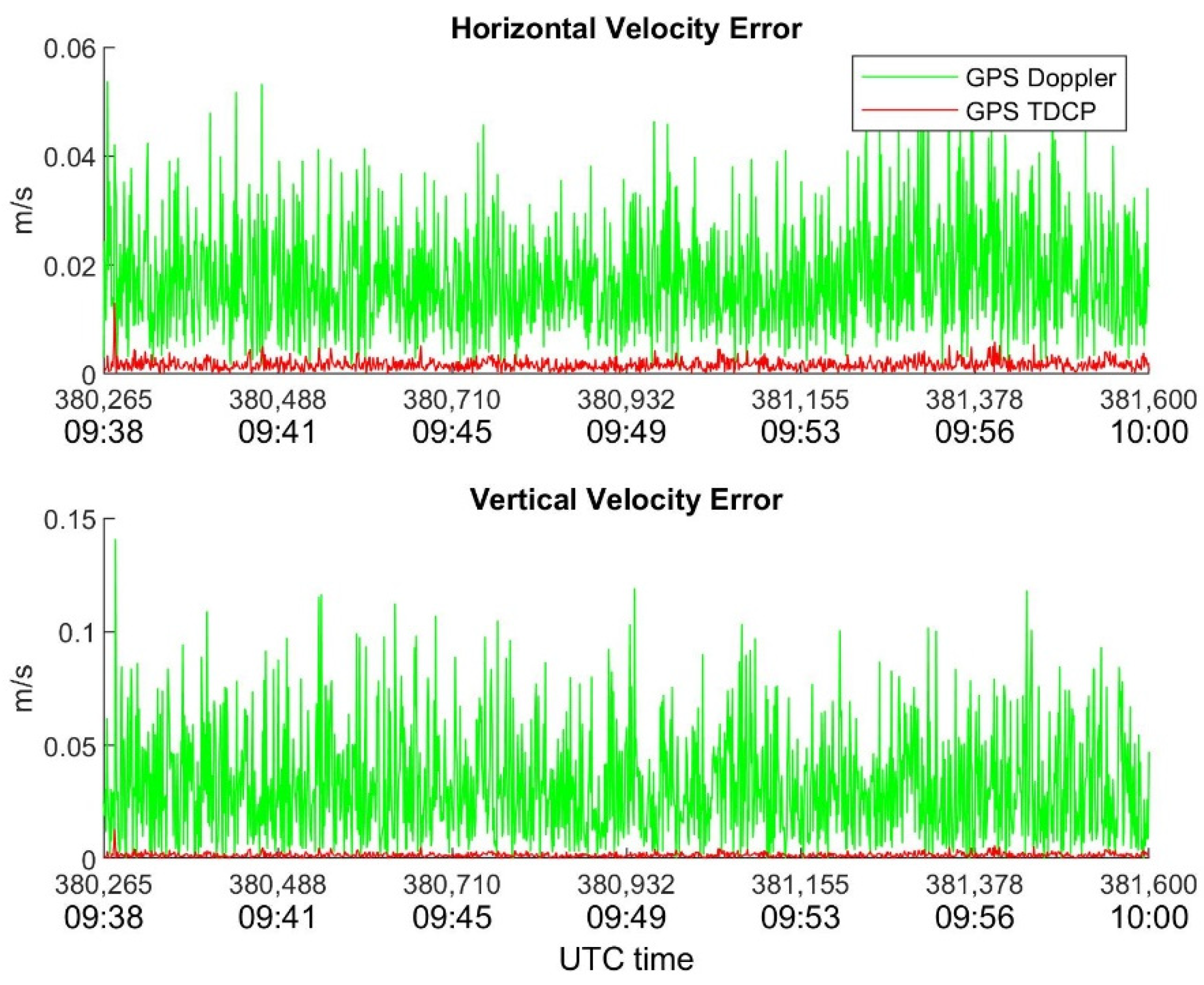
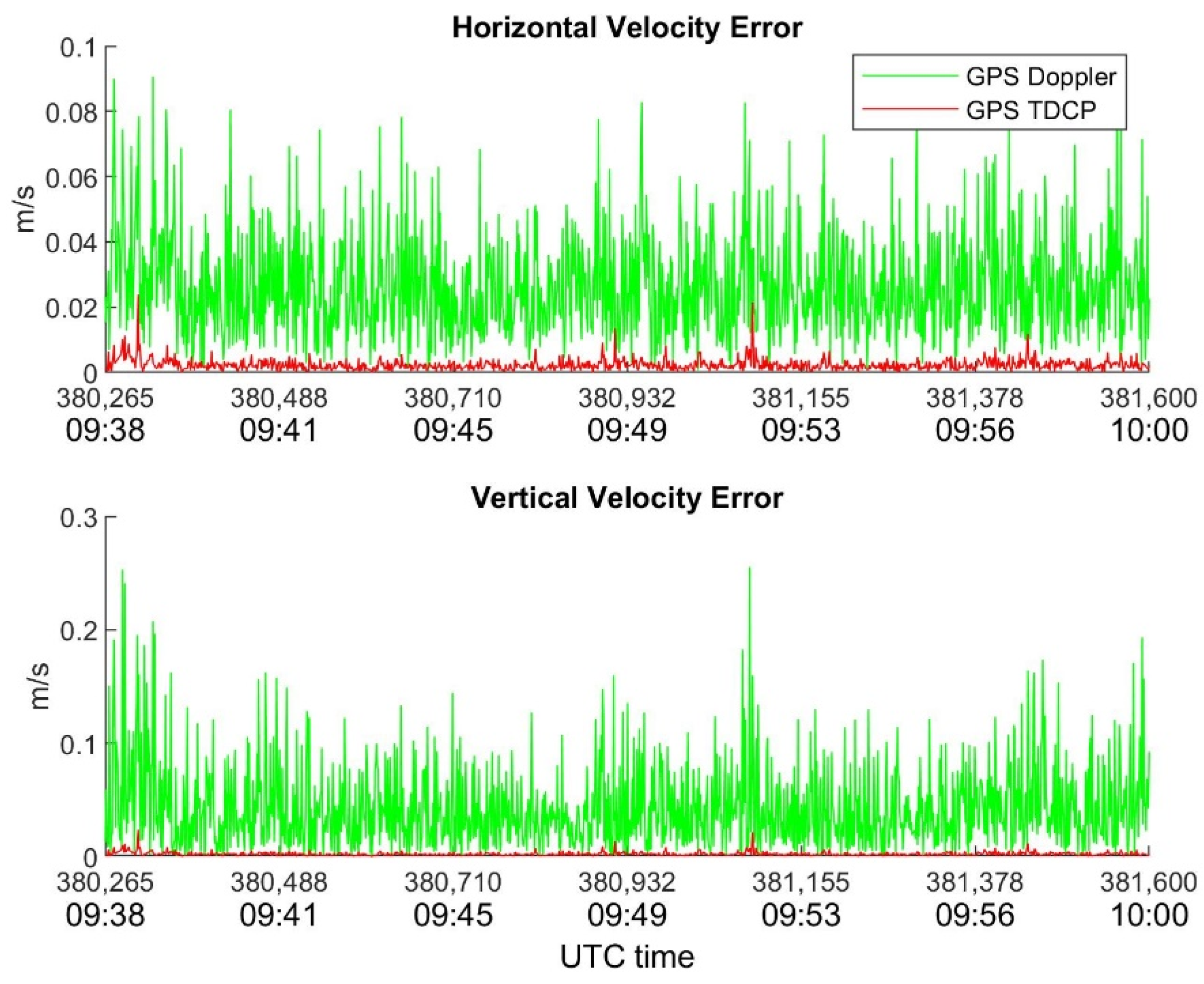
We can use both numbers as error bounds - the actual error would be expected to be more than 14 cm, but less than 200 cm. We can also just look at single point errors: 40 knots are about 20 m/s, or 2 meters per data point at 10 Hz, so a position error of 2 cm is 1 percent. For doppler speeds, we typically get error estimates of about 0.2 knots for single points, which is a 0.5% error at 40 knots.
So RTK could possibly improve accuracy for straight-line, "gated" type of speed contests, like official records - but
not for single-point "max speed" than many love to use, and also
not for categories like nautical miles, hour, or alpha, which are not done in straight lines. Nor would RTK data be more accurate when speeds are calculated with current programs that sum up speeds from point data (which is what all commonly used programs currently do, AFAIK).