Select to expand quote
nebbian said...
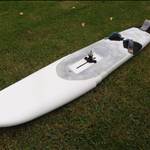
How can a cutout reduce wetted surface area? What a load of bollocks.
I suppose the reasoning goes like this:
"If I cut some bits out of the tail then those bits won't be wetted anymore so I'll have reduced wetted surface area". OK then let's carry this on further, and skim 2mm off the entire bottom of the board. Wow we'll have no wetted surface area so will have unlimited top speed!
What rubbish.
If you stop a certain portion of your board from touching the water and therefore giving you dynamic lift then the board will sit lower. This will mean another part of the board that wasn't touching before is now touching. So your wetted surface area will be the same (if the angle of attack of your board is the same and the bottom is flat).
I think the cutouts make the board less 'bouncy' in chop by allowing you to have effectively a narrower tail but with more leverage 'cos your foot is further outboard. Personally I prefer not to have them but each to their own.
But...but...but...not wanting to make the foolish mistake of contradicting Nebbian in a scientific argument, buuuuuuut...
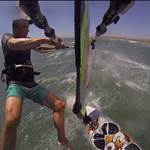
Once a board is planing, it's not "sitting in" the water any more, is it? It's skimming the surface, and the tail cutouts should reduce the amount of board surface which comes into contact with the water, shouldn't they? Reducing the wetted area and thus lowering drag?
How about asking someone whose board has cutouts to actually look down behind them as they are planing? What do they see? Does the tail "sit lower in the water" while planing, or are there visible gaps between board and water surface at the back of the board, where the cutouts are? Maybe there's a bit of spray coming out the gaps, but the board couldn't be said to be in contact with the surface at that point?
You will notice I'm not venturing any strong opinions here; I'm just posing questions. That way, I can't be proven wrong, 'cos I'm not saying anything!!
Shouldn't I be working now?