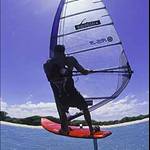
shortboard non-planing upwind steering

> 10 years ago
Reply
Register to post, see what you've read, and subscribe to topics.
franchetto
franchetto
WA
306 posts
WA, 306 posts
25 Jun 2010 1:35am
Hello anybody !

Whilst I am trying to perfect my planing ability, I'd like to know the best way to head upwind in light winds , in sub-planing conditions, from a broad reach course, without engaging as yet in a full reversal with a gybe.
In other words how to steer from broad reach towards beam reach and then into the upwind zone. In either cases, it involves upwind steering. It is not easy with a short-board, even if the upwind steering is done, as it should, in small angle increments.

I have just purchased a 145 lt Tabou Rocket, which comes with a longish 46 cm fin.
My quiver of sails is a 7.5 Freeride Ezzy sail and a 6.5 Gaastra Pilot.

I was coming around pretty well towards planing with the beginner Starboard Rio , even with the daggerboard fully retracted, but with the new Tabou Rocket it seems I have to re-learn the trade. I find it very nimble, responsive and " rearing to go", allright, but a bit wobbly.Perhaps I was spoiled with the Rio, but I am not worried. I'll get adjusted quickly. What concerns me is the sub-planing upwind steering technique.

Usually I start moving slightly downwind in a broad reach, out of the harness and the footstraps. Before I get too far downwind, I must sooner or later head back upwind to engage in the return path towards the launching point.

At this point, i.e. when I am in a sub-planing broad reach course, am I still supposed to steer upwind with the backward forward/tilt of the rig ? I tried backward tilting the rig, but it sinks the tail. Do I have to forget this and bank instead with the heels on the windward rail to have the board carve upwind?
What is the proper position of the body and the weight distribution along the board when correcting the course more upwind? Will scissoring the board help, when sub-planing?
I know somebody will tell me :" why don't you get planing, once for all? Steering is so much easier with speed and planing!" My answer is : true, but until I get there, I must cope with sub-planing/light wind conditions. So it is essential I learn how to handle a short-board accordingly.

To wrap it up: can somebody give me the right upwind technique ( sub-planing)?

Thank you

Francone
KenHo
KenHo
NSW
1353 posts
NSW, 1353 posts
25 Jun 2010 6:00am
You use a gentle combination of mast rake and rail pressure and I stress gentle. The rig is led at a different angle too, but I don't know how to describe that. It just falls away from you a little, into the right place.
When there is a swell or tide running, it gets trickier, as the water pressure drags the fin around in random directions.
Learning how to go upwind on a non-planing short-board is a very important skill, so no-one is going to tell you to not bother learning how to do it.

AUS-057
AUS-057
QLD
466 posts
QLD, 466 posts
25 Jun 2010 7:30am
www.guycribb.com/userfiles/documents/Look%20Depressed.pdf

This summarised it nicely for me. Shows how the rig + rail pressure can be used in non-planning conditions.
sboardcrazy
sboardcrazy
NSW
8333 posts
NSW, 8333 posts
25 Jun 2010 8:46am
I went from c late 90's early 2000's boards which went great non planing upwind prob due to greater waterline length to the Tabou Rocket 125 and had to relearn my technique.I'm trying to remember what i do..? I think let the rig rake back subtly but dont oversheet although you want it to be working.Maybe a little heel pressure. Once you are going upwind place your rear foot on the centreline / just over to leeward a bit and use a little pressure to sink the leeward rail to give some lateral resisitance.
I usually make a point of trying to work upwind as soon as I get out in those conditions as they dont point great .If I get a few puffs and end up upwind then I can have fun & not worry about having to get back.So I'm not much help with the steering from a broad reach up to a work although hopefully what Ive said isnt too far off the mark.
nebbian
nebbian
WA
6277 posts
WA, 6277 posts
25 Jun 2010 7:24am
Oppose the rig:

Rig goes back, you go forwards. This stops the tail from sinking, and makes you head upwind.

Leaning forward helps in going upwind even when planing...
sboardcrazy
sboardcrazy
NSW
8333 posts
NSW, 8333 posts
25 Jun 2010 9:53am
nebbian said...

Oppose the rig:

Rig goes back, you go forwards. This stops the tail from sinking, and makes you head upwind.

Leaning forward helps in going upwind even when planing...


Yep..forgot that..
KenHo
KenHo
NSW
1353 posts
NSW, 1353 posts
25 Jun 2010 9:59am
nebbian said...

Oppose the rig:

Rig goes back, you go forwards. This stops the tail from sinking, and makes you head upwind.

Leaning forward helps in going upwind even when planing...


That's well put.
Trousers
Trousers
SA
565 posts
SA, 565 posts
25 Jun 2010 5:02pm
Where I used to sail in the capital, the wind was notoriously fickle, and sailing upwind in sub-planing conditions was a matter of survival. You wanted to be upwind when the gust hit, that way you'd ride it downwind without risking a long plod back afterwards.

I weight the windward rail thru my heels, so that the board is slightly angled as a brake against its desire to go downwind. I stand with both feet almost touching together just behind and windward of the mast base and lean forward, which along with twisting my upper torso, rakes the sail back to match the new direction of the board in relation to the wind. The more I lean and twist, the more the board points until I feel it starting to stall, and then I back off. As there's not much wind at this stage you can get away with this otherwise precarious stance, and I find it prevents me sinking the tail. This foot stance has proven effective for me...does anyone else do this?
ab01
ab01
QLD
87 posts
QLD, 87 posts
25 Jun 2010 5:33pm
I find in none planing conditions things work a bit differently. I use a fairly short 125 litre slalom board in the ocean and in less than 10 kts I must stand with the front foot up near the mast -as far forward as I can without the nose going under. The back foot pushes the tail away to point hard up wind and to stop the board going right into the wind and stalling I tilt the sail forwards and away from me. It is a fine balance as the forward sail wants to push the nose away and at the same time I am steering hard to windward. This way I can sail very high into the wind (not planing of course) Practice makes perfect. Tilting the sail back will only make you go up wind until you stall.
sboardcrazy
sboardcrazy
NSW
8333 posts
NSW, 8333 posts
25 Jun 2010 8:32pm
Trousers said...

Where I used to sail in the capital, the wind was notoriously fickle, and sailing upwind in sub-planing conditions was a matter of survival. You wanted to be upwind when the gust hit, that way you'd ride it downwind without risking a long plod back afterwards.

I weight the windward rail thru my heels, so that the board is slightly angled as a brake against its desire to go downwind. I stand with both feet almost touching together just behind and windward of the mast base and lean forward, which along with twisting my upper torso, rakes the sail back to match the new direction of the board in relation to the wind. The more I lean and twist, the more the board points until I feel it starting to stall, and then I back off. As there's not much wind at this stage you can get away with this otherwise precarious stance, and I find it prevents me sinking the tail. This foot stance has proven effective for me...does anyone else do this?


Thats what I used to do with my older 258cms boards but when I got the 245cms Tabou I was told to sink the Leeward rail & it seemed to need a different style of sailing..Yep sail up high until you start to stall & then bear off a little then upwind again.This is about the only thing I'm getting good at as I always seem to sail non planing in light winds..
Mark _australia
Mark _australia
WA
23647 posts
WA, 23647 posts
25 Jun 2010 6:56pm
nebbian said...

Oppose the rig:

Rig goes back, you go forwards. This stops the tail from sinking, and makes you head upwind.

Leaning forward helps in going upwind even when planing...


Not to confuse Francone I hope - the above is correct, but not always. Just thought I'd mention for those who may be reading this thread and are thinking of boards that are small (145L is not small ) that the mast goes forwards.
On a waveboard you need to lean the mast forward a LOT - so much that you can't hook in with the harness) or else the tail sinks real bad.

ginger pom
ginger pom
VIC
1746 posts
VIC, 1746 posts
25 Jun 2010 9:50pm
if you sheet out and weight the tail you will head up...

Most people have the opposite problem when learning on small boards ie they luff all the time...
decrepit
decrepit
WA
12872 posts
WA, 12872 posts
25 Jun 2010 8:12pm
As nebs says, get your weight forward and sail back to turn upwind,
When going upwind non planning it's very easy to oversheet. Most underpowered sails, centre of effort will be further forward than when powered up.
busterwa
busterwa
3782 posts
3782 posts
26 Jun 2010 4:52pm
Try using the correct equiptment how about a car bonnet lol
franchetto
franchetto
WA
306 posts
WA, 306 posts
28 Jun 2010 12:16am
Thank you for your hints!
There is one more point, however, which is unclear. Guy Cribbs, I believe, proposes a " reverse steering" for upwind as an alternative, i.e. you don't bank on the windward rail to go upwind, but, instead, on the leeward rail! . I fail to understand the physics of this, because the braking ( or carving) action being on the leeward rail, the board should turn downwind!

Can somebody comment on this, please?

Thank you

Francone
racerX
racerX
463 posts
463 posts
28 Jun 2010 5:07am
Francone said...

Thank you for your hints!
There is one more point, however, which is unclear. Guy Cribbs, I believe, proposes a " reverse steering" for upwind as an alternative


Tried to find where Guy Cribb says that?, I only use the windward rail technique, but in both cases you are using the rails of the board to provide resistance against which the sail works against to make you go upwind.

When you sink the windward rail your'e not actually 'carving', or 'turning' otherwise you would turn around in circles... Though initially you will 'carve' or 'turn' as you bank the board, but once you settle into your new heading you stop turning, and the resistance from the rail assists the fin taking you upwind.

The same thing happens when you sink the leeward rail just in the opposite direction, though I think this technique works best for longboard, especially with a centre board and bleating straps. I am sure it would work for your rio with the daggerboard down, not so sure how easy that technique would work for the rocket.

Trousers
Trousers
SA
565 posts
SA, 565 posts
28 Jun 2010 3:16pm
Francone said...

you don't bank on the windward rail to go upwind, but, instead, on the leeward rail!


ah...when planing, I do this, slightly riding the leeward rail. not sure to the physics of it, but it feels to increase board speed and therefore pointing ability (although this might just be my imagination)
it's only sub-planing I dig the windward rail in (which makes it sound more exagerated than it is...it's essentially just favouring one rail over the other, instead of the usuall flat trim on a normal reach while planing).

DipsyGriftir
DipsyGriftir
40 posts
40 posts
28 Jun 2010 2:00pm
Surprised to hear a 145 litre is a short wobbly thing, raking the sail back sinks the tail, man you must be pretty big guy. I can get the family and the kitchen sink on that one ! But in the light stuff you will struggle as you will find you travel sideways more than upwind especially if you bagged out the sail. As for Guy Crib's advice on using the leeward rail I have used that and it actually does work.
Windxtasy
Windxtasy
WA
4019 posts
WA, 4019 posts
28 Jun 2010 2:42pm
I find fin size is also important.
I find it challenging to sail upwind with a 30cm fin on my 85L sonic (stock fin), but easier with a 32.
sboardcrazy
sboardcrazy
NSW
8333 posts
NSW, 8333 posts
28 Jun 2010 5:12pm
Francone said...

Thank you for your hints!
There is one more point, however, which is unclear. Guy Cribbs, I believe, proposes a " reverse steering" for upwind as an alternative, i.e. you don't bank on the windward rail to go upwind, but, instead, on the leeward rail! . I fail to understand the physics of this, because the braking ( or carving) action being on the leeward rail, the board should turn downwind!

Can somebody comment on this, please?

Thank you

Francone


Once you are going upwind you edge the leeward rail to prevent leeway.As I mentioned in an earlier post..subtley.When I got my 125 Tabou Rocket I emailed gybesports ( the importer ) because I found the shorter modern board didnt go upwind very well using the technique I had been using on my longer boards ( windward rail edged) .He told me to use the leeward edging to prevent leeway and it took me a little time to get used to it but it works well.
Please Register, or first...
Topics Subscribe Reply

Return To Classic site 😭
Or... let us know if a problem, so we can tweak! 😅