Select to expand quote
kato said..cammd said..kato said..
Yes, but never seen them work well. Easier to teach on water
Disagree, taught quite a few course's to a dozen people at a time. The are a great tool you can use to teach technique on the beach and then let the students go and apply the technique on the water.
Being able to demonstrate the technique on the beach, then getting students to attempt the technique where you can give immediate correction is great because when they do get on the water they understand what your asking them to do when you are providing instruction in what is often a noisy and fluid environment.
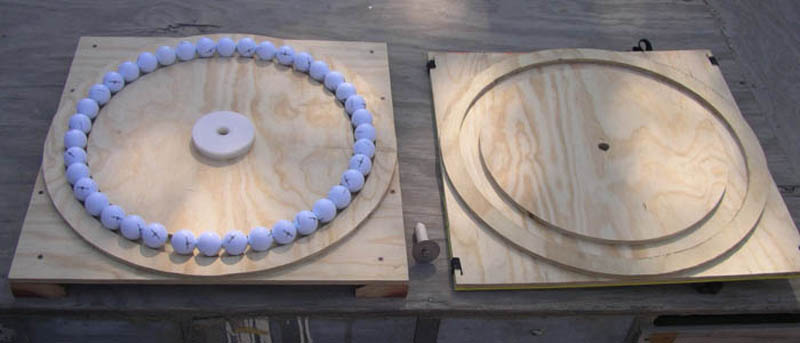
Yep, you're right. You just don't need all the swively stuff because it never behaves the way a board on water does.
The swiveling is crucial to teach a static turn using the rig combined with foot pressure so the student can face the board in the direction they want to go prior to beginning to sail, its one of the first techniques to teach students, helps them turn around and sail back.
Also is vital in helping to teach students how to up haul the rig from any position including clew first upwind, saves them hours of trying to swim a rig into position.
Also its great in explaining to them how a board actually steers using a rig and helps them to understand the relationship between centre of effort and centre of resistance.
I agree the board reacts better than a simulator to adjustments on the water but the simulator does respond the same all be it a little clunkier but the technique and understanding can be taught on land and then applied on water.
One final thing the swivel is great for is teaching technique on both tacks which is a must do, every time a student learns a technique it gets practiced on both tacks, the swivel makes that real easy and every time a student is swiveling the simulator from one tack to another muscle memory is being developed.