quote:
Originally posted by MavericK040
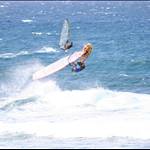
So when it comes to Gybing ive got nothing also , maybe all you distinguished blokes with gray hair and beards could share some knowledge with us clean shaven non grey fellas who arent very good (yet)?
any tips ?

I have grey hair and grey beard so that means I have to respond

Get a good video, Just got Jem Hall's that's excellent or get lessons.
The basics are as follws: Break the gybe into 3 componebts.
1 The Set up/The Carve/Transition with rig flip.
Set Up; Need to be planing. If moderrate winds, start going a bit broader (down wind) to pick up speed. Unhook, have a look, take foot out of back footstrap and place on leeward rail (opposite to where wind is coming from). Move clew hand further down boom and sheet in, bend knees, depress leeward rail, lean into turn.
Carve; Carve the board in a long steady arc, using your bent knees as chop shock absorbers. Lifting the heel on your front foot can be an added shock absorber for choppy conditions.
The transition; As the rig begins to feel light, need to get ready to flip the rig and change feet positions. Once pressure builds in the it has to be rotated or your in the drink. Flip the rig (and think fast hands),and catch it, then it is time to move feet (The step gybe is recommended here) The front foot is taken out of strap and placed in middle of board (To become your back foot) and the carving foot takes a step in front on the other foot now becoming the front foot. Pump a bit to get your momentum going again, hook in, get feet into footstraps.
Practice, practice, practice, find flat water to practice on, it's a complex and technical manouvre and you need to make things as easy as possible, if in WA Metro, try Safety bay or mandurah estuary, or the sandbars near Applecross, this is very important for building confidence, chop will only make gybing when learning feel like an impossible manouvre.



 A?
A?