Select to expand quotejh2703 said..
All I do is look way up wind more the i actually want to achieve, By over exaggerating the look your body and kits justs falls into place and you crank upwind....Well it works for me. Slalom kit is easier to get upwind because of outboard straps and bigger fins, just load up the fin and they go upwind. Wave gear on the other hand needs more rail in the water to help carve upwind, really pull up on the toes of the front foot....I move my back foot out of the strap slightly and pull up on those toes as well to get the board really carving up wind. I can't rember the last time I ever had spin out while sailing? I think the key is to get speed off the wind before loading up the fin and unloading the back foot when cresting chop and all should be sweet.
I've seen you sail Sue, You do know what your doing and sail very well....Don't stress just blast!
Thanks. Yep need to ease the pressure off and just lay back and enjoy.. Except that I'm too attached to my GPS 
 I'd leave it behind next time..
Did someone say upwind lol
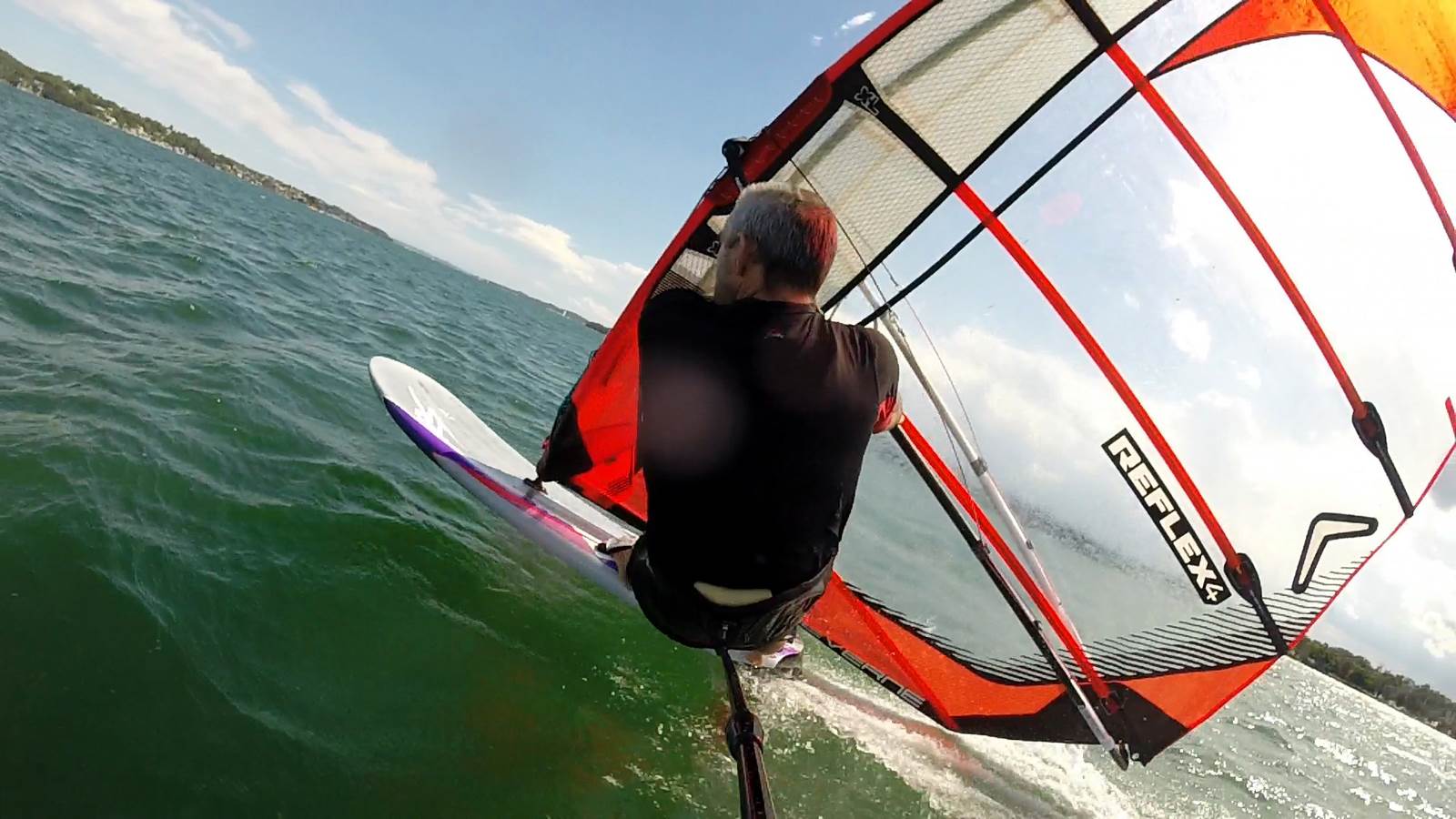
When I'm powered up on the formula gear I try to have my legs in a slalom stance and pointing slightly backwards but it changes from my hips up. Hips and shoulders rotated forwards and look over my front shoulder with my torso leaning forwards. I find it gives me extra sheeting in ability and keeps the board driving fast without it getting to bouncy.
Of course this is on formula gear with a massive fin. It's different on boards that can't be driven so hard off the foil.
Select to expand quoteCluffy said..
Did someone say upwind lol
When I'm powered up on the formula gear I try to have my legs in a slalom stance and pointing slightly backwards but it changes from my hips up. Hips and shoulders rotated forwards and look over my front shoulder with my torso leaning forwards. I find it gives me extra sheeting in ability and keeps the board driving fast without it getting to bouncy.
Of course this is on formula gear with a massive fin. It's different on boards that can't be driven so hard off the foil.

I don't understand how everyone says rotate the hips forward.. How do you pull the sail on if your hips aren't // to the rig? 
( No doubt it works for you though. )
)
Select to expand quotesboardcrazy said..Cluffy said..
Did someone say upwind lol
When I'm powered up on the formula gear I try to have my legs in a slalom stance and pointing slightly backwards but it changes from my hips up. Hips and shoulders rotated forwards and look over my front shoulder with my torso leaning forwards. I find it gives me extra sheeting in ability and keeps the board driving fast without it getting to bouncy.
Of course this is on formula gear with a massive fin. It's different on boards that can't be driven so hard off the foil.
I don't understand how everyone says rotate the hips forward.. How do you pull the sail on if your hips aren't // to the rig?
( No doubt it works for you though. )
the pull comes from the outside of the front hip
Select to expand quoteWindxtasy said..sboardcrazy said..Cluffy said..
Did someone say upwind lol
When I'm powered up on the formula gear I try to have my legs in a slalom stance and pointing slightly backwards but it changes from my hips up. Hips and shoulders rotated forwards and look over my front shoulder with my torso leaning forwards. I find it gives me extra sheeting in ability and keeps the board driving fast without it getting to bouncy.
Of course this is on formula gear with a massive fin. It's different on boards that can't be driven so hard off the foil.
I don't understand how everyone says rotate the hips forward.. How do you pull the sail on if your hips aren't // to the rig?
( No doubt it works for you though. )
the pull comes from the outside of the front hip
Ok so forward and into the wind..that makes sense..
Select to expand quotesboardcrazy said..Windxtasy said..sboardcrazy said..Cluffy said..
Did someone say upwind lol
When I'm powered up on the formula gear I try to have my legs in a slalom stance and pointing slightly backwards but it changes from my hips up. Hips and shoulders rotated forwards and look over my front shoulder with my torso leaning forwards. I find it gives me extra sheeting in ability and keeps the board driving fast without it getting to bouncy.
Of course this is on formula gear with a massive fin. It's different on boards that can't be driven so hard off the foil.
I don't understand how everyone says rotate the hips forward.. How do you pull the sail on if your hips aren't // to the rig?
( No doubt it works for you though. )
the pull comes from the outside of the front hip
Ok so forward and into the wind..that makes sense..
Think of it as sheeting in with your hips. It gives you a lot more harness pressure and therefore more mastfoot pressure as well. This loads up the fin less than simply sheeting in with your arms.
Select to expand quotesausage said..
I find that getting some good board speed up initially before pointing hard helps greatly - the faster you are going the more fin pressure you can apply (that's why the board tends to spin out when pointing hard and you hit a lull & board speed slows). I then rotate my hips forward which naturally trims the board really flat along the waterline i.e. extremely straight front leg even though body position is forward. This effectively utilises the leeward rail of the board to assist in pointing ability and takes some pressure off the fin and of course reduces board drag (which maintains decent speed)
It's much easier to point in over powered conditions and you can really fly off the fin whereas in lighter conditions you have to move your body forward and swing more off the boom. In the really light stuff my back foot never goes into the straps which tends to take some pressure off the fin and gets your body position all the way forward.
This^.
I hit one 30 knot plus gust today on my 5.5m.
I could have sheeted out completely and sailed really high upwind to survive the inevitable 
However,i decided to risk it a bit and pushed my upper body weight in my harness as far forward as was possible to stop the nose from going sky high.
The person just behind me went airborne and I just survived.
I find this technique of getting maximum body weight in the harness as far forward as possible really helps me get upwind also.
In genuine strong to overpowering conditions,this is where a sliding hook really helps with this technique.
Select to expand quotepetermac33 said..
I hit one 30 knot plus gust today on my 5.5m.
I could have sheeted out completely and sailed really high upwind to survive the inevitable
However,i decided to risk it a bit and pushed my upper body weight in my harness as far forward as was possible to stop the nose from going sky high.
The person just behind me went airborne and I just survived.
I find this technique of getting maximum body weight in the harness as far forward as possible really helps me get upwind also.
In genuine strong to overpowering conditions,this is where a sliding hook really helps with this technique.
I was thinking a sliding hook would be needed to best get the pull from the right spot if you use this technique.
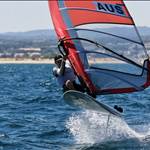
I haven't really sailed wave boards or anything like that, but sailing upwind is one of my stronger angles given the amount of RSX racing and training that I do. I've got a picture here of my upwind stance, and I'll try to explain it.

One thing to remember is to keep your body comfortable and healthy, so keeping your back straight is important. Next, I like to keep my front leg straight, and my back one bent. Locking the front leg helps to keep the windward rail and the nose of the board under control, stopping the board from 'flying'. The back leg then controls the power to the fin - more pressure and more height, less pressure and relax the load on the fin. It also helps to recover quickly from a spin out, as you can then pull it up under your hips effectively. Working up the body, my hips are rolled forward. This means that my hook is pulling down more on my harness lines and helps me to take the weight out of my arms (well balanced harness lines will help lots). My head is looking upwind, keeping an eye out for gusts and waves that could upset the balance I have created, and gives me time to prepare for them and allows me to adjust quickly. But the most important thing by far (in my opinion) is having the clue of the sail cranked in tight, and the foot pulled back as close to the board as possible. Once it is in and back (like in the picture) I like to imagine it being glued there. This creates a great flow over the sail and generates lots of speed, which means that you can push hard on the fin and it will have more 'traction'.
The RSX is 220L board with a 66cm fin and a 9.5m sail, and in the picture im sailing in 15-20 knots, but I use the same technique on my 90L Isonic with the 5.6 in 35 knots.