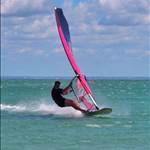
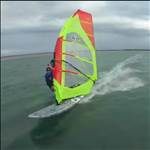
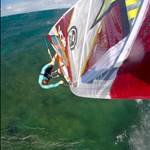
Mark _australia said.. Gorgo said.. AUS1111 said.. The laydown gybe?
Well one thing is for sure; kiters can't do it!

You think so? You've never seen a kiter do a toeside carve? Kiters and windsurfers do it for exactly the same reason.Maximum engagement of the rail. Come to think of it, surfers and snowboarders do it too.
I would think it rather different - it is not just about max rail engagement - this is all about how hard it is to do so and why...... do kiters completely depower the kite and rely upon pure momentum to maintain that carve, then bring the kite power back into play late on, then to make it even even harder the kite has to switch sides so just after you bring the power back on the game changes all over again. I think not. They carve with power all the way (mostly)
A real good planing laydown gybe in chop takes years. Kiters carve a turn with the nice constant power and no need to swap feet or flip the rig, in half a season.
Pilot vs passenger analogy again.
I would suggest a lay down gybe is the only way to initiate a gybe. The real issue is how far and how aggressively you lay down depending on the conditions. Perhaps approaching gybes with too much hesitation is the reason so many people find gybing difficult.
Kites depower going through a gybe. As you ride at the kite the lines lose tension and as the kite moves to the edge of the window power is reduced, or lost completely if your timing is bad. If you ride with too much power and insufficient engagement of the rail you're going to spin out, same as a sailboard. Kiters on directionals can and do change feet mid gybe. At the optimum point of depower there is little force on the board and rider and swapping feet is easy, also the same as a sailboard. It is possible to do powered transitions on a kite in very strong conditions, and of course a twin tip doesn't need to swap feet.
All that is irrelevant. The reason to lay down gybe is to approach the turn with sufficient power, engage the rail fully and with power, and to oversheet to depower the sail at the critical moment.


 but i will not give up