Select to expand quote
ducati said..
Hi Francone, forget the bigger fin, use the side thrusters
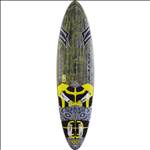
Yes, you should definitely use the side thrusters, they make more of a difference than you think. I have a Bic WindSUP 10.6, which uses the same fins. It works fine without the thrusters in light wind and flat water, but in waves and more wind, the board sails a lot better with thrusters (the difference gets quite dramatic when I downsize the center fin to do light wind freestyle in shallow water, but that's a different story).
So try that first, and make sure the daggerboard is up when the wind picks up. If you're still unhappy, getting a different center fin may also help. From your description, the issue is not so much getting more lift (which would help planing), but rather better directional stability. For that, area is more important than length. You may find that a weed fin works well, since weedies usually have more area. A weed fin would also move the center of lateral resistance back a bit, which also helps with directional stability.
The second issue you raise is that the board "does not respond to tacking and gibing as well as it does in flat water, no matter whether the centerboard is full out or retracted". One of the issues you have to deal with is that the chop and waves will push the longer board around much more than a shorter board. That's obviously not an issue on flat water. To counteract that, you need to move around the board more, from front to back, to change the waterline and keep the nose out of the chop. You can practice that even in light wind and flat water - try to get the board to turn in a really tight radius by stepping back, and keeping all your weight on your back leg.
If you have a lot of wind and the board is planing, keep in mind that the response to carving will differ depending on whether the daggerboard is up or down. With the daggerboard retracted, the carving will be similar to a shortboard (albeit slower); but with the daggerboard down, you'll have to weigh the
opposite rail for the same response. Somewhere in between the fully down and the fully retracted position, there will be almost no reaction to rail pressure. In the wind conditions you typically sail in, you probably will not be planing fully even when the wind picks up. That will also mean a sluggish or non-existing response to carve attempts. You'll have to use sail steering, and move back on the board (or forward for tacks) to get the board to turn. Just play around a bit, and you'll figure it out!