Select to expand quote
Loonie said..
That was a great video with a good perspective.
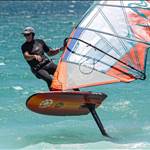
Question about swell riding. I've played around in small (maybe to waist high) waves in a manner similar to the video (lots of turning with various radiuses). So it's rare where I am but last summer there were a couple of sessions with chest to head high fast moving swell that travels straight downwind. It's not useful for fin windsurf or even kiting with a surfboard (it's generally round shaped). It's off shore and not breaking. Little opportunity doesn't help figure this out. I've dropped down but the burst of speed and straight downwind lead to crashes (skill). Getting in front may be better but the straight downwind direction challenges this. When I google wind foil swell riding, it's mostly wing foiling that comes up. As you likely know, they can fully flag out their wing. So next time my thinking is to flag the sail out by moving my back hand to front of the boom and hold with one hand. I foil with no footstraps so I should be able to adjust my weighting and position as needed. There's the odd video out there showing this but smaller swell. For example, Tyson Poor riding boat swell.
Any insights or experience?
Cheers

Downwinding bigger swells successfully requires practice, we all crashed a lot at first not reacting quickly enough transferring weight to the front foot to counter foil lift from acceleration - with enough practice it becomes kind of subconscious.
Works better and's more fun to S-turn down swells keeping the power in the sail by holding the boom in and going as fast as possible (might hit 20 knots). Fly across the swell face, bank off a steep section and accelerate down the swell dead downwind until you lose speed (as you lose wind pressure), then carve back cross-wind and repeat the cycle. The G's in the carves are superfun.
In 2 to 2.5m windswells you can hold dead downwind, clew-in runs for about 50m

A front footstrap is helpful in bigger swells.