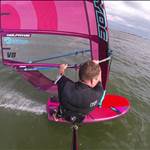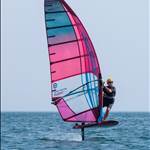
From the pictures at the NP web site, it looks like the Free Flights have 2 mini battens in the top panels. They also seem to have quite a lot of looseness, which is typical for other NP sails.
The most similar sails I have used are old North Idol freestyle sails, which are also 4-batten sails. Most sessions, they are great, without any noticeable flutter. But I remember a couple of sessions with strong gusts where the noise from the top panel was pretty bad. Releasing downhaul helped somewhat, but the main problem was that the sail was just way too big in the gusts. I never had the same problem with a 5-batten freestyle sail (Severne Freek).
Comparing a 3-cam foil (Foil Glide) sail to a 3-cam freerace sail (SwitchBlade), there's a big difference in looseness. My speeds relative to the wind are similar with both sails, and they work beautifully for what they are intended for (but much less so when switched). The much tighter foil sail reflects that the wind-height gradient is steepest near the water surface. By moving the sail up a foot or two on the foil, you eliminate the need for a lot of the twist you need in sails for finning.
Looking at the picture from the NP web site, they show looseness almost all the way to the mast near the top:

Even in the middle panel, the looseness goes about 3/4th into the panel. IMO, that's too much. For comparison, the Severne Freeks have shorter mini battens, and work great for foiling when trimmed so that the looseness ends where the mini battens end.
Some sail designers seem to have a pretty hard time to adjust their designs for foiling. Some of the earlier foil-specific sails were very low-end oriented and often described as "unstable at the high end". Could be that NP, coming from the soft-top-mast, "lots of loose" end of the spectrum, has to adjust more than others. I'd put the Free Flights in masts with harder tops and see how they work.