Posting a new topic so not to totally hijack another thread here:
www.seabreeze.com.au/forums/Windsurfing/Foiling/Board-for-medium-to-lower-aspect-foils?page=2Select to expand quote
mr love said..
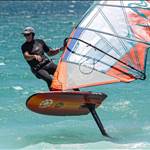
Just wondering how many "freeride windfoilers" are out there. By that I mean people chasing swell and pulling tricks as opposed to blasting on faster foils. I get the impression that there are not that many but maybe I am wrong. Nearly all the guys that were windfoiling at my local ( except for the iQ crew) have swapped to winging. Are we a dying breed?
Oh, wow... I've been trying to avoid climbing on this soapbox but here we go anyway.
First, people should do what brings them happiness. My comment isn't to say there's only one way to do things. Ride the style that brings you joy. Yet, I see variations of this comment all the time and I think it causes people problems: "I'll get X wing (usually between 1200-1600cm2)) and then get a smaller wing later on as I get better for higher winds." I saw this comment a couple of weeks ago and I saw this comment over and over from two, now banned, accounts including one that said my personal favorite 1100cm2 wing was unfoilable over 20kts of wind speed while I merrily use it in 30. I'm not a big nor heavy guy either. btw, this isn't a "wings suck" post. I've winged a few times and it does have it's moments. But even my winging friends look at how I ride and get why windfoiling is my first go-to.
I'm not opposed to smaller foil wings. The smallest in my current quiver is a whopping 475 which I promise to get wet soon. And, yes, a smaller wing also allows you to carry a bigger sail since you aren't bumping into the drag wall and having to deal with both the wing and sail as winds pick up. But for intermediate windfoilers, smaller wings (say <750ish) bring challenges as conditions get more difficult, the same conditions where freeriding gets more enjoyable (say 18-30 kts). Ripping through deep swell on a 600-700cm2 swell in the middle of a jibe is hard. It's easy to get too high over a trough and it's just as easy to not maintain enough speed and stall the wing. The guy/gal who has trouble making a jibe in lighter winds on an 1100 probably isn't going to be nailing them in 25 kts on a 650-700cm wing.
From my observations, part of the challenge is that we windsurfers ride those conditions like we are still windsurfing instead of freeride foiling. If you just charge ahead and try to solve the issues brought by higher winds and swell/chop by adapting high wind windsurfing techniques, yeah, I can see why you'd want to wing instead. Instead, consider taking advantage of what a windfoil does well.
1) Don't automatically grab the smaller foil in higher winds. Consider a mid-aspect 1000-1600 wing. That's why wings like the SAB 799/940/950, Slingshot G800-900, PTM 926(iirc) have become popular. You are still fast enough not to bang into the drag wall quickly like you would with a big shovel wing in higher winds but you have enough lift that you can bridge lulls in gusty conditions, glide through transitions and actually "ride" the foil.
2) Do use a smaller sail. The key to making this work is consistent jibes so you aren't having to relaunch each time you change direction. But even if you aren't and using a floaty enough board, you'll get enough gusts to get off the water.
3) Don't mow the lawn. The two easiest ways to deal with too much wind pressure is go either deep upwind or downwind. You can kill an amazing amount of wind doing this. And by deep, I mean really deep. If you are going 20 kts deep downwind and get hit by a 25 kt gust, that's only about 5-7 kts of wind going past your rig which is a lot less than if you are just on a reach getting blasted by the 25. Get good at this upwind/downwind stuff because it's more than just bleeding excess wind.
4) Now the fun begins and why my winging friends are absolutely psyched about how I ride: you get to play, especially downwind. Upwind is like the ski resort gondola delivering you to the top of the slope. Now you get to ride downhill and play on every bit of chop/swell. You get to turn, carve, etc. This is where the bigger wing comes in handy - not outrunning all the fun stuff and often the water provides enough power on it's own to keep you going. This is where being trapped in the "windsurf" paradigm can be restricting. I imagine those who wave sail a lot (which is definitely not me) probably grasp this better than those that bang back and forth all day.
5) The bigger mid-aspect wings make it easier to start to play with transitions as you have enough glide to through but enough lift not to fall off the foil halfway through. Balz is doing his maneuvers on a bigger wing, not a 650. His latest "signature wing is a 1000.
sabfoil.com/en/products/WMP909-BM His previous wing, the 799, is about 1100 and according to their website "optimized for freestyle and finds its best use in wing and wind foiling with medium-strong wind conditions."
6) Be careful. If you are really doing the upwind/downwind thing, you'll be crossing all the BAFers at a 45 degree angle many times so keep your eyes open for traffic.
7) Back to that jibe thing. If you don't have yours wired yet, keep at it. One of the great things about even a big windfoil is how hard you can put them over and go through a turn and even our wing friends notice this. Yes, it's easier to learn how to change directions on a wing but the windfoil jibe has it's own payoff. And, learning on a bigger mid-aspect is a * ton easier than on a small, speedy wing.
Again, there's no one right/wrong way to rig or ride. But if you aren't having fun windfoiling, maybe think about how you are windfoiling first before thinking that a new set of winging gear is going to solve your problems.