That sounds interesting.
How hard was it to take in and out.
Part of the case that needs to be pushed to the politicians is that there is both investment in infrastructure and ongoing care of sporting venues.
So a team managing structures, monitoring to maximise the number and quality of waves should also attract funding from each level of government.
Select to expand quoteGCT1965 said..
That sounds interesting.
How hard was it to take in and out.
Part of the case that needs to be pushed to the politicians is that there is both investment in infrastructure and ongoing care of sporting venues.
So a team managing structures, monitoring to maximise the number and quality of waves should also attract funding from each level of government.
it is a modular system that can be deployed from shore or towed in with a small vessel
to retrieve was just as easy
the structure are be easily maintained and leased to local govt as required
Select to expand quotekatana said..GCT1965 said..
That sounds interesting.
How hard was it to take in and out.
Part of the case that needs to be pushed to the politicians is that there is both investment in infrastructure and ongoing care of sporting venues.
So a team managing structures, monitoring to maximise the number and quality of waves should also attract funding from each level of government.
it is a modular system that can be deployed from shore or towed in with a small vessel
to retrieve was just as easy
the structure are be easily maintained and leased to local govt as required
So a whole bunch of cray pots strung together? 
Surf and a feed, winner winner.
But on the serious side. Anything that involves changing of the seabed either through artificial structures, dredging, groynes, reefs etc. will affect the natural dynamics of that environment through changing of major current flows and carry and deposition of sediment.
The gold coast is a classic example, my old man worked on the dredges that channelled out so many estuaries and canals in the 70's. He also helped construct a lot of groynes etc. If you check with local councils you will see a pattern of spending on dredging to remove sand build up because these developments and structures have disrupted the natural rips and offshore currents that once naturally cleared the sand, and then brought it back seasonally.
The exact same thing applies to WA over 40 years later. Anything that messes with the rips and currents that allow for natural clearing and deposition will completely change the long term dynamics. Case in point is Secret Harbour, you talk to anyone that has surfed there before the Dawesville cut went through and they will tell you just how good the banks where even in the summer time. Talk to them now and aside from their lament at the crowds they will tell you just how badly the cut has screwed up the banks.
Hence I like the Webber concept of a floating system tethered or pinned via a single pylon and anchor points that floats. Yes it will interact with surface currents and change the dynamic to a degree but not to the extent that subsurface flow streams would be strongly affected, and not to disrupt the carry and deposition velocities of the sand that these currents help to migrate.
To me this makes way more sense than trying to mitigate the amount of disruption through modelling of a "dynamic" bag design.
Will be interesting to see if this gains any traction and what direction it heads in.
Hi Hydromann
Thanks for the thoughts and agree on the groynes in particular as I saw a photo of a beach in Italy where I the end they just kept on adding groynes to fix the mess of the previous one.
Interesting you mention the Dawesville Cut as the community group I am involved with is pushing to repair the loss of sand to the beaches from this.
A lot of waves have disappeared.
I will look for Webbers idea as he commented about this in another forum but didnt give details at the time
In that forum he coped a lot of flack about his wave pool design
Select to expand quoteGCT1965 said..
Hi Hydromann
Thanks for the thoughts and agree on the groynes in particular as I saw a photo of a beach in Italy where I the end they just kept on adding groynes to fix the mess of the previous one.
Interesting you mention the Dawesville Cut as the community group I am involved with is pushing to repair the loss of sand to the beaches from this.
A lot of waves have disappeared.
I will look for Webbers idea as he commented about this in another forum but didnt give details at the time
In that forum he coped a lot of flack about his wave pool design
I would imagine that issues with the wave pools are exactly the same for every design, cost of investment, and cost of operation. Kelly's works because he's rich and can afford the juice to run the place.
The Melb wave pool is novel (no pun intended) but it costs a lot more to run than a cable ski park dragging a lot less mass around a pond. Mass displacement equals energy, and to move a mass of water, or supply sufficient energy to create a wave will always cost more than dragging a 100kg human around.
So for wave pools, they would be awesome but the costs associated and return on the investment would be minimal. Again on the Melb park I read an article that said that they where heavily reliant on retail trade to supplement profit. So kiosks, vendors, leases around the attraction etc are the main source of profit. Similar to some amusement park based shopping centres in the US.
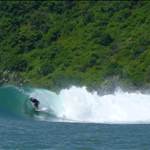
The Webber V-Reef can be erected at the location of existing infrastructure, it can operate using natural energy / swell and harnessing that, it is a suspended artificial reef that does not dramatically effect the flow of underlying currents, and especially more so when located just off the back of the shallow waters.
The cut is a classic example of humans getting it wrong. It was made to flush saline water through the estuary and to essentially reduce the plague proportions of insects (mozzies) that bred in the still waters and swamps. Those pesky little buggers where causing havoc with the value of peoples properties. The estuary had existed for millennia before humans decided to make it "better", the coastal topography had existed for millennia before humans build to the shoreline, the banks and the reefs existed for millennia before the cut. And then they where all changed for the "better".
As an engineer it was an amazing engineering achievement, as an environmentally conscious human it was a disaster. We need to learn from past mistakes and not make the same errors with fixed artificial reefs. Regardless of what outcome is decided if any, anything that a human does to bend nature to our designs and desires will have an effect, the objective should be to tread lightly and reduce our footprints.
The state government should look into things like this and evaluate their potential for tourists. This season of plague will pass and if we have our wits about us we can use this time to set things in place for the future. Imagine offering tourists patrolled and safe ocean environments protected by shark nets with world class waves and existing infrastructure. That would be a big big draw card.
Anyway that's just my two bobs worth, get in contact with Greg Webber.
Cheers Hydromann
I looked at Webbers site.
For others here is a link.
webber-reefs.com/
I agree this looks like something that would have lesser impact than groynes or other technology.
My main interest is trying to improve wave quality while getting the authorities to re think how they tackle the negative impacts of the Dawesville and main Mandurah entrances.
I posted this and formed a Facebook group to see how Perth surfers feel and if anyone wanted to push for something in Perth.
Happy to be involved but Perth is not my local, just where I grew up and started surfing.
Big amounts of energy needed for wave pools and given nature gives us waves for free makes makes more sense to see how we can harness this but as you say tread lightly.