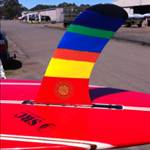
When I lost the 10' arrow noserider from the roof and it landed on the highway at around 90 kliks, I didn't even want to take it out of the bag and look at it for almost a week, so I had no idea how bad the damage was. I knew the fin was cactus blurtus, but it was a fin I had very little use for and it was only there because it was the smallest hatchet type I had and I was looking for early entry, not good nose riding.
Turns out that having that fin in was a real bonus for 2 reasons, firstly, it was a very lightweight fin and therefore it acted like a shear pin and took a lot of the energy out of the fall before snapping without damaging the fin box. Secondly, I would never have been able to replace the original Pearson Arrow fin if it had broken.

Turns out that the only other damage was a crushed nose on the right ride, but it was smashed in all the way to the Styrofoam core.
In the past I would have given this to someone else to repair because I've never repaired a painted epoxy board before, but the last time I gave my Munoz to someone for a repair, it was a really crap job. I thought, I could not possibly do any worse than that.
Plus, I had a ton of epoxy resin, and because the hardener was “surfset” I knew it would be compatible with any polyester glass or filler I put over the top to finish it off. And I've bogged and painted more than enough cars in my day to know how to do a half decent finish.
First up, I dug out all the broken laminating, rough up everything, masked if off and filled with a half dozen or so layers of volan and epoxy resin.

Once she's good and hard, I sand it back to a about the right shape top and bottom, then use a standard filler to build up the nose in successive layers, with sanding and shaping in between, I think it took 3 to 4 goes before I was happy that it was all blended and even.

After a good wipe down with Wax & Grease (W&G) remover (same as prepsol) I then applied about 6 layers of automotive primer and surfacer, with around 3 minutes between each coat.

Maintaining the automotive methodology, I even gave it a black guide coat before turning in for the night.

Next day I got stuck into it with 600 Wet & Dry, then plenty more W&G to make sure it was good and clean before doing a bit of soft masking to avoid having to do any excess sanding and to help blend the 2 whites together

I then just use a rattle can of epoxy spray enamel to finish off with around 5 layers and 15 minutes between coats, once I took off the masking tape, it appeared to be blended so well, I doubt I will need to do any sanding, so I guess the soft masking was a good idea.


And tomorrow I will visit my best mate and explain it all to him to get his seal of approval



 I love seeing repair jobs, is that weird?


 " and the next thing you know, you're sporting a toothless grin.