Select to expand quote
MangoDingo said..
Good thread - cheers for posting Slatz
Was heartening to see the NSW state titles held in similar conditions to what I mostly get up here in Darwin during the Dry Season (April to October-ish).
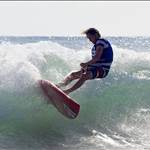
Clearly the surfing was really good with some good moves in small conditions - but yeah, a lot of short board style hacks on longboards.
I wonder in comps like these, do we (should we) follow WSL longboard judging criteria? Note the WSL directly reference traditional longboarding (see below):
Article 70: Judging Criteria for Longboard
The Surfer must perform controlled manoeuvres in the critical section of the wave utilizing the entire board and wave using traditional longboard surfing.
The Surfer who performs this to the highest degree of difficulty with the most style, flow and grace will receive the highest score for a Ride.
Further to that above, the following are key elements for Judges to consider:
Nose riding and rail surfing
Critical section of wave
Variety
Speed and power
Commitment
Control
Foot work
NOTE: It's important to note that the emphasis of certain elements is contingent upon the location and the conditions on the day, as well as changes of conditions during the day.
NOTE: The following scale may be used to describe a Ride that is scored: 0-1.9 = Poor; 2.0-4.9 = Fair; 5.0-6.4 = Good; 6.5-7.9 = Very Good; 8.0-10.0 = Excellent.
Anyway, still got me goin' and was great to see what's happening around the joint.
See ya's in the green room!
I'm trying to implement this in every 10ft SUP comp:
The judging criteria for the 10+ longboard sup.
"The 10 foot plus longboard sup surfer must perform controlled traditional manoeuvres with the highest degree of difficulty in the most critical sections of the wave to gain the highest score. Judges will reward the performance with reference to style and flow, visual appeal, commitment, functional use of the paddle to increase the intensity of the maneuvers, variety of manoeuvres and use of the entire board, speed and power. Nose riding, trimming and footwork will be important elements in the Judges decision-making."
The words: continual motion, flow, style and grace directly relates to how the surfer reads the wave and performing the manoeuvres that "fits" to the wave. Stylish and flowing
traditional elements will become obvious when the surfer is committing to the entire criteria.
Classic nose rides are usually best when the walk to the nose is set up by a tail stall or directly in from the arc of a turn.
Nose rides, touch 5 and 10's and extended 5's and 10's, Cheater 5 nose rides.
Cross-stepping, reverse walks, layback cutbacks, cutbacks, drop knee cutbacks, cross step cutback, roundhouse cutbacks, tube rides, cover-ups, re-entries, off the face and lip floaters are all considered to have a high scoring potential in the competition system.
Helicopters, tail 360's, dishpan cutbacks are considered but not highly scored.
The paddle is used in turns as a brace, a pivot, and a force multiplier. A surfer will be scored higher when he uses the paddle in some, or all, of these three ways to achieve sharper or more powerful turns
Use of the paddle when nose riding will be a critical factor when judging, style, finesse and use of balance will be considered.
Tricks such as twirling or otherwise using the paddle in a non-functional manner will earn no extra score for the surfer.