This sport of sailing never ceases to amaze in how you never stop learning. I'm embarrassed to admit I worked something out recently I probably should have known a long time ago, and that is wind shear.
Wind shear is described as a difference in either wind angle or wind speed over a short distance in the atmosphere. Real world explanation : It can lead to your masthead instruments and your telltales telling you different things.
Its always there, and the variety of meteorological conditions that contribute to can cause wind shear to becoming more or less noticeable. Upshot is we all sail in it, with cooler water and hotter air making it more evident.
I confess to being a bit obsessed with data, so I enjoy mucking around with sensors such as the masthead, impeller and Nav. Calibrating those sensors to be always accurate for all conditions is not an exact science, for your masthead vane and anemometer the wind from the sails can disturb the readings, and this may be different when going up wind as compared to downwind etc etc. I still like to try and get it close to reality as I can whilst acknowledging the limitations of the system.
So the other weekend we're out, and I noticed a calibration issue appear. It's intermittent, but every now and then I'll see a big difference in our port and starboard tack angles. In this case , it was not tide, (as a running tide will definitely cause a difference in TWA between the two tacks also)
Conditions: flat water, turn of the tide, 12-14 knots breeze. Boat was trimmed exactly the same for both tacks.
-Starboard tack we were 35 TWA. Boat speed was down a bit, and my heel angle was less than what the wind strength suggested.
-Port tack we were at 55 TWA. Boat speed was too high, and my heel angle was fine.
???????????????? I just calibrated the *&%$@ thing!!!!
After lots of number crunching and research, I discover this is the classic symptoms of wind shear. A simple guide:
In the southern hemisphere, wind will always veers to the right as it slows down.
As the wind gets closer to the surface, it slows down,
So for us Aussies, the wind at the surface will always veer right compared to the wind at the top of your mast. This can vary, and it can vary a lot.
So, if you see, like I do, a marked change in your tack angles, it could be wind shear your experiencing and not tide. The giveaway seems to be heel angle, if your instruments are reporting a wind strength and your heel on starboard is weirdly more upright, that's wind shear. Your wind instruments are living in a different wind pattern (one more shifted to the left as its faster wind up the top) than the majority of your sail plan, so you can't trim to suit your wind instruments .
Outcome.
In the prescence of wind shear, flatten the upper sail plan when on starboard to suit the decreased TWA up the top.
When on port, ease the jib cars back to open up the top leach, and ease mainsheet to twist off the top leach to suit the increased TWA.
The reason this is particularly annoying is that the false reading screws up not just your helmsman getting TWA numbers that are out, but all your navigation routing, laylines, polar performance and sail selection. If we are aware of it, it's easy enough to do your own revised calculations (tack before the port layline by the half the degree difference you see when on the opposite tack) if you're calling lay lines or doing the nav.
I hope this helps!

Good post Shaggy.
Those that fly model aircraft or pilot aircraft usually have an understanding and a respect regarding wind shear, not to,,, usually ends in tears.
Very interesting, I've noticed this effect and haven't been able to figure it out. When you say "So for us Aussies, the wind at the surface will always veer right", is that as you're looking down wind or up wind?
That is the problem Shaggy, looking at the data most of times and got no time left to listen to your boat, the water and the wind which, by the way is wearing clockwise and backing anticlockwise regardless of hemisphere.

Select to expand quotesirgallivant said..
That is the problem Shaggy, looking at the data most of times and got no time left to listen to your boat, the water and the wind which, by the way is wearing clockwise and backing anticlockwise regardless of hemisphere.
I'm hearing you SirG. I've spent most of my life sailing without much in the way of electronics, so this obsession has come about because this is really the first time I have had info like this.
I still remember buying my first Navman 3100 for wind angle, I was pretty excited.
Then the screen promptly failed after a few months of use.
Welcome to electronics!
Too be honest, I find it hard to believe the rotation effect could be so significant over a relatively short distance.
There could have been thermal activity happening, which can distort wind direction at different heights. Even in a clear sky there can be thermal activity.
Then you have to allow for the boat speed vector. That will always bring the wind more abeam, no matter what the tack.
Hi Yara,
Yeah, I didn't think you could have this degree of difference either. I thought initially it was the different heel angle, even though the windvane data is auto adjusted by the gyro to negate the heel angle effect.
One thing I dimly remember is there can be 10-15 deg of wind angle change from the top of a 60ft mast to the surface just from the gradient, so if that's correct it's plausible to see those numbers.
I didn't think of thermal. Bugger.
So far its the only logical finding to date, but I'm still digging deeper into it so I'll keep you posted 
Select to expand quote2bish said..
Very interesting, I've noticed this effect and haven't been able to figure it out. When you say "So for us Aussies, the wind at the surface will always veer right", is that as you're looking down wind or up wind?
Into the wind
Select to expand quotesirgallivant said..
That is the problem Shaggy, looking at the data most of times and got no time left to listen to your boat, the water and the wind which, by the way is wearing clockwise and backing anticlockwise regardless of hemisphere.
Everything is reversed in the Northern hemisphere
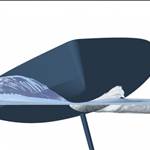
I love the diagram Shaggy.
Frank Bethwaite goes into this in some detail in his original "High Performance Sailing" book especially where he discussed the Coriolis effect.
However, his book would suggest the effect should be more noticeable in laminar wind flow conditions; less than about 7 knots.
In turbulant flow conditions, it would be a question of what the depth of the boundary layer was. I always thought it was deeper than an average mast height (but then as a dinghy sailor, I might have a distorted view of that).
Select to expand quoteTamble said..2bish said..
Very interesting, I've noticed this effect and haven't been able to figure it out. When you say "So for us Aussies, the wind at the surface will always veer right", is that as you're looking down wind or up wind?
Into the wind
Thanks Tamble, I missed 2bish' post, sorry. Select to expand quoteTamble said..
I love the diagram Shaggy.
Frank Bethwaite goes into this in some detail in his original "High Performance Sailing" book especially where he discussed the Coriolis effect.
However, his book would suggest the effect should be more noticeable in laminar wind flow conditions; less than about 7 knots.
In turbulant flow conditions, it would be a question of what the depth of the boundary layer was. I always thought it was deeper than an average mast height (but then as a dinghy sailor, I might have a distorted view of that).
Thanks very much for the book reference, I haven't read this which is always a good find!
Edit: That's good info about the 7 kn threshold, thanks!
Boundary layer wind speed can be best noticed sailing in light airs when it produces more apparent wind angle on the lower mainsail than at the top. Mainsail twist will be observed when the sail is trimmed to the tell tales
Select to expand quoteTamble said..sirgallivant said..
That is the problem Shaggy, looking at the data most of times and got no time left to listen to your boat, the water and the wind which, by the way is wearing clockwise and backing anticlockwise regardless of hemisphere.
Everything is reversed in the Northern hemisphere
No. The correct definition of veering v backing is wind direction change at a fixed location over time. This is the same whether in the Northern or Southern hemisphere.
Meteorologists often refer to veering and backing wind as the change in direction with height. In the SH, wind backs with height. In the NH, wind veers with height.
Select to expand quoteFreeRadical said..Tamble said..sirgallivant said..
That is the problem Shaggy, looking at the data most of times and got no time left to listen to your boat, the water and the wind which, by the way is wearing clockwise and backing anticlockwise regardless of hemisphere.
Everything is reversed in the Northern hemisphere
No. The correct definition of veering v backing wind is wind direction change at a fixed location over time. This is the same whether in the Northern or Southern hemisphere.
Meteorologists often refer to veering and backing as the change in direction with height. In the SH, wind backs with height. In the NH, wind veers with height.
That's a neat trap. That's a pretty different outcome in the real world, one identifies wind change in the horizontal, the other identifies wind change in the vertical. Must remember to check the source data reference.
Select to expand quoteFreeRadical said..Tamble said..sirgallivant said..
That is the problem Shaggy, looking at the data most of times and got no time left to listen to your boat, the water and the wind which, by the way is wearing clockwise and backing anticlockwise regardless of hemisphere.
Everything is reversed in the Northern hemisphere
No. The correct definition of veering v backing is wind direction change at a fixed location over time. This is the same whether in the Northern or Southern hemisphere.
Meteorologists often refer to veering and backing wind as the change in direction with height. In the SH, wind backs with height. In the NH, wind veers with height.
Sorry. I completely agree with you.
I had misread what I was replying too. My bad!
Interesting reading Shagiod ! I will though delete all that from my thought patterns, as i am confused enough as is !! Keep it simple and steer to the head sail luff tell tails is my motto , and i,m sticking to it ! Overlay the mark slightly and make a good tack !
Let me complicate the story.
I understand that normally the shear is caused by surface friction slowing the wind closer to it and multiplies the Coriolis effect causing the low down wind to veer (come more from the right). SO the existence of the sheer suggests of itself a different true wind at different heights.
But because you have different true wind speeds at different heights, it means you have different apparent wind angles - even before sheer is taken into account (the classic reason you twist the sail in light air). Broadly the apparent wind will be more on the bow where the wind is lighter (low down).
So on Port tack, this is going to increase the differential in wind angles otherwise caused by sheer.
On Starboard tack, it will narrow the differential in angle.
So, who on board a maxi in the Sydney to Hobart has to deal with all this electronic data that seems to me to be
utterly overwhelming, relay it to the helmsman and be responsible for getting it all correct. The skipper or the tactician ??.
Shaggy thanks for the lesson. I had almost the same experience last week and had similar thoughts about calibration and I could'n for the life of me get anywhere near the performance on the Stbd tack as the port. I am also a pilot and deal with wind shear close to the ground all the time but never made this connection.
Thanks again
Scrubby
Very interesting Shaggy. Back in the 90s I had a laptop on my boat when racing which recorded boat speed and angle of heel. I mainly used the data to work out best angle of heel to get max boat speed). But did notice one tack was always better than the other for no apparent reason. I assumed maybe boat was crooked or heavier on one side. Your theory may have cracked the real reason.
Select to expand quoteTamble said..
Let me complicate the story.
I understand that normally the shear is caused by surface friction slowing the wind closer to it and multiplies the Coriolis effect causing the low down wind to veer (come more from the right). SO the existence of the sheer suggests of itself a different true wind at different heights.
But because you have different true wind speeds at different heights, it means you have different apparent wind angles - even before sheer is taken into account (the classic reason you twist the sail in light air). Broadly the apparent wind will be more on the bow where the wind is lighter (low down).
So on Port tack, this is going to increase the differential in wind angles otherwise caused by sheer.
On Starboard tack, it will narrow the differential in angle.
Hi Tamble,
Good point, and that's quite pertinent. The normal twist of the wind direction from surface to masthead follows exactly the same rules of physics due to the friction caused by the sea surface. I cant remember where I read it, but it is I think from memory you'll have over 10-15 degrees twist normally from masthead to sea level on a bigger boat. And that's before any abnormal shear.
I suppose you could say we always sail in wind shear for that reason. The severity of the shear is the variable, and aside from cooler water/hotter air, the cause of this severity is currently a plethora of meteorological conditions that are way past my poor little brain!
Cheers,
SB
Edit: As a sideline, I am looking at tide. Does a wind with opposing tide, or a wind with tide give me a favored tack angle to see if it assists by bending the wind back. This is in case shear is bending the wind forward in your upper sailplan.
And because I'm a simpleton, I drew a strong and weak tidal influence with wind, and opposing wind, to determine what impact the tide has from a gain or a loss.
The upshot was: when wind shear is present, and you're committed on starboard, a stronger tide with opposing wind is the best option to mitigate the effect. A strong tide with the wind will make the effect even worse, as it also bends the wind forward.

Edit: This theoretically applies when you're sailing normally if some shear is always present from the gradient effect.
Interesting thought that!
Hi Shaggy
I work through your complexities when I can get my brain together. It looks interesting
In the mean time, a simpler answer into your question about tides (which I suspect is the same underlying point) lies in the apparent wind effect of them. If you are crossing a tide coming from your windward side, it will shift the apparent wind forward and make you feel as though you've hit a knock.
That could well induce you to tack directly into it at the worst possible point.
PS
I've just taken a closer look at your diagrams. Yep, same point
Only difference is when I teach this using vector diagrams I complete the picture with the "(non tide)boat movement wind" to which you add the "tide wind" to get the total picture.
I read a piece on this a while ago and I must say - it doesn't seem to stack up - for a couple of reasons.
The first is the strength of the Coriolis effect - it is tiny. When you pull the plug out of the sink water does not go one way or the other due to the Coriolis but due to slight turbulence as you pull the plug out. Compared to all of the other forces that push on a fluid, the Coriolis is puny and insignificant unless the volume of fluid is vast.

I think you guys are making this all to hard, switch the gadgets off look at the tell tales trim to suit, sail by the luff keep the leach open ,always twist more in the light (for us that means pull on the main toper below 8 knots0
Select to expand quoteboty said..
I think you guys are making this all to hard, switch the gadgets off look at the tell tales trim to suit, sail by the luff keep the leach open ,always twist more in the light (for us that means pull on the main toper below 8 knots0
right on bro !!
Select to expand quoteboty said..
I think you guys are making this all to hard, switch the gadgets off look at the tell tales trim to suit, sail by the luff keep the leach open ,always twist more in the light (for us that means pull on the main toper below 8 knots0
Really like my Compass 22, still got my hands on the mainsheet and tiller, can feel the movement under my feet and bum, with two eyes looking up and around. Sometimes wonder what the step up to, say, an RL28 would bring, or a 40+ footer.
Thanks for all the comments gentlemen, I am open minded to say the least, so it's all good info!
I am not advocating in any way this is knowledge needed to go sailing, and absolutely we should all go out and just sail our boats.
I'm interested for purely selfish reasons, I enjoy the nuance of wind....and I l think I have an obsession for measuring stuff
Kankama, thanks for the leach telltale idea, that's interesting. I get why and it makes sense, I'll make sure to check next time I'm out, more so as my main is a real &^%$ to trim really well..
I went looking for any evidence as to how much sheer, when it is most prevalent, if its all horse&^%$. I think it can be localised to have an impact. I just grabbed a couple of links that appear to support that shear can be stronger than I at least thought. This is not in any way exhaustive, or even the best-of, I've just picked some interesting ones.........
____________________________________________________________________
Wind shear is a well known effect. The "surface level" wind speed given in shipping forecasts is actually the predicted wind at 10m above the surface, where wind shear shouldn't be having a significant effect. 10m is roughly the height of the masthead on a typical cruising yacht, so the met office are forecasting the wind that you'll see on your wind instrument (assuming that the anemometer is in the usual place at the masthead).
www.oceansail.co.uk/Articles/WindTwistArticle.php
Less than two weeks ago at Storm Trysail Club's Block Island Race Week, it wasn't uncommon to see sailors on dozens of boats tapping on their instrument displays and scratching their heads. Throughout the week, tacticians and pretty much anyone on board who was paying attention to the wind angles, had to grapple with an interesting phenomenon that's fairly common in many early-season racing venues. The confusion these sailors were experiencing was based on reading radically different apparent wind angles from one tack to the next. This anomaly wasn't only playing havoc with tacticians, who were trying to determine tacking angles, but also with helmsmen and trimmers who were trying to hit their boat's target speeds and angles, especially upwind.While this situation was most noticeable on boats with larger rigs, the effect has been seen even on boats as small as Solings. And it is not trivial: the amount of variation we observed on board Bob Towse's Reichel/Pugh 66 Blue Yankee was as high as 20 degrees. Observing from the back of the boat, helmsman Steve Benjamin explained his dilemma this way: "On starboard tack, the instruments were telling me that I was sailing upwind at an apparent wind angle of 38 degrees, while on port the angle was close to nine degrees!"
www.sailnet.com/forums/racing-articles/20819-understanding-wind-shear.html
Good article about wind and sensors..
www.blur.se/2009/02/09/wind-sheer-fact-or-fiction/
A recent Thursday night race started in an easterly and the course was set up to be a square two-mile beat. After trimming in on starboard tack at the start of the race, I noticed the masthead wind vane indicated the wind practically on our beam. This told me to sail to the right side of the course in order to get the impending right shift. When we tacked to port in order to move to the right side of the course, the lower telltales on the jib were flowing straight back on both sides of the sail, while the masthead wind vane showed the wind coming from straight ahead and our boatspeed was a knot less than it was on starboard tack.
www.uksailmakers.com/news/2016/5/24/predicting-the-next-wind-shift
It looks like people are sailing their tacks by compass heading and not by the wind itself.
I still cannot get myself to believe that there is any consistency in the different wind directions which may be experienced across a height difference. Velocity differences are easy to explain and clearly logical. IMHO local influences will dictate direction changes. If there are any obstructions around, add vortex shedding....
As another poster said, the flow is turbulent, it is not a a nice smooth traveling block of air.
Unlike flying a plane, I think it is better to ignore the instruments, and use the look and feel of the sails and boat. Set her up for optimum trim, then use the instruments and computer to determine if a different point of sail will get you to the waypoint faster.
Is now a good time to bring up Energy Polariser's?
Poor ol' Peter Brock, what did they call it? Automotive Woo!