Select to expand quote
julesmoto said..lydia said..
What type of boat.
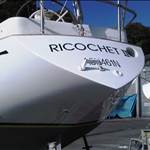
Northshore 38 I think.
Pretty easy.
Set the forestay first. So 750 mm of rake at the tip
Then Caps to firm with a small not long handle spanner
You will feel when the load starts to come on.
Go for a sail, and the lowers will needs setting to match the luff round.
Do up the leeward one first and then tack
Tension on lower will generally need to match luff round ie no overbend creases.
Just keep sighting the mast track to keep it all straight.
You will never get it perfect as there will too many flaws in the mast section
Wow thanks for that. I'm assuming that you have owned or raced one. How do you set the rake? Exceptionally long plumb bob on Main halyard and very calm day? Going to get new sails so might have to see if there is weather or lee helm with them before deciding on rake.
Pardon me if I'm telling you suck eggs, but if you're going to get new sails then the sailmaker should be able to give you some pretty good hints. IMHO helm balance on a moderately modern boat, especially one as well known as the NS38, isn't much to do with mast rake. On a fractional rig, a few inches of twist or traveller will affect helm more than rake. They tend to have pretty vertical masts; I've only seen one with much rake (maybe 900mm??????) and it was quite noticeably different from the norm.
One of the critical things in rig tune on a fractional can't be done on the dock. What you're basically trying to do, generally, is to balance the increase in forestay tension (which affects jib depth) with the increase in backstay tension as you flatten the main. When the boat is set up right, the forestay sag is reduced enough that the jib reaches its proper top-end depth just as the backstay tension is increased to the stage where the mainsail matches its luff curve (as noted above) and is therefore about as flat as it will go.
So a lot of the time, you really need to know how deep your headsails should be at the top of their range, and them measure them (by taking a pic from underneath and measuring the draft on the pic) and ensure that they are getting optimum flatness as the mast bend reaches about the same amount as the mainsail's luff curve. If the headsail is too deep, wind more backstay on (or more shrouds) and if it's too shallow, ease.
If I recall correctly on my boat (same sort of speed, size and general design as a NS38 and with a fractional rig but a much stiffer top section) tightening the forestay by about 30mm took about 7% of draft out of the jib at the top of the wind range. Then of course you have to try to ensure that with the backstay eased so that the mainsail is powered up in light airs, the forestay sags enough to power up the headsail to the right depth.
The issue with the NS38 is the very long topmast and the single spreaders, which mean that you haven't got as much bend control as a boat with double spreaders, jumpers, etc.
With a boat as popular as the NS38 I'd expect a good sailmaker to be able to give you some pretty reliable draft percentages to aim at for the new sails.