This is also a interesting read from the site
kite-stuff.orgI did not post below on the other site by the way...
http://kite-stuff.org/forum/viewtopic.php?t=615&highlight=camel======================
Who is the real inventor of concave trailing edge ILE kites, so called BOW's?
This is the question that I have in mind for quite long time. It cames out again after I was checking Bruno pages about his latest work... and last patents...
So, lets start.
1A. This is his design picture (flat 2D) took from "BOW" patent dated in 2004...

1B. And this is the pic took from the "article" The Camel goes kitesurfing dated in 2001
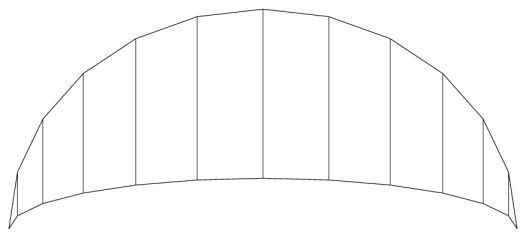
Looks quite alike, right?
Well, next...
2A. This is his design picture (3D) took from "BOW" patent dated in 2004...

2B. And the pic from 2001 (3D)
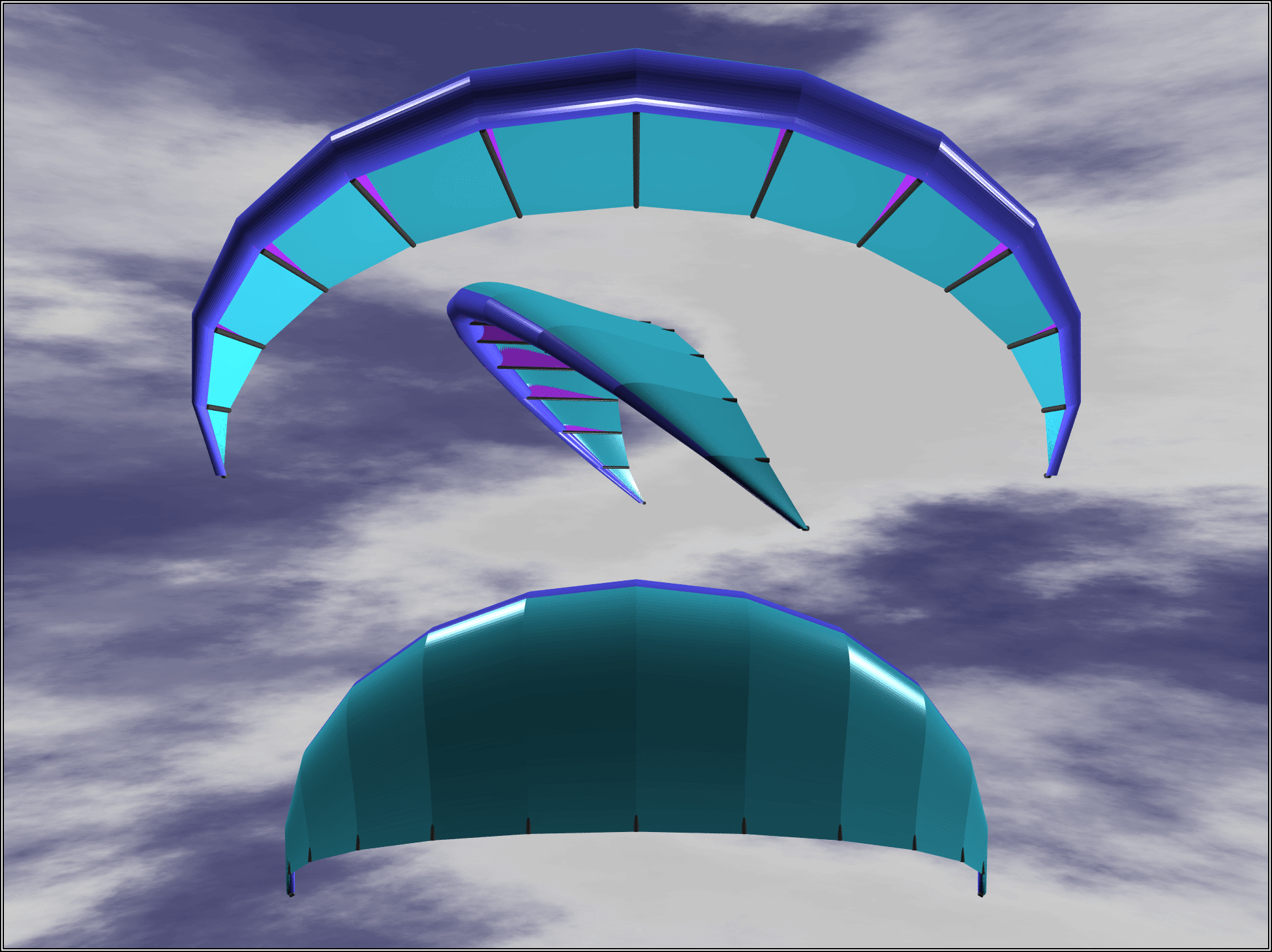
Again, looking alike?
Did you also noticed straight struts on the design?
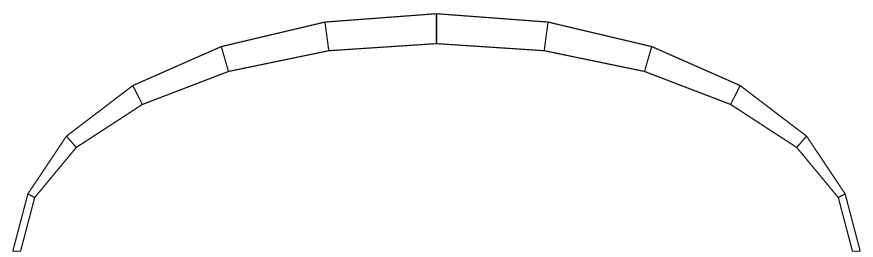
I probably wouldn't bother with this, but the new "ultra flat" BOWs have one more similarity with the idea/design from 2001, very flat arc. And that is the reason for this post...
The next thing that bother me is one bridle patent (pending?) dated in 2007 - sliding bridle which connects a front line to a back line. From the quick translation of my French friend it basically says hat if one rear line is connected to front line, you must pay royalties...
Well - here is one bridle which connects a front line to a back line dated 2005 - it's from Windwing S.A.F.E. system.

I do not like to discredit Bruno for all of his stuff that he gave to this great sport...
I still have the question in my head - who the real inventors are and how he can patent the stuff that were somebody else ideas???
M2C
Please only constructive posts...
==========================
And a reply form the camel
=============================
Hi All,
I'm Andy Wardley, the designer of the Oxygen kite and author of "The Camel Goes Kitesurfing" (TCGKS).
I can do better than prove that I published the web pages in 2001... The pages are a web version of a paper I presented at the 2001 Open Source conference. The complete paper was published in the proceedings of the conference. It's out of print now, but I've got a couple of printed copies sitting here in front of me. There *should* be a copy in the Library of Congress (if I understand how things work in the US), although their online catalogue doesn't show it.
O'Reilly Perl Conference Proceedings
July 2001, O'Reilly and Associates
ISBN: 0-596-00228-9
I just tried to scan it, but it looks like my scanner has died I'll take some pics later. But I think it's safe to say that I can establish prior art without any doubt.
Copies of the Bow Kite patents are here:
www.inflatablekite.com/siteinf/gb/InfPatent.html#gotoApril The patents cover three separate things:
1) The swept wing, concave trailing edge, general shape and construction. In this respect, my design is clearly prior art. Strike 1.
2) The bridle system. I don't mention the bridle in TCGKS so I can't easily establish prior art, but the bridles I used in my prototypes were very similar to what they've published in figures 4 through 10 (I've also got my bridle drawings from the time in front of me). They're all just variations on the catenary curve (think: inverted suspension bridge) theme. I don't make any particular claim there because kite designers (like Peter Lynn and Andrew Beattie for example) have been making similar variations on arch bridles for as long as I can remember (certainly back to the 1990s). In my opinion, there is no inventive step here. What they've done is obvious to any skilled person. Strike 2. For a background on the research I've done into active bridles (mostly on sticky kites), see
wardley.org/kites/bridle/index.html 3) The control bar. Out of my league. I've never done anything vaguely invented with control bars so I'm not really in a position to comment.
Back when I submitted the paper, I did so in full knowledge that its publication would prevent me from subsequently patenting the idea (you can't patent an idea once it's published, even if you're the publisher). But that was fine as far as I was concerned. I didn't have the time or inclination to follow the idea through back then (or even now), so I was happy to share my ideas in the hope that someone else might make something of it. But the most important thing was that it would clearly establish prior art to prevent anyone else from patenting the idea and stopping me, or anyone else, from working on it. And here we are.
So I guess I get to say "I told me so".
In summary:
kite patent: bogus - clear prior art
bridle patent: probably bogus - no inventive step
control bar patent: no idea
All IMHO, IANAL, etc.
Cheers
Andy
====================================

 Kitepower Australia
> 9 months ago, 23 Aug 2009
Kitepower Australia
> 9 months ago, 23 Aug 2009