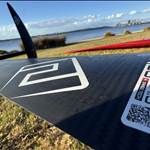
Below is my now possibly biased opinion (more on this in the conclusion) on the new 2027 HA Gen 2 sails from Patrik. None of this is AI, just more of my drivel, I mean learnings based on my journey so far. It’s my understanding they are being available later this year and I just noticed them on the Patrik website.
I was chatting with Mark at Surfsail Australia a while back about buying a couple of new sails to fill some gaps. I thought two sails around 5.5 and 7 metres would help to maximise my on-water foiling time, or at least increase the odds of getting quality flight time. To my surprise, a couple of 2027 pre-production sails were becoming available. Evidently used a couple of times by the Patrik team riders, but not abused. Below are my thoughts using the new sails.
For context, I'm 51, 6ft, 80kg, still questionably fit, started sailing at the end of March 2025 after an almost 20+year hiatus. I try to sail twice per week, in winds 5 to so far 28 knots. I'm not sponsored, none of this is Ai, feel free to laugh at any errors. Looking forward to hearing others’ experiences.
I originally started windsurfing in the late 80s, got into slalom and a bit of wave sailing, sailed in Perth mostly, also a bit in Lancelin, Margaret River, Geraldton, Hawaii and Bali, until the early 2000s, was no Dunkerbeck, got bored, jumped into cycling, life changed bla bla bla, 20 odd years later here we are, I needed a new midlife crisis, I mean sport. Tried golf, swimming, running, canoe, kayaking …boring, nothing could hold my ADHD attention. Looked into kite surfing, wingfoiling, all looked awesome (still might try it) but windfoiling looked more fun.
Conditions |
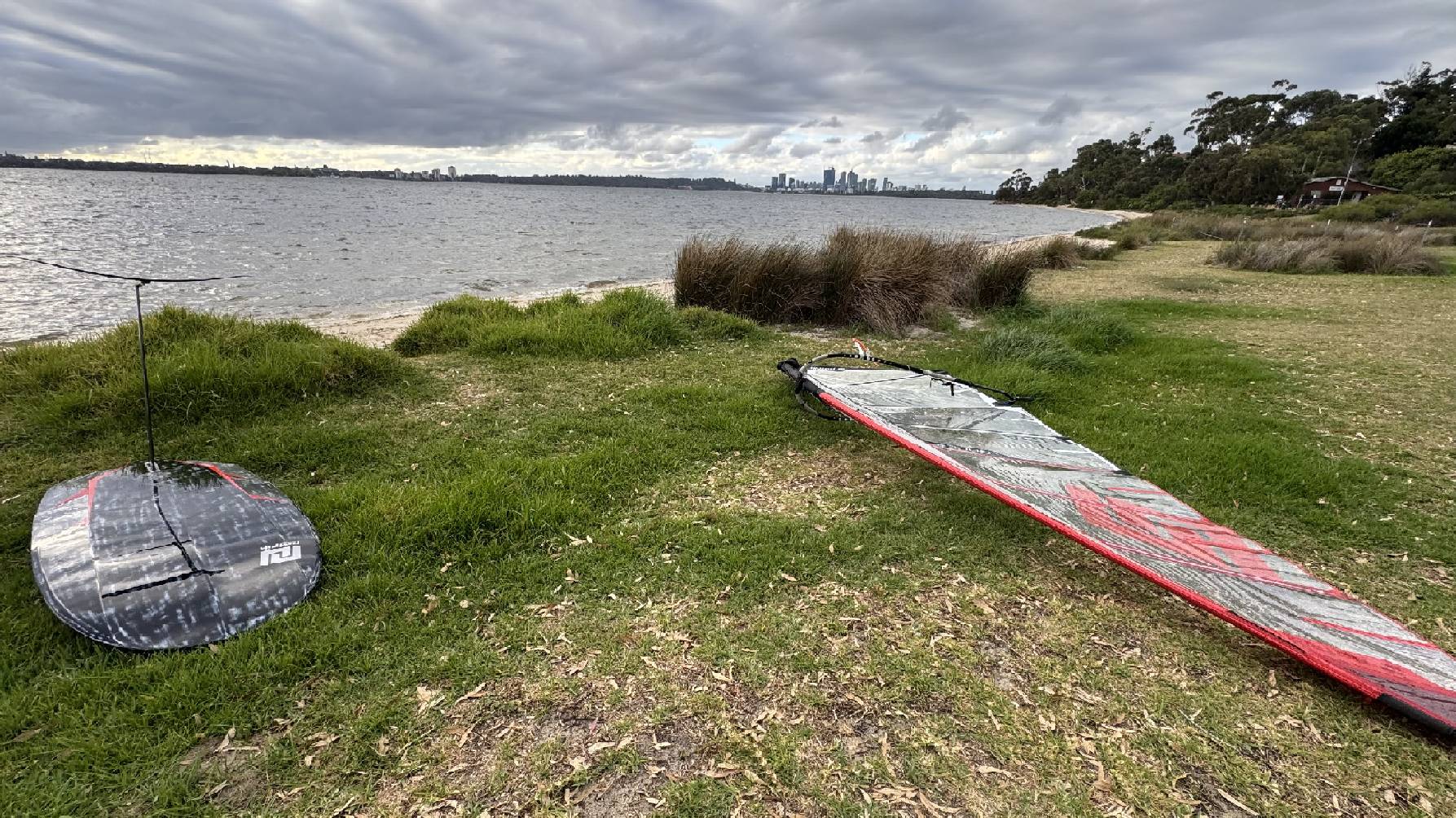
I managed to pick these sails up near the end of March so the best of the summer sea breezes had pretty much finished and we’re in that in-between season, it has been to say the least substandard weather for windfoiling. I managed to time a couple of westerly, SW and southern fronts, morning easterlies and north easterlies for some gusty, marginal but sometimes perfect conditions. Wind range from 5kts to 27/28 kts. Chop (wind, boat tidal) varied from 100mm - 800 or 900mm, all on the Swan River.
I have * the gear I used for these tests. (See far below, if you’re still awake) I’ve considered each session for each category below.
Design & Style Aesthetics |
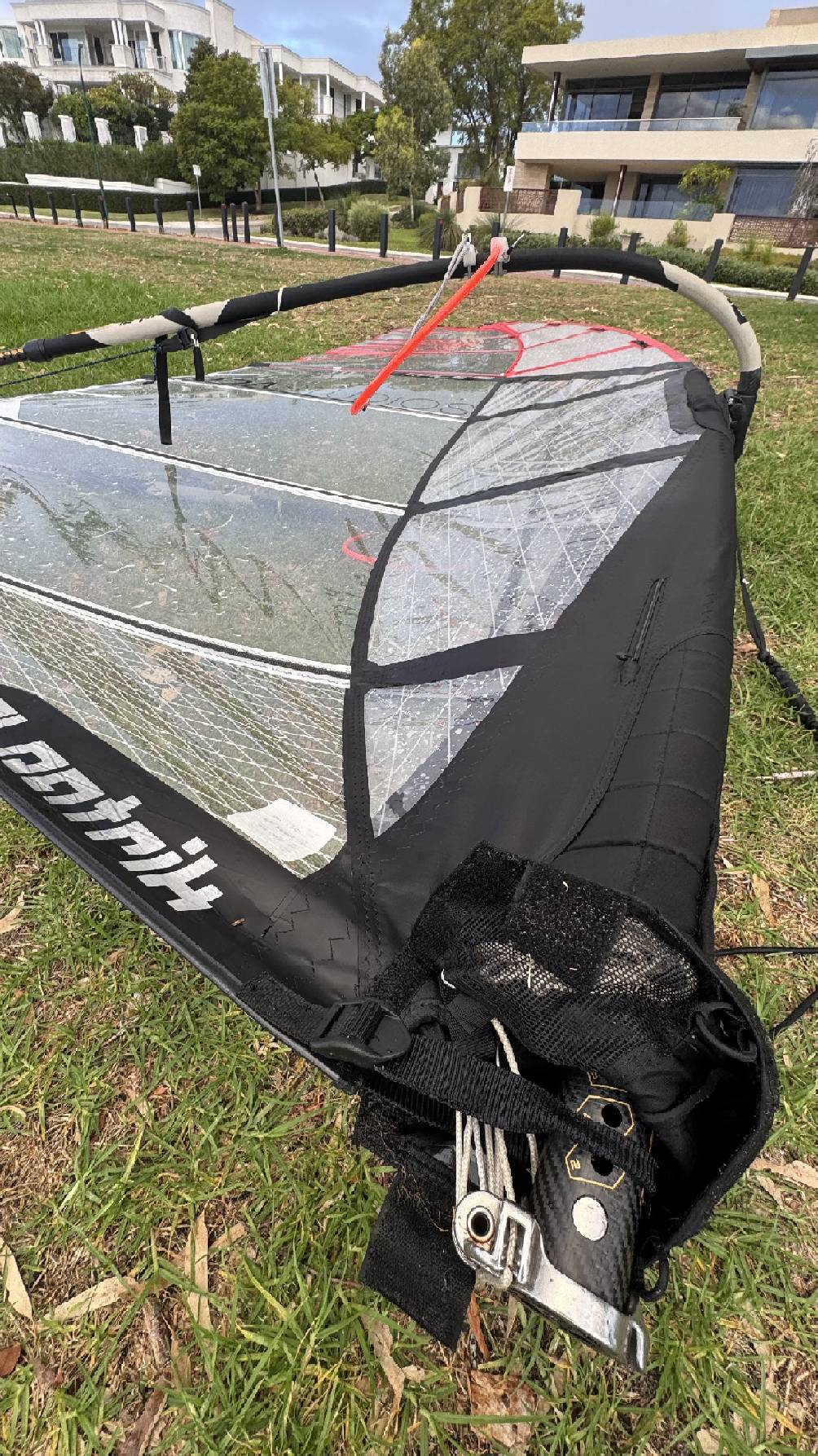
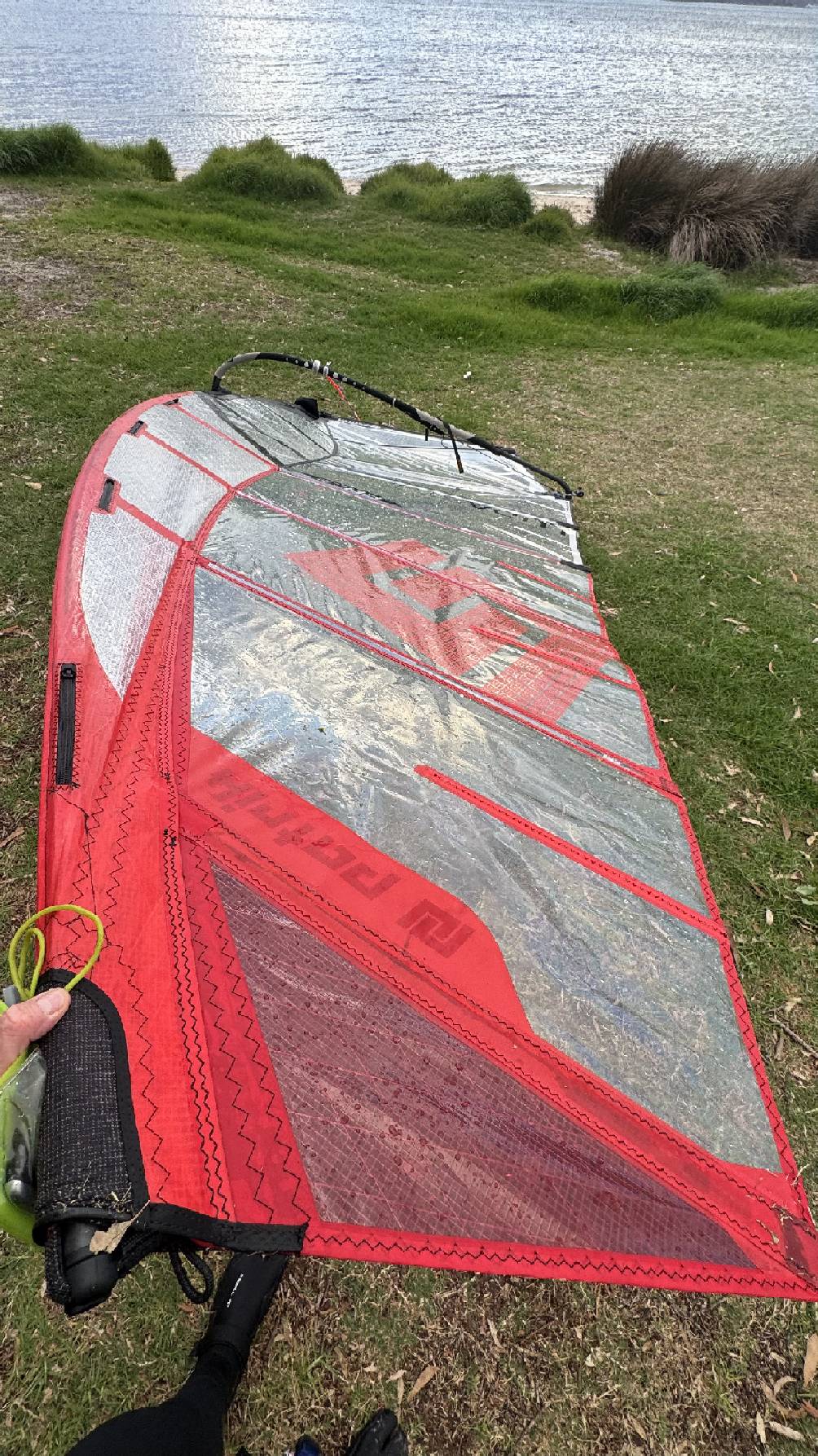
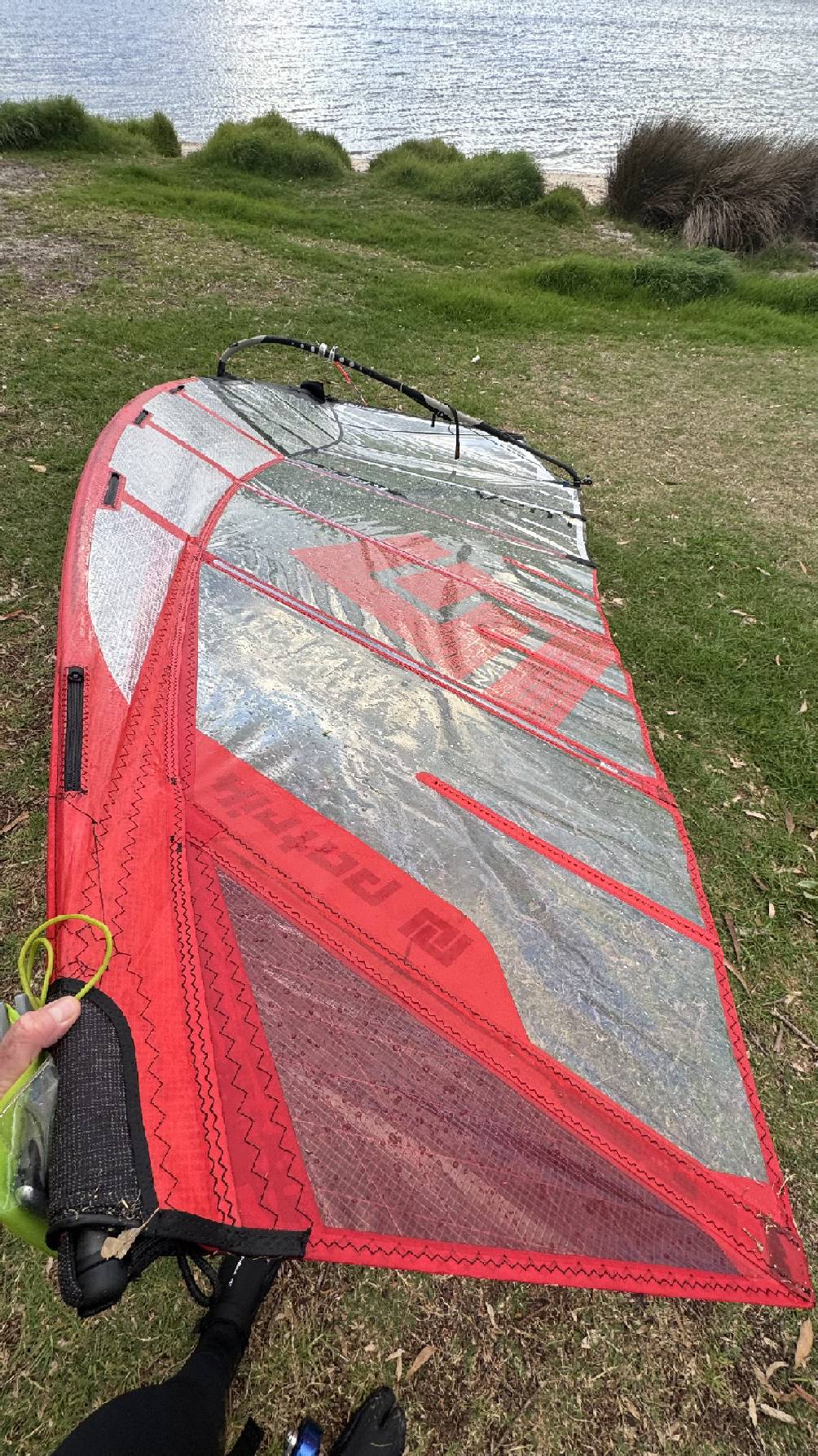
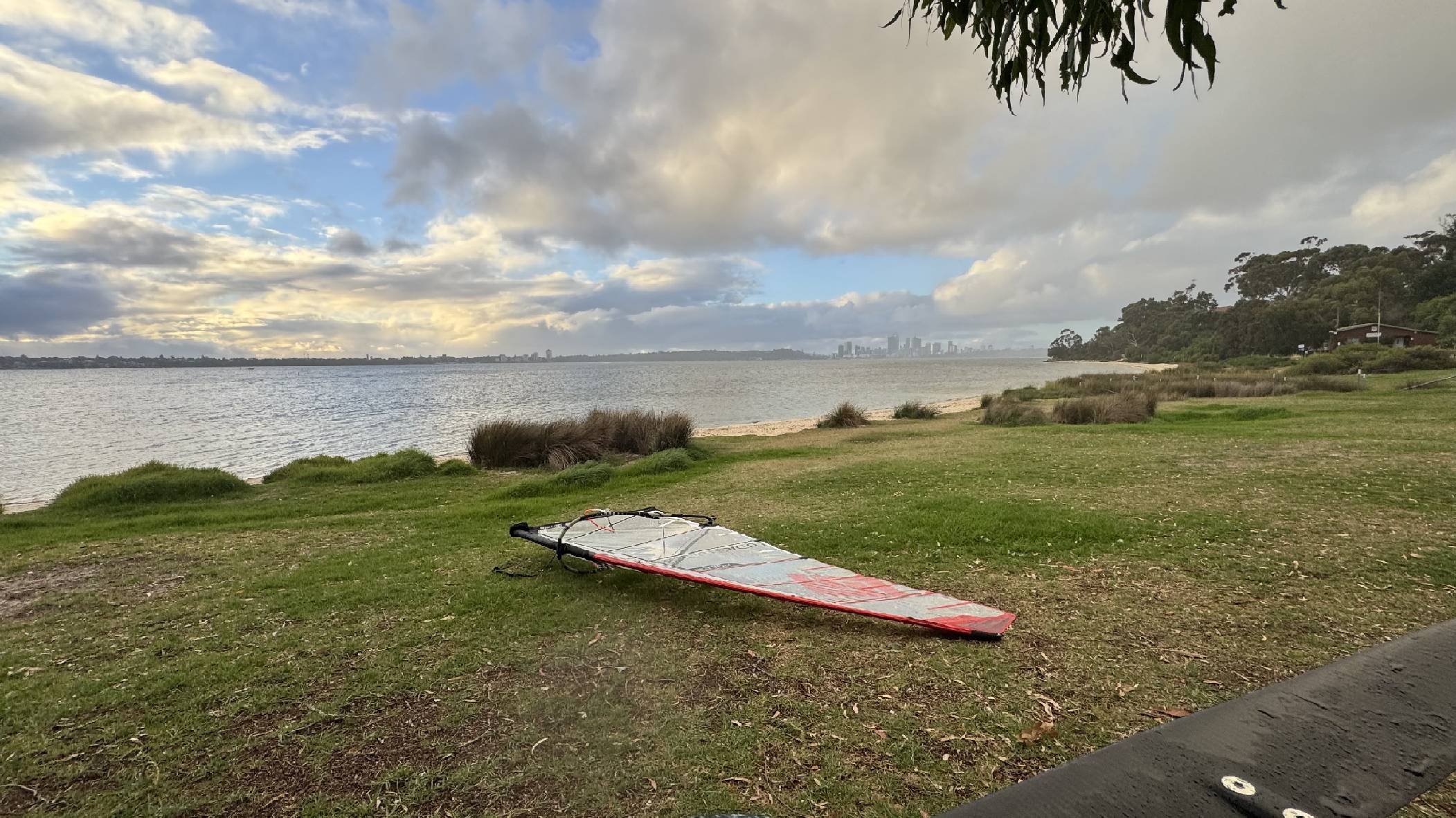
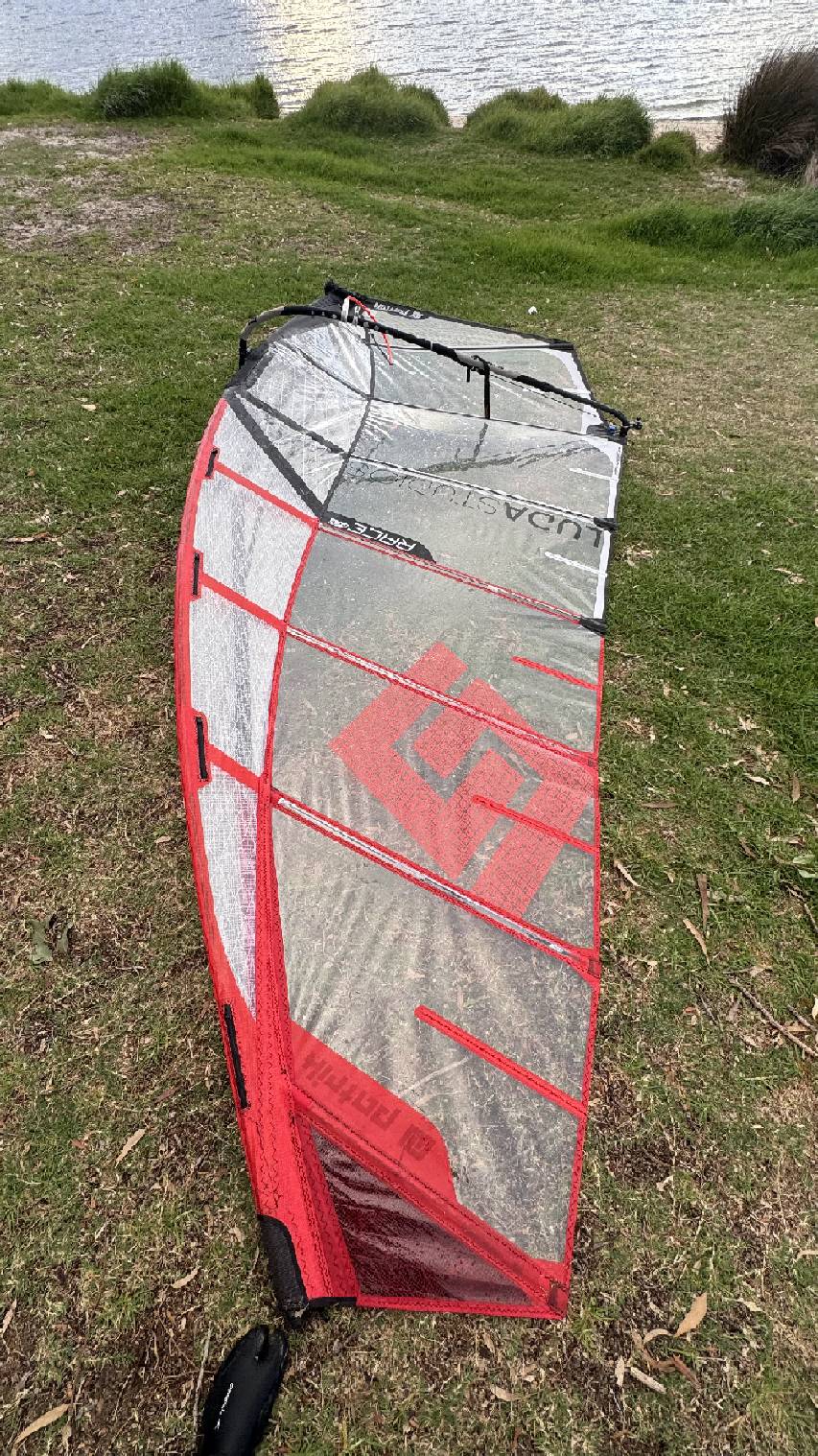
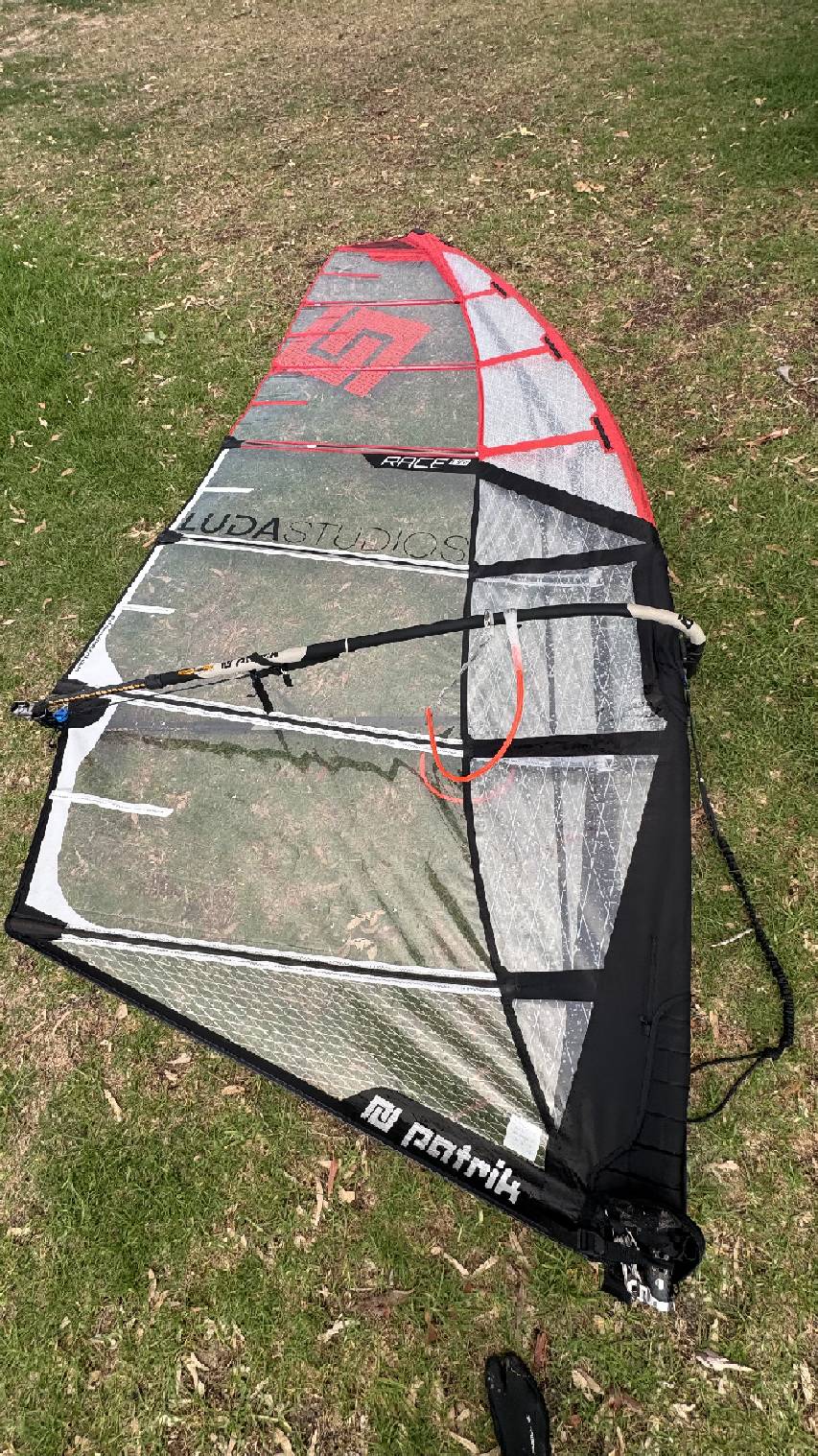
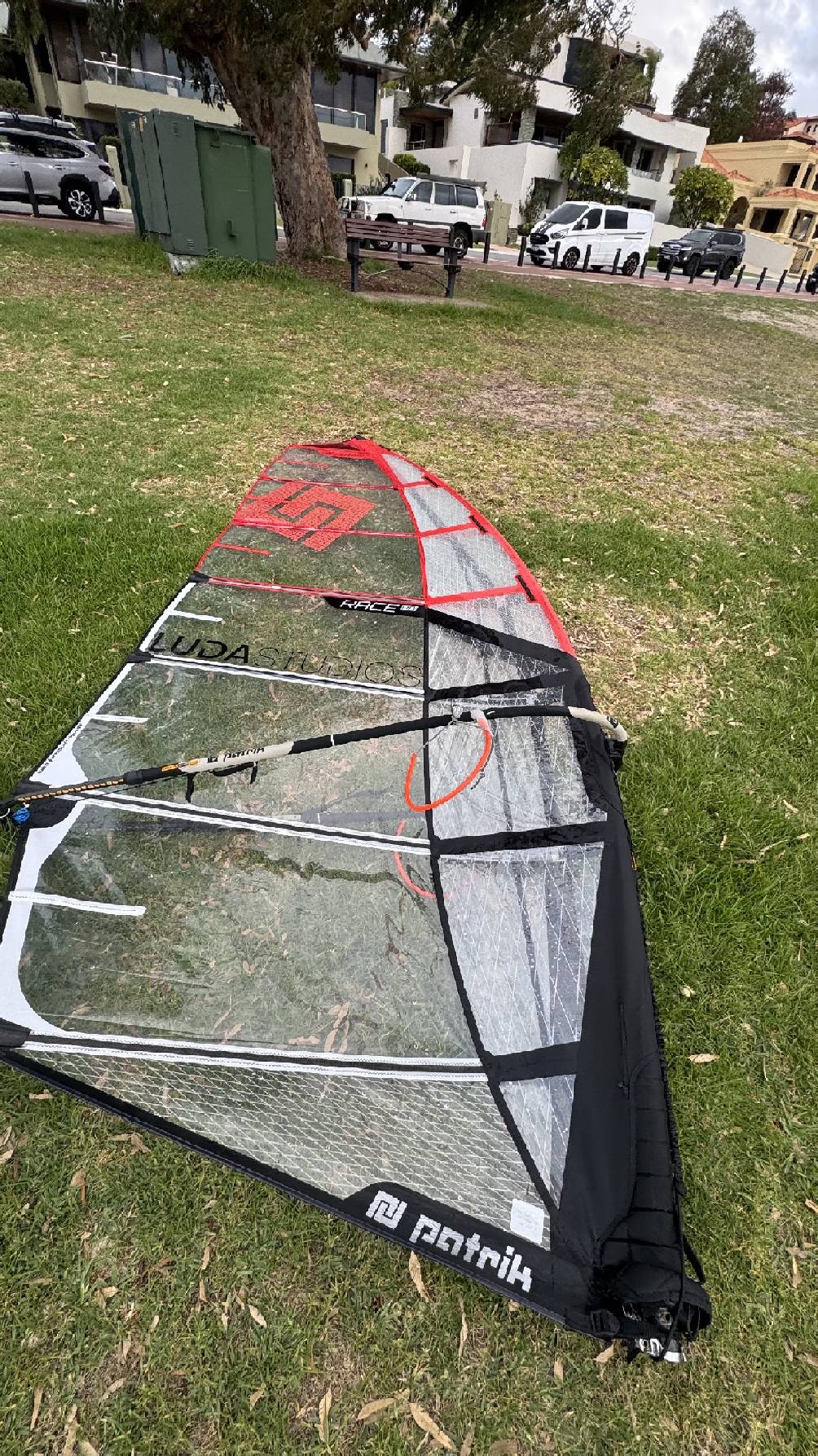
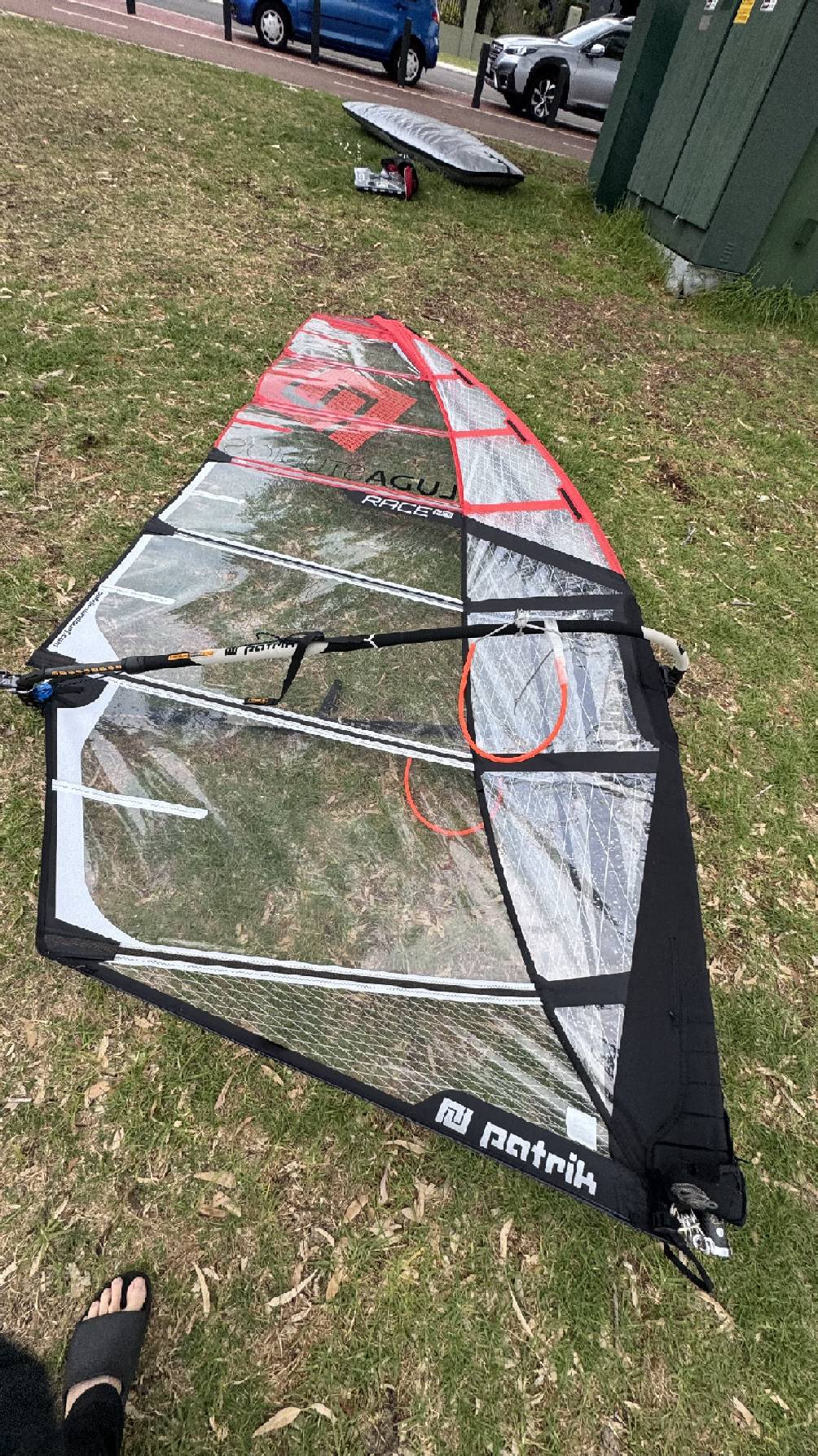
Straight up, the new Patrik Gen2 HA sails look like a stylised mix of the 2022 S2, Foil +, and the 2024 Gen 1 HA sails, except for a few things that seem to make the sail lighter, arguably more robust, and a cleaner-looking wing shape. I like the design principles; it’s one of the things that drew my attention to the Patrik sails from the beginning: minimalist, clean lines, and lots of viewable area. In short, the Gen 2 is almost entirely clear, with red outlines up top and black outlines at the bottom. Red Patrik logo up top, white text on black below, super clean, simple, practical.
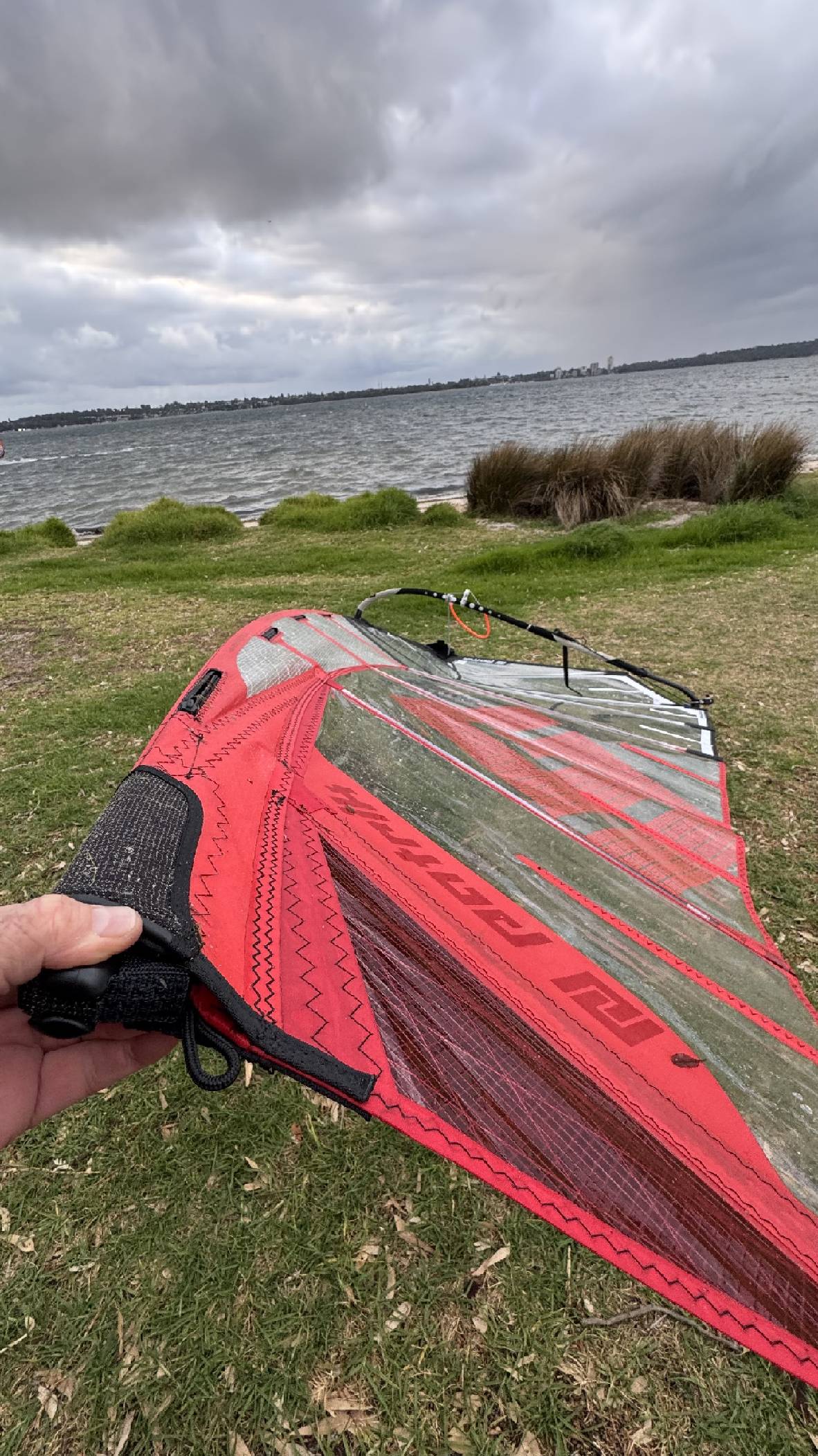
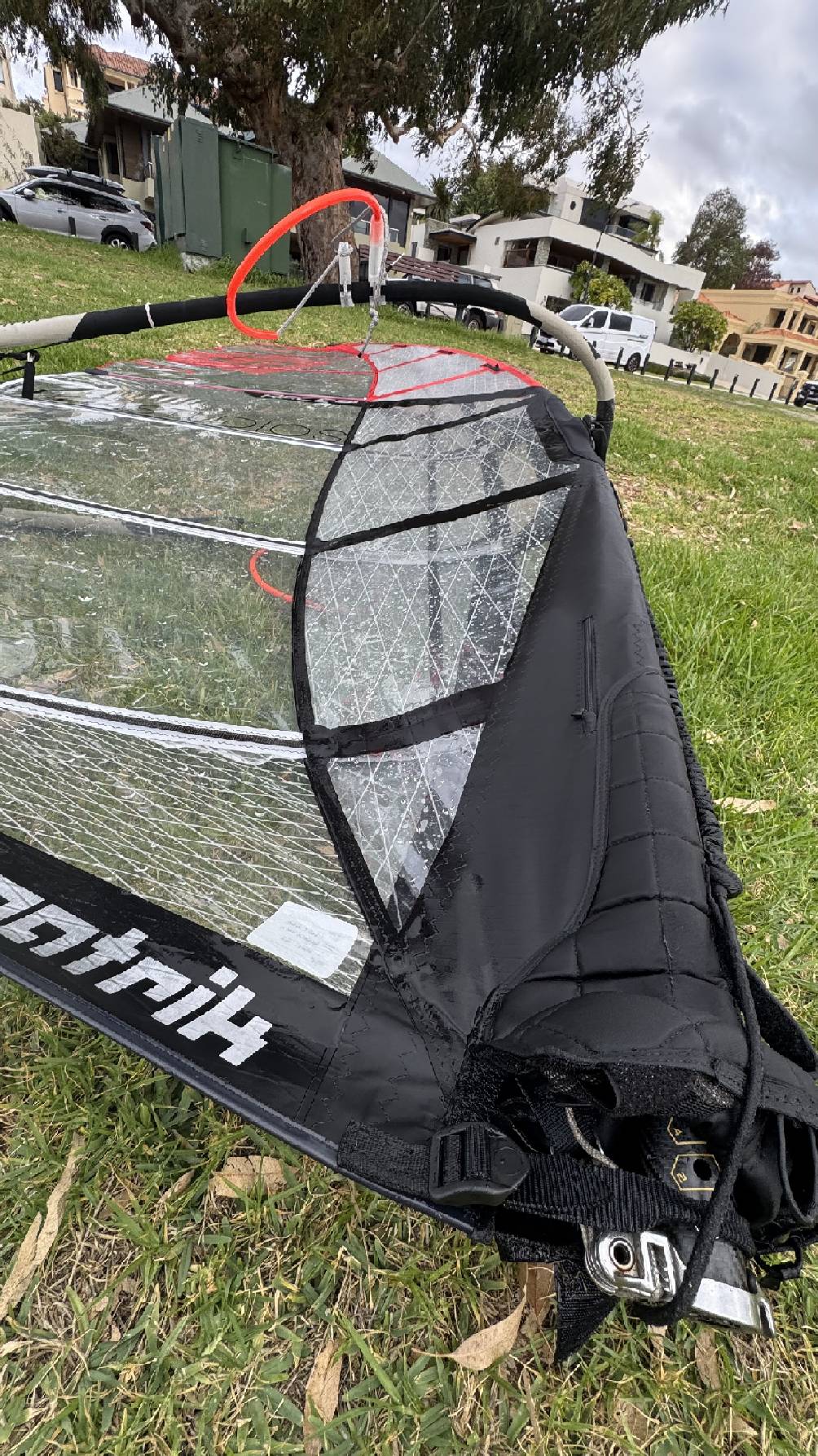
Starting with the fine red line (I want to call it Scrim - can someone chime in on materials?) on the upper leading edge of the mast sleeve, including the Batten pocket zippers, runs from the head to the boom pocket where it turns black to the mast foot. This combo is much better in the dirt and grass. But here’s where it differs; most of the mast sleeve is a continuation of the (I think it’s called) X-Ply, Luff curve. It's like the Luff Curve runs as one piece into the mast now (see photos); this makes the sail lighter, both physically and visually.
And this is where the things differ: the entire luff curve from head to foot is much more transparent with the clear reinforced X-ply stuff. With the tighter weave (slightly opaque) above the boom and the larger open weave X-Ply (transparent) along the bottom 4 panels, on the water this just makes sense, more on this later.
The red is also picked up at the sail head and along the top half of the clew, mini battens, and one side of the batten pockets, maintaining a cohesive look. The bottom panels are surrounded by the black Scrim, with a few splashes of white on one side of the battens and text.
The bottom 4 panels are almost entirely clear Monofilm; the very bottom panel has more of the X-ply stuff, which makes sense; this area gets punished during dodgy gybes, uphauling, and waterstarts.
All of the Batten pockets have been refined too; a clear monofilm covers one side, it’s actually like one sheet extends from head to foot over the battens, with the red or black ‘Scrim’ fabric on the other side again above and below the boom maintaining design and colour aesthetics. So far, this is great, holding up to the endless punishment I throw at it. I never thought I’d see the battens flexing while sailing, bringing on a new appreciation for the amount of work they do.
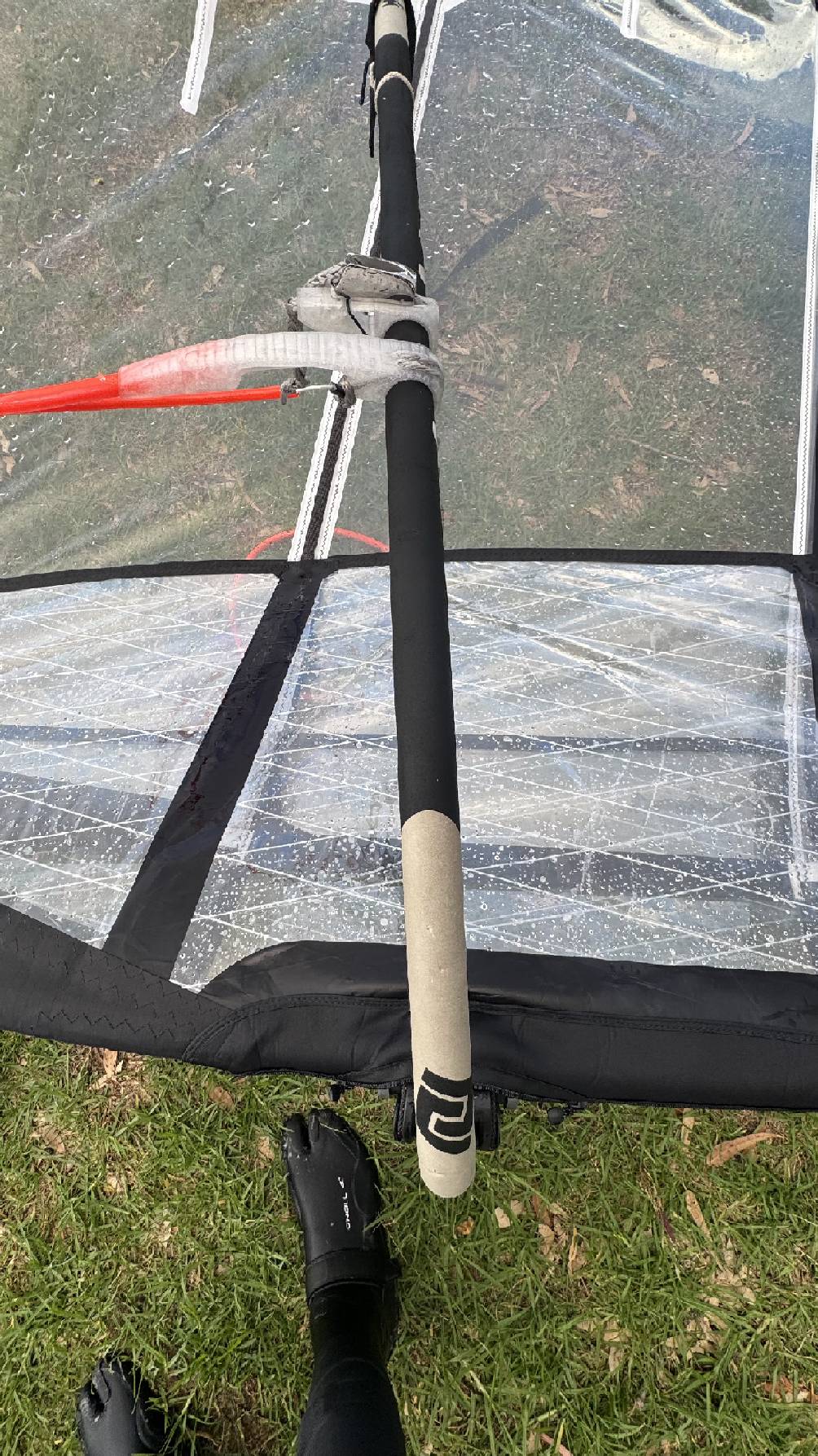
The top three battens have their tensioner alongside the mast, it just feels like the logical step, as the top of the sail’s swing weight to the clew is minimal. I’ve especially noticed this when running downwind and midway through gybes. I want to say it’s more balanced here, easy to flip in a gybe, and the sail feels like it releases airflow more quickly. The biggest feel of them all is blasting in gusts…the sail feels like it opens up when accelerating, more on this later in feels.
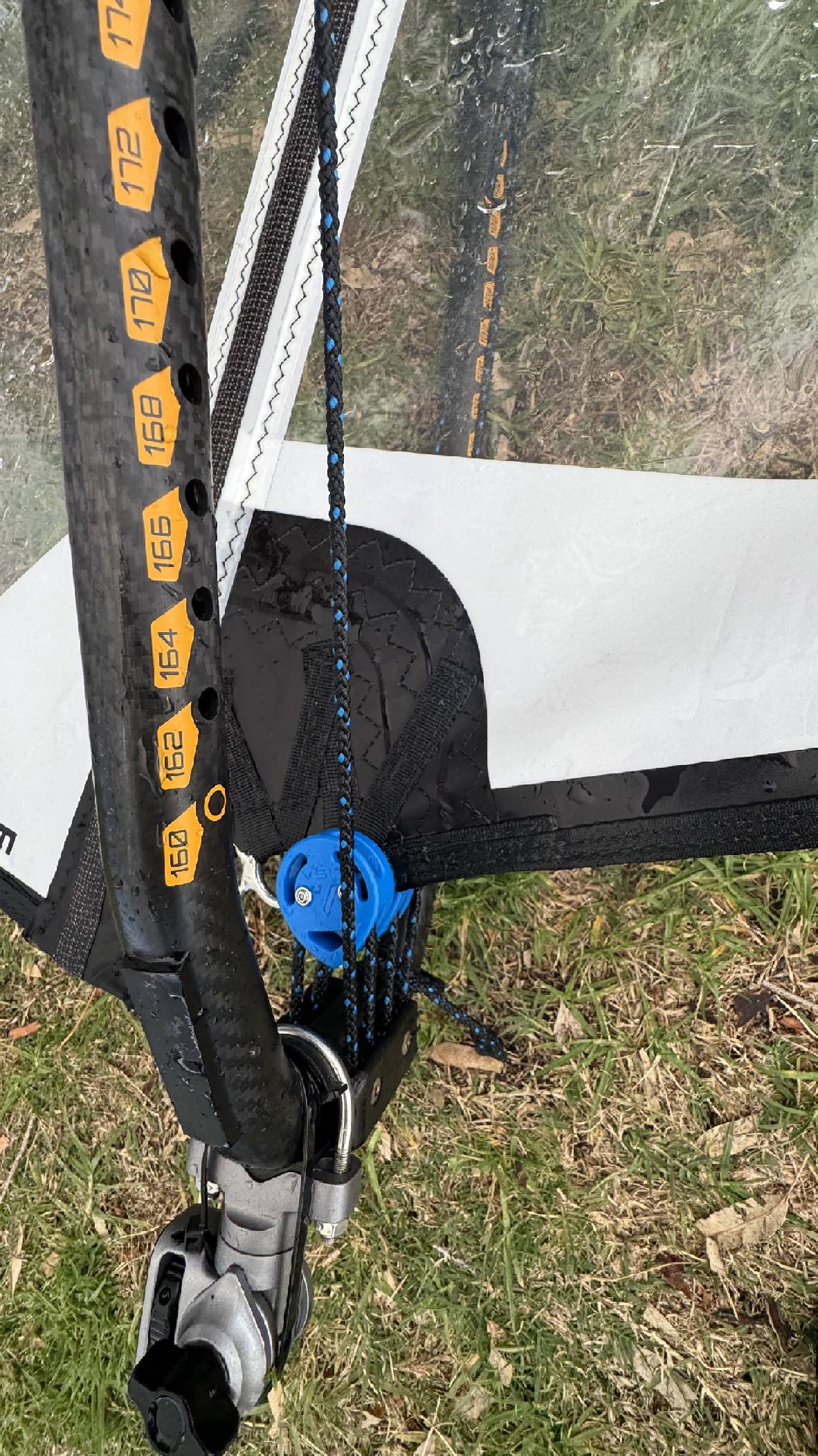
The foot area and area under the boom looks very similar to the GEN1. Black outline with white highlights and text, clean lines, strong, robust and makes logical sense not to change things too much here from the Gen1. It’s tidy and pretty easy to prepare for downhaul. The padding is tough, especially against the sandpaper deck, it scratches but doesn’t seem to wear out. Speaking of downhaul, I thought the downhaul effort was easier; it’s still the 3 on 3 pulley as per the Gen1. This is the one thing to get right across all of the sail generations and can make the difference between falling into the Goldilocks zone or muscling my way into it. (more on this later in feels)
Clew |
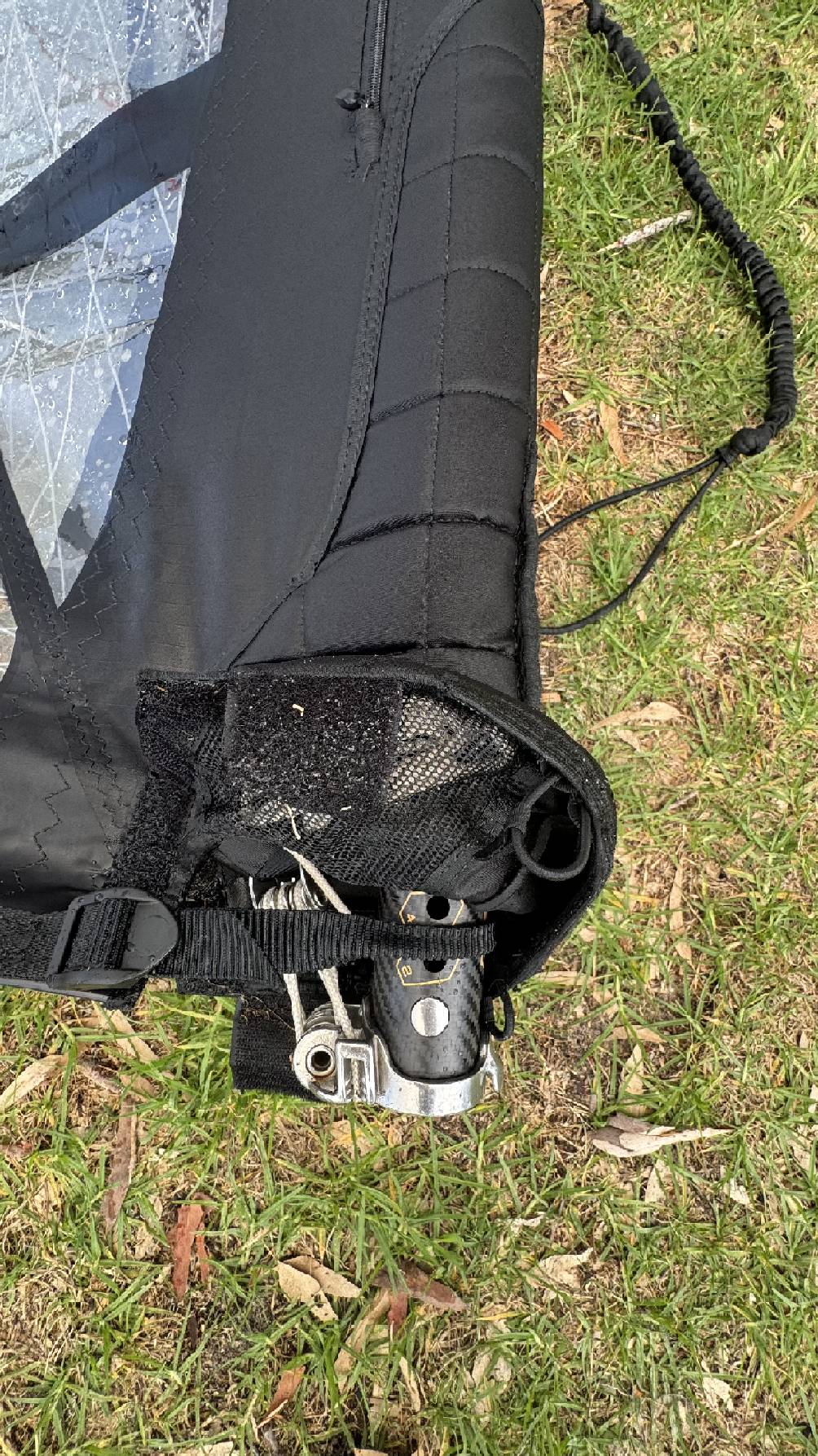
The new knuckle duster clew design makes sense. Looking at it now, I am amazed it wasn’t introduced years ago, or did I miss it? The three rings are on the outer edge of the sail, like the new Patrik wave sails. They are well-designed and easy to use, making rigging and adjusting on and off the water easier. It’s not just the knuckle duster, the whole clew area is lighter, fewer materials congregating at this point, so the sail looks and feels cleaner and lighter. I use the Lisa Clew pully thingo, and it makes it a 30-second outhaul adjustment in shallower calm waters; it fits perfectly on the knuckle duster, bit of a match made in heaven.
Having the extra midway hole is a fine-tune detail I didn’t know I needed, and now I’ve found it’s essential on the water as the wind picks up. I regularly use the two different rings on the previous models, and weirdly, they make a huge difference to the handling of the sail. If the wind picks up and I’m thinking of changing down, I’ll test out the lower holes first. It’s surprising how much more wind the sail (and me) can handle. I’m assuming this allows the batten above the boom (captain obvious) to open further, dumping or releasing wind quicker and providing better gust control on the backhand.
The three-ring (knuckle duster) system is like the new Partik wave sails. It is less bulky and easier to rig. (More on this later) It’s neater and feels lighter but stronger, maybe better stated, it’s more efficient. Looks like fewer layers here too, so the clew feels lighter and easier to push and pull around. Weight-wise, the 5.6m feels like my 4.4m Gen 1.
Feels & Comfort
I’m no sail tuning expert, but the first time on the water, the sail was mind-altering. I was straight into the Goldilocks zone. To me, this sail has been a massive evolutionary leap forward. Smoother onto the plane, easier to pump, lighter in the hands, more balanced and just great fun! I felt like I’d just unlocked another level in the windfoiling game.
The Gen 2 feels like it has a much wider sweet spot; it instantly improved my confidence on the foil. It’s like there is more margin for error on the downhaul and outhaul front, or just some weird magic, more on this shortly.
In hindsight, on earlier versions (still in the learning phase), it took me a while to dial (downhaul) in that same Goldilocks sweet spot. I have come to learn it’s all in the downhaul. Not enough, and the sail can feel front-hand bias like the balance is too far forward, giving me the feeling I can fall over the front and sheeting in won’t fix it. Too much downhaul and the sail takes a few more pumps to get going.
The same with Outhaul: too much and it can make the sail a bit twitchy, but it’s great for blasting upwind; too little and we’re heading to that front-weighted feeling again, but great for getting going and off-the-wind, downwind runs. Ive been using the Patrik Outhaul kit which is great, however I can’t quite find the best spot to place the loop. Too close to the harness lines and it gets in the way of the trailing hand, too far away and it’s impossible to grab the flapping toggle. (Because I’m unco) I just installed the Chinook outhaul pulley system on the big boom, so far its perfect but again the trail hand the hits the clam cleat and slips on the plastic wrapping around the boom.
Surprisingly, these sails have embodied everything on my wish list. (see wish list at the end) Patrik and his team have really stuck to their ‘Control first’ philosophy. It’s been great to see this translating to on-the-water feels. I didn’t think the Gen 1 could be improved, as it was and still is bloody good, but the numbers don’t lie.
My average speeds and top speeds increased straight away. On the Foil One board and AIO 900 front wing & 6.8m I hit 39 kp/h on the first session, up from 37. My top speed on the Foil Slalom Gen 3 and Aeon went from 43.8 kph to 46.3 kph (just over 25 kts) on the 5.6m (450 front wing). 42.3 kph on the 600 Aeon front wing, up from 37.6 kph. Granted, these are marginal gains, but over 2 knots is still 2 knots. What surprised me the most was I didn’t realise I was hitting this top speed; everything just felt easy, comfortable, and in control. This says to me the design team are on the right track.
In the first session, I rigged up with two to three batten spacers already in place. I thought it would be too much, but it turned out to be perfect. The battens were harder to push through during a gybe (see camber rotation). Great bottom end and seemingly endless top-end— or as far as I was game enough to push it. I didn’t have any catapults or near misses, just fun sailing.
I’ve made a few tweeks since then, and wow, the sail just excelled in every session and getting better each time. I also had a few chances to use the Gen2 Foil Slalom 85 board (160L). It took the first session to find the perfect foot strap position and mast track position, but the sail continued to be super reliable and recalibrate. (Incidentally, footstraps needed to be further back than expected (compared with the prototype).)
Looking back, the differences between S1, Foil +, and the Gen 1 HA sails are an obvious evolution: incremental improvements both on and off the water. Gen 2 is a big leap forward. Every feel is easier, buttery smooth. I think this is in part due to the way the sail opens up in the gusts. Without speaking with Patrik or any team riders, I can only speculate here based on feels… I think it’s partly to do with the battens; they all seem to flex in different ways. As a gust hits, (because I can watch them now), it’s like they each have a different flex characteristic, opening up more and more as I look up the leech, and gently flexing up through and from the middle of the sail from the wide luff curve, (so there is no weird fold line above the boom to the middle of the mast). Speculating again, it’s like battens 1, 2, and 3 with the mast side adjustment are free to open unencumbered; the wind flow doesn’t bunch up like it would around the older style, so the sail just twists elegantly, letting it go quicker. The feels from this…I’m not overreacting to the sail pushing the nose of the board down or rotating me and the sail forward; it’s like that rotational force is let out the back, and I think this is where that control is being generated.
I’ve also become a big fan of the fine edge along the leech in all of Patrik’s sails; it is silent, it doesn’t flap around like a kite; instead, it flexes seamlessly and silently, like an Albatross wing from a Sir David Attenborough documentary.
Bottom-end power |
As mentioned in the Gen 1, 4.4 review I did last year, it packs a lot of punch, and the Gen2 is no different, this time around. It could be that my technique has improved, but it feels even easier to manage. I don’t find myself mentally bracing myself or erring on the side of caution as much. I’m just looking forward to leaning into it, giving it a backhand wiggle to drop into that sweet spot, jumping in the front footstrap, pumping the foil all while I am smoothly accelerating. I consistently start flying in 10 - 12 kts winds on the 6.8m on the 91 Foil One (650 Front Wing 195 Stab) and maxing out around 22/23 knots on the 85 Foil Slalom (365 Front Wing 160 Stab). The 5.6m, I think I can get going in around 14 - 15 knot winds (650 Front Wing), and I haven’t maxed out yet. I’ve been out in 25/27 knot gusts and didn’t realise it. (Err caveats: getting going was dependent on how fatigued I was feeling. I was feeling frisky in the 25+ knot day.)
Camber Rotation:
Richard, one of the awesome guys down the river, gave me some great advice on (amongst many things) Cams - he gets better rotation with more downhaul on his really nice Severne Sails. It turns out he was right. It has a huge impact on the Patrik camber rotation too. Too little, and it can take some effort to pop them round, especially in a gybe when I needs it to be effortless & because I’m bloody uncoordinated. I took a few ‘spacers’ out that helped too. All of my Patrik sails take a bit of a ‘technique’ to rotate initially, but they all seem to get better with age and/ or after a few tweaks here and there. I’ve found if I get the one above or below the boom rotating perfectly (not both), everything else falls into place on the water. The last two sessions, I have been favouring the one above the boom, only because I like the shape deep below the boom helping with that bottom end grunt.
Boom Height |
I mess around with the height of the boom on the water a lot. If the wind is getting lighter, I’ll stop and slide it up 1cm or 2. If it’s picking up, lowering it a bit helps control the lift and puts me in a better position when speeding up. Speculation here, but it seems to reduce the amount of lift on the foil and helps with my reaction times. This does mean another tweak of the harness lines. For the most part, I start with just over a hand-width from the bottom of the mast sleeve and adjust from there according to the conditions. If I raise it too much, such as 4 cm, I find I need to push the mast track forward 2 - 4 mm to keep the board level and as aero as possible. (Foil mast rake is typically 2.8-3.2 degrees)
Acceleration & Top-end speed |
Top speeds are, without a doubt, awesome fun, but it’s subtle and creeps up on ya; it’s not until I had been on the water a few times that I came to realise how unique this sail really is and what other sails aren’t doing. I started to feel like I was sitting in an armchair instead of the Wild Mouse at the Royal show. The stability is mind-boggling, which made the acceleration and top-end speed so nonchalant it wasn’t until I stopped to look I thought, “ohh ****, I just hit another PB”.
Regularly, I have found myself with a cheeky grin or bursting into laughter amid this acceleration. It’s just ****n fun. From standstill to planning, popping onto the foil or flipping the sail after a gybe, the acceleration is awesome, it’s forgiving when you need it, and the speed…it sneaks up on you.
Initially, I thought it was my imagination; I thought I was slightly slower to accelerate than the Gen 1, or maybe time momentarily stood still. I don’t think it is either; it’s just a nice new feeling, it’s lube smooth, and this smoothness makes everything easy. The acceleration is more exponential, not parabolic. I could get that ‘dialled in’ position straight away, maintain the control, and continue to accelerate. I felt like I had time to find footstraps and harness lines. I wasn’t bracing myself or fighting the rig at all; I wasn’t hanging on for grim death and didn’t feel like my forearms were getting hammered all the time. I could get into the harness lines earlier and take off in comfort, just a really controlled feeling that's difficult to describe with my limited vocab.
Blasting along Nedlands and (my top speed spot) Matilda Bay and Point Walter, which is arguably the best spot on the Swan River, they all have a whole new dimension to them. Over summer, most of the time, Point Walter is flat water, the wind funnels down from Fremantle and over the sandbar, so in the right wind conditions (I think more south-westerly), it’s an off-the-wind speed-session paradise. Every session there, I have managed to beat my previous PB since getting these sails. But the cool thing is the sail makes it easy to get there from upriver. When the wind is in, I’m finding the commute up the river enjoyable and easier; again, it’s like the sail has unlocked a new level in the game.
Balance and comfort |
From what I can tell, the sail has a slightly higher aspect ratio than Gen1. The luff curve looks and feels much wider, from head to foot. To me, it feels more nimble in my hands, easy to throw around, and slot into the sweet spot. It has an almost wave sail vibe or 2 or 3 sizes smaller weight-wise than the actual sail size. As I fly into a gybe or uphaul out of the water, the 5.6m feels like a 4.5m and the 6.8m feels like the 5.8m.
The balance is amazing. Now that I have had time to play with the sails, I’ve found myself looking forward to the gusts instead of mentally bracing myself in anticipation. I’ve been loosening up and just enjoying the time on the water and playing with the gear.
I’ve been making tiny tweaks here and there to get more (or less) out of each sail, like the harness lines, mast track position, and footstraps. The sweet spot is fun to explore and adjust to better suit the conditions. (More on this shortly.) I’ve also tried under the recommended downhaul, and this is where things start to feel unsteady or the balance is too far forward relative to the current foot strap setup. While it’s interesting to find the limits, I can see why the recommendations are printed on the sails.
Thinking about it another way, I’ve found myself fighting the rig less and no longer psyching myself out, as the whole rig feels fully in control, with no forced touchdowns in gusts, just subtle push downs that feel less than 5cm further up the mast and, on the flip side, no huge out-of-control lifts upwind or skyward. I can lean in and go fast or relax all session.
I was that confident after a couple of sessions that I thought I’d test the sails out with 0-degree shims in the Stab, making the foil super slippery and a bit twitchy. Until this upgrade, this has been on the edge of what I am comfortable with. But the sail feels so stable and reliable that I was keen on testing it again. It was so good that I didn’t realise I was hitting 45 plus kph. Sure, it was fast, but usually I’m hyper aware of that kind of speed and on the edge of my comfort zone. Yes, I had a wipeout in the run before this one, but that was because the boat chop was too high, and I shouldn’t have pushed it in that area. Once I’d found a flat area, it was dreamy, and I’m keen to push it further next time.
I’ve heard Patrik talk about “Control” a lot on YouTube over the past year or so. It’s like it’s a part of the guiding principles. This sail really is the physical manifestation of this philosophy and a testament to the incredible amount of time and effort that goes into producing all of this gear.
Harness line positioning |
The Gen 2 Luff-Curve looks much wider, so the logical thing to do is move the harness lines back, then a bit more, then a bit more. The centre sweet spot is way further back than expected. I’ve found myself wanting longer harness lines on the first few runs, then as I warm up, small incremental adjustments shorter as confidence expands. My harness lines are now close together, taking 90 - 95% of my weight and using my hands only to push my front hand, pull with my trailing hand, and front foot back foot pressure to maintain or adjust the ride height on the foil. This sail seriously only needs subtle movements in the Goldilocks zone.
I’ve recently added the Lisa harness lines too, which are now really good, but they take a bit of time to get used to. Maybe I should do a separate review on these. In short, they get in the way during gybes as they don’t fall away when I unhook - always on position. (Could be also be me being unco.) On the flip side of the sail, it’s perfect - always there right where you need it at the end of a gybe or getting going.
Gybes |
To be fair, I’m still **** at gybes. Some sessions, I’ll pull off a bunch of awesome gybes and I think the Olympic squad are going to call me, other sessions are a combination of not bad, almost, meh, I can’t believe I made it this far, or ohh that was ****ed - what the **** am I doing out here... I definitely don’t fall in as much as I used to, but I still need to work on this area. In saying this, I have definitely levelled up, the new sails have noticeably made things easier, both in terms of consistency and control.
The one thing that caught me unaware was the bottom panel. It looks and feels like it hangs about 5cm lower than the previous Gen 1, so it can catch the water when I’m not on the foil midway through a gybe. My first gybe was half-baked, dropped off the foil, the bottom edge caught the chop, and I was straight into the river, in slow-mo. The next few, I was conscious of keeping the mast more upright or staying on the foil. Over time, this has become less of an issue. Overall, I’ve made some great progress with my gybes. Being in control definitely creates confidence going into the gybe, especially after the sail flip. The Cams flip into place easily, and the sail is controllable and ready when I bring the power on again, not the other way around. It still baffles me how the team has done this.
The sweet spot, (or dialled-in)
Ahh, this is important because once you find it with ANY sail, it makes foiling (and windsurfing) F%$KING AMAZING!! It’s one of the reasons why we keep coming back.
With previous sails, some days nothing seems to work and it’s hard to know exactly what to do, especially if it’s been a few weeks or months off the water. But if the sail offers the sweet spot with ease every time, it’s worth sharing the experience.
Gen 2 reveals what I’ve always wanted in a sail, and that's the groove should just fall into place naturally, not occasionally but all the time. Whether getting going or accelerating straight out of a gybe. Gen2’s sweet spot feels bigger or wider, or more consistent and forgiving even if the tuning looks out. It requires less body movement to stay balanced, less man-handling to get there and keep it there. What I like about this is it's more consistent than previous generations, by that I mean every session I get into the groove and have a great sail.
All that said, it’s not that I couldn’t find the real sweet spot with the Foil+, S2, and GEN1 HA sails; compared to the Gen2, I just needed to tweak things a bit more. Usually, it took one or two outhaul adjustments on the water or a quick beach stop to add more downhaul to find that “dialled in” feeling again. Granted, I’m still learning and it’s not always obvious to me that the sail needs more downhaul or the wind is getting stronger (or lighter), but so far, with the Gen2 I’ve found rigging up on shore getting on the water I’m consistently getting into the groove first time. This is not to say it was perfect first time I went out on both sails, but it was bloody close.
Luff (sexy) Curve:
I am a big fan of the transparent Luff -curve and the open Weave X-ply stuff. There is no neck careening around the mast & luff while blasting, chugging, or gybing anymore. To me, this is a game-changer; it simplifies the sailing experience and makes it safer on the water and looks pretty cool. It’s obvious now, make the bottom 4 panels transparent so windsurfers can see where they are going…
Looking across all brands, it seems most modern sails face this challenge. I understand why the downhauling makes Dynema look like dental floss sometimes. To me, this looks like the most practical design response I have seen so far. View lines downwind and ahead are almost perfectly clear. All outlines and shapes of people, boats, and objects on the water are easily discernible.
I’ve even caught sight of a fast-moving Foiling Moth way ahead of time through the sail before things went pear-shaped.
Of course, once the sun is in a lower azimuth or water or condensation is in the Luff-curve, it's harder to see through, but this is so much better than any sail I’ve used.
Rigging & de-rigging |
Nothing new to report here, everything is very similar to the Gen1. Maybe it’s easier to downhaul or I’ve gained some upper body strength, maybe I’ve found some muscle over summer.
Cleaning |
It is a bit easier to clean and maintain than the previous generations, as I can see the whole internal luff curve, and I can get access with the hose through the zips to push any salt and sand out.
Build Quality |
This is something I’ve always liked about Patrik gear and Loft Sails. Arguably the best on the market. Everything is fit for purpose and then some. All of my sails have taken a beating and are still going strong.
Conclusions |
I am sure everyone probably asks these questions before parting with cash:
Can it make me go 10 knots faster?
Is it 2 kilos lighter?
Is it cheaper?
Does it make me look like a PWA pro without trying?
I don’t think this sail does any of that tbh and they don’t need to. It is a huge technical leap forward in the evolution of wind foiling and I think this is the change everyone was searching for before jumping back on the fin in frustration. This generation takes foiling from hard work to an enjoyable day on the water. Sure it can be hard work if you’re pushing like a PWA Pro, but as a mere mortal I just want to have a fun foiling session, maximise my flight time, explore my own capabilities and sometimes push the limit or have a crack at 30 kts plus if my balls can cope and the conditions align.
Do I think it’s worth it? Yeah absolutely.
These two sails have blown me away and I can’t wait to get on the water again.
I’m thinking of upgrading my 8m S2 to a Gen2 too.
Maybe I’ve fallen into a cognitive or confirmation bias here. I’m okay with that. I don’t mention other brands as I haven’t tried them all, and unless I’m comparing apples with apples, there isn’t any point mentioning it here. Sure, I’d love to do a comparison and I’d love to write about the experience, but I’m going to compare them with Patrik’s sails. The gear works…really well, individually and together with other Patrik gear, on and off the water. It’s quietly and confidently getting incrementally better, easier, and controllably faster, opening up more possibilities on the water. It manages airflow across the sail beautifully, it’s made easier to rig for a wider range of conditions, and, so far, it just enables more enjoyable, confident flight time.
I still stand by what I’ve said before… it’s a momentous achievement to bring any product to market. More to the point, especially in a niche sport like WindFoiling. Multiply that across heaps of products AND have them all working together as a cohesive, well-thought-through product line, that deserves my time and spare cash.
Faults and criticisms|
To be fair, where I am at with my WindFoiling journey, this sail has really nailed it. It’s clear to me where things are heading: control, balance, ease of rigging - set and forget, reduction of weights, transparency, and more fun.
It would be great if stitching didn’t eventually fail or fatigue, maybe .7 have nailed it with the new gluing process, and Loft sails have nailed the materials.
It would also be great if the big panels were less prone to crinkling and getting dented from knees and elbows, but we are here in the evolution. I just have to work on being a better WindFoiler!
I definitely think a few videos on rigging, packing, cleaning, storing, settings, and what to look for in the sails before hitting the water and once we’ve been on the water, as well as what feels to expect and to look out for and how to diagnose if there is a problem, would be super helpful. Tips and tricks the pros use would be great too. What to look for if you’re 120 kg’s 192 cm down to 70 kg’s 155 cm. If you sail in light winds or strong winds, ocean or lake, river or wet dreams. These and many more ideas we can all benefit from.
Feel free to add your ideas, challenges on the water, and maybe we can get some answers instead of giving up when it gets too hard or confusing. I seriously think the sail technology has arrived for really good wind foiling.
The Wish list.
These are a few things I wrote down before I purchased and sailed on them, the things I was looking for and wanting to feel on the water.
Silence
Easier in all conditions
Go faster with more all-round control
More clear panels
Balance under load/in the wind shear gustsIs there a way to reduce the catapult feeling further, so far it’s been pretty good on Gen1
Maintain the same bottom end as Gen 1.
Easier to rig for the conditions
A bigger sweet spot or ‘Goldilocks’ and/ or easier to find that “dialed in” effortless feeling.
Lighter in the hands on and off the water.
Gear:
Sails | Partik 8 & 10m Foil +, 6m Foil S2 & 4.4m HA Gen 1, *5.6m & *6.8m HA Gen2
Masts | Partik 550, 500, *460, *440 & *380 | *40cm mast extender 100% Carbon
Boom | *Patrik 200 XL-Curve | * Patrik 160 L-Curve Carbon Booms
Board | *Patrik Prototype 85 Board (sold)
Board | *Patrik Gen 2 Foil Slalom 85 Board
Board | *Patrik Foil One 91 Board
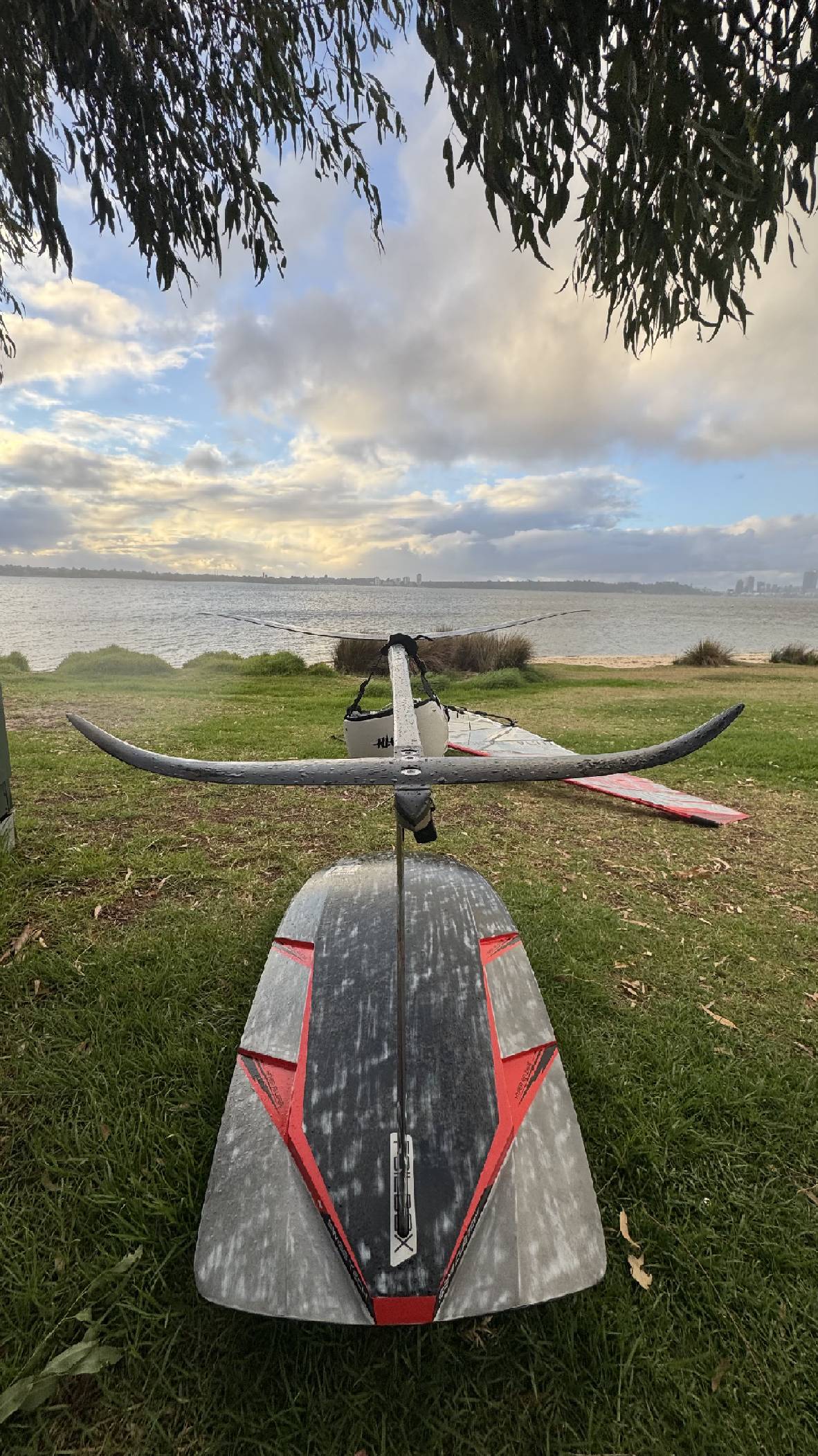
Foil | Patrik Foil One AIO Foil. *900 Front Wing, 1120 Front Wing, *250 Stab.
Foil | Aeon Foil System
Foil Mast | *95 Dim-S
Foil Fuse | *100 Ti. V3 | 100 Al. V2
Foil Front Wing | 365 DNA. H | *450 DNA. H | *650 DNA. H
Foil Stab | *160 | *195
Harness | *Patrik Free Fall Hook.