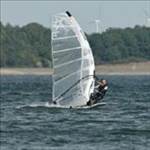
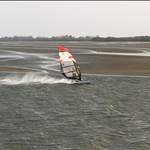
Run's video : www.facebook.com/ptmiriam/videos/2691812681059493/
53.38kn GNSS-500m : www.gps-speedsurfing.com/default.aspx?mnu=user&val=299596&uid=6135
Rank sail name [s] [km/h] [knots]
Men
1 BEL-62 Vincent Valkenaers 18.289 98.62 53.25
2 NED-127 Twan Verseput 18.555 97.20 52.49
3 GER-2 Gunnar Asmussen 18.785 96.01 51.84
4 K-81 Farrel OShea 19.215 93.86 50.68
5 GER-93 Andy Laufer 19.248 93.70 50.60
6 E-18 Pep Bonet 19.418 92.88 50.15
7 E-11 Bjoern Dunkerbeck 19.488 92.55 49.97
8 K-33 Jim Crossley 19.527 92.36 49.87
9 NB-9 Taty Frans 20.046 89.97 48.58
10 IR-777 Oisin van Gelderen 20.074 89.85 48.51
11 A-297 Stefan Csaky 20.392 88.45 47.76
12 GER-818 Torsten Mallon 20.577 87.65 47.33
13 K-5 Erik Beale 20.831 86.58 46.75
14 SUI-203 Christian Arnold 21.920 82.28 44.43
15 GER-77 Christian Benzing 22.093 81.64 44.08
16 I-107 Alberto Possati 22.363 80.65 43.55
17 SWE-58 Mick Born 25.661 70.29 37.95
Women
1 SUI-204 Heidi Ulrich 22.340 80.73 43.59
2 NOR-17 Miriam Rasmussen 22.513 80.11 43.26
No Cigar it seems for V2, Looks pretty nuclear to me going by the tail spray, and other footage in launch area.
A2 best be polishing his fin or something though...
What a day?? @vincentbel62 missed the World Record just by a blink of an eye and set his Belgium record up to 53,25 kt, @twanned127 takes over the Dutch record with 52,49 kt, @taty_frans had a phenomenal debut and achieved 48,58 kt on his first day in luderitz = bonaire speed record and @miriam_rasmussen_windsurfing improved the Norwegian speed record to 43,26 knots (all records need to be ratified by #WSSRC)
#CONGRATULATIONS TO ALL RIDERS FOR THE FANTASTIC SAILING IN THIS NUCLEAR CONDITIONS ????
No fancy assy' boom either..
In his 07/11 GNSS log, Vincent would have benefited from gates placed farther. Today, the other way around. I wonder if we could do with 5 pairs of gates and picking the best pair. I also had a look at Oisin's log and his best 500m starts 60m to 100m earlier than his next four best runs.
Interesting how in 55 to 65 kts and very flat water they couldnt beat the world record? Hmm, what part of the gear needs changing/improving, I don't think it;s rider skill or courage?
In most wind strengths, we are faster than the wind, in these wind strengths we were slower than the wind, does that mean drag is the issue?
Select to expand quotehardie said..
Interesting how in 55 to 65 kts and very flat water they couldnt beat the world record? Hmm, what part of the gear needs changing/improving, I don't think it;s rider skill or courage?
In most wind strengths, we are faster than the wind, in these wind strengths we were slower than the wind, does that mean drag is the issue?
he couldn't hold the power down and kept sheeting out
Select to expand quoteWindxtasy said..hardie said..
Interesting how in 55 to 65 kts and very flat water they couldnt beat the world record? Hmm, what part of the gear needs changing/improving, I don't think it;s rider skill or courage?
In most wind strengths, we are faster than the wind, in these wind strengths we were slower than the wind, does that mean drag is the issue?
he couldn't hold the power down and kept sheeting out
Don't think he was sheeting out but an indication of how gusty it was
Select to expand quotehardie said..
Interesting how in 55 to 65 kts and very flat water they couldnt beat the world record? Hmm, what part of the gear needs changing/improving, I don't think it;s rider skill or courage?
The main culprit is likely to be cavitation at the trailing edge of the fin - the solution to that is to ditch the classic airfoil shape and go to something like a wedge. That's what sailrocket did to go significantly faster that 50 knots.
Select to expand quotened321 said..
Looks like VV has a helmetcam on. Would love to see the video of that run.
I wonder how much drag that cam cost him. (would like to see the video, too)
Select to expand quotehardie said..
Interesting how in 55 to 65 kts and very flat water they couldnt beat the world record? Hmm, what part of the gear needs changing/improving, I don't think it;s rider skill or courage?
In most wind strengths, we are faster than the wind, in these wind strengths we were slower than the wind, does that mean drag is the issue?
Board drag is the issue Hardie...look at the trough he is gouging in the water behind him and the spray being released. Reduce that and you can go a lot faster. Takes a lot of energy to displace that much water.

Select to expand quoteRoo said..hardie said..
Interesting how in 55 to 65 kts and very flat water they couldnt beat the world record? Hmm, what part of the gear needs changing/improving, I don't think it;s rider skill or courage?
In most wind strengths, we are faster than the wind, in these wind strengths we were slower than the wind, does that mean drag is the issue?
Board drag is the issue Hardie...look at the trough he is gouging in the water behind him and the spray being released. Reduce that and you can go a lot faster. Takes a lot of energy to displace that much water.
Put your futurist or visionary hat on, and how do you see us overcoming this?
Select to expand quotehardie said..Roo said..hardie said..
Interesting how in 55 to 65 kts and very flat water they couldnt beat the world record? Hmm, what part of the gear needs changing/improving, I don't think it;s rider skill or courage?
In most wind strengths, we are faster than the wind, in these wind strengths we were slower than the wind, does that mean drag is the issue?
Board drag is the issue Hardie...look at the trough he is gouging in the water behind him and the spray being released. Reduce that and you can go a lot faster. Takes a lot of energy to displace that much water.
Put your futurist or visionary hat on, and how do you see us overcoming this?
I can understand that the current tail shape of boards is being informed by the desires to reduce wetted surface and minimize aerodynamically exposed surfaces but what variations on bottom shape have been explored (ie concaves, steps, more square tails, etc?)
According to some calculations board drag accounts for around 48% of the total drag. The sail is around 30%. If you reduce board drag by a third (16%) then the resultant speed gain is about 8%. With the current maximum of 53.27 over 500m that would give a speed of 57.5 knots and a peak of close to 60 knots.
Select to expand quotechoco said..
How do you reduce board drag? get it up on the fin?
Wake management is the answer, time to warm up the 3D printer!
More aerodynamic lift, less lift required from board, smaller trough created in the wake. But that would increase aerodynamic drag, would you gain anything?
Looking at some of the videos, a lot of the sail is actually leaning downwind, for vertical lift it needs to be leaning upwind. Is this possible?

The spray indicates the apparent wind is almost crosswind, maybe 5-10 degrees forward of beam. The top 1/3 of the sail looks like it is acting as a weather vane however even at a couple of degrees angle of attack in those winds would provide useful drive which importantly would be pretty much in the direction of travel. So that is a good thing but too much sail would increase the side load the fin must resist which would increase it's drag. The bottom of the sail seems theoretically oversheeted though this may be unavoidable. The only real alternative would be less twist (with a smaller sail) and sheeting out more which may perhaps be unsailable in those conditions. An overhead shot would clear up the vectors but not likely in 65knots.
The drag on the rider in the direction of travel seems minimal in a crosswind (which would be the case if doing 50 in 65kts at ~140+ degrees true). However the side force the fin has to resist from rider windage would be significant. Hence the fin drag would also be significant.
I am surprised the were no asymmetric boards.
Love the laydown at the end.
Ludervitz is one place where a solid wing sail would come into its own. Or just a smaller sail with less twist.
Select to expand quotened321 said..
Looks like VV has a helmetcam on. Would love to see the video of that run.
That would have cost him 0.02 kt
Interesting question regarding the maximum speed. If you look at high speed boats or its propellors if I understand correctly is that they use the cavitation to go faster. So it seems the fin is not the limiting factor. If the board is the biggest drag maybe they should create cavitation or small air bubbels underneath the board but ok I suppose a lot has already been tested out one way or another :). Must be hard not to fly out of the water at those speeds.
His posture is very upright. That makes the tail dig in. He needs to get more pressure onto his harness and release tail pressure by levelling out the board. That makes it harder to manage sail lift but it's faster. It's a defence mechanism for the less experienced sailor to stand upright. Here's AA showing us how...
Select to expand quoteholy guacamole said..
His posture is very upright. That makes the tail dig in. He needs to get more pressure onto his harness and release tail pressure by levelling out the board. That makes it harder to manage sail lift but it's faster. It's a defence mechanism for the less experienced sailor to stand upright. Here's AA showing us how...
I think he's just taller than Antoine and this makes his stance look straighter, when I'm going deep off the wind I'm driving everything through my front foot, not sure if this is right but feels safer lol
Select to expand quoteholy guacamole said..
His posture is very upright. That makes the tail dig in. He needs to get more pressure onto his harness and release tail pressure by levelling out the board. That makes it harder to manage sail lift but it's faster. It's a defence mechanism for the less experienced sailor to stand upright. Here's AA showing us how...
Everything is a balance. Everything needs to be in balance for things to work at best overall efficiency. One can't change one aspect of stance or balance without changing other parts of the equation. The simplistic statement that 'He needs to get more pressure onto his harness and release tail pressure by levelling out the board' is a nonsense. One would have to look at all the other impacts of such a move (even if it is possible with the current design) and would likely find other impacts that created drag somewhere else, or impacted control.
For instance, it is possible to take some weight off the board by getting some upward lift from the sail. It could be raked to windward for example. But such a change would affect control and probably reduce drive forward.
Another instance: Trying to get more weight/drive through the front foot would require a change in the centre of effort of the rig and would probably increase the length of the board in the water, creating more drag.
Another. Making the tail of the board wider may decrease the angle of attack of the board and enable it to ride higher on a shorter (higher aspect) planing surface, but it probably would also make control more difficult (that is a big reason we use narrow tailed speed boards in the first place) And what we have found so far is that narrower (up to a point) boards make us faster.
etc. etc.
And then there are there many other compromises we accept in speed sailing that allow us to go faster in certain circumstances but that are otherwise less efficient. The Luderitz Canal is a great example. It nessasarily has a fixed angle. And it has extremly gusty/turbulent wind. I lot of the time it lines up with the ideal wind angle, but not always. And when the angle is broader and the wind nuclear, it may in theory be faster, but it gets too choppy and gusty to maintain control and produces more drag. Solution: find a way to pick the ideal course angle regardless of wind strength and direction. The only way I know of to do that so far, is on the large weedy lakes, but that introduces another big factor of weed drag and the necessity to use a fin that does not catch the weed - another area of compromised efficiency. And then one must find a way to get back upwind again for the next run.
One could go down the weedy lake path, but then we need to find one that has consistent very strong (40 knots) winds. So far, that eludes us. Although there is strong evidence in some great past performances at LG, that 35 knots of wind would be enough to get over 50 knots! Unfortunately, winds of that strength from the preferred direction are extremely rare.
Another way to reduce board drag may be to run in really shallow water and use the ground effect, (and get an end plate effect for the fin). That has been done by at least one kite sailor with great results, (think Tillman, 'liquid ice' 56 knots peaks and 54.5 Kt - 10 sec World Record in 2013) but for the windsurfer that introduces a whole lot of other significant problems.
The old (as it was from 1987 - 2010 Sandy Point speed course had, IMHO, more potential for a windsurfing world record than Luderitz, purely from an environmental aspect. It had a large curved course which enabled one to find the idea angle in any wind strength and in many wind directions, it had/has regular 40+ knots winds, and those winds were very laminar, even and consistent, right to the water surface. It was so good that many overseas sailors initially refused to believe that completely unknown (to them) sailors could possibly do the speeds that were being posted.  And lets not forget that Yellow Pages, and Macquarie Innovation did break a number of world records there.
A holistic approach is nessasary if we want to find a way to decrease board drag. That approach would have to involve analysis, and probably re-design, of many of the parts of the equation (board, rig, fin, sailors technique)
Back to my coffee and waiting for the wind to kick in at Lake George. 
The Macquarie innovation also used sort of foilette fins than lifted it up incrementally with no hull in water.
so a windsurf fin with mini foil to cut out board surface tension drag maybe needs a look.
on the subject of surface tension. Race boat propellers that break the surface are using that surface tension for drive.
thinking back to mid eighties and a single rig in southern eighty. We tested some props. A Chopper prop we tried which was designed to be at least a third out of water was fast but not out of hole. But I could only hang onto steering wheel for about 5mins before arms pumped up. Anyway it all shows how significant surface tension is.
As I recall it, the 'fences' on Macquarrie innovation's fins were not actually designed for lifting the hull. They were to try to prevent what we call 'spin-out' caused by air getting sucked down the fins. They were very concerned about not losing 'steerage' if the foils aereated. It was for good reason as it turnes out, as this did happen on one occasion, they broached and end for ended it! I have a very shaky video of the event! 
Select to expand quotesailquik said..
As I recall it, the 'fences' on Macquarrie innovation's fins were not actually designed for lifting the hull. They were to try to prevent what we call 'spin-out' caused by air getting sucked down the fins. They were very concerned about not losing 'steerage' if the foils aereated. It was for good reason as it turnes out, as this did happen on one occasion, they broached and end for ended it! I have a very shaky video of the event!
The driver of it told me that they provided lift and ideally they would get hull clear and as each 'fence' left water the lift would self level.
But it seemed every time they ran it when I was there. They cavitated or ventilated and lost steering.
Select to expand quoteRAL INN said..
The driver of it told me that they provided lift and ideally they would get hull clear and as each 'fence' left water the lift would self level.
But it seemed every time they ran it when I was there. They cavitated or ventilated and lost steering.
Ahhh, interesting. I had lots of long conversations with Tim but he never told me that.
I like the idea if it could work though.