Hi all
Probably a bit of a how long is a bit of string question but i will ask it anyway
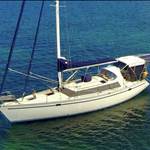
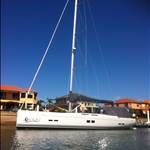
One of the sailors down here who has a Sailmaster like mine has just replaced his old furling head sail with a new Doyle dacron sail that is a bit longer in the luff and foot
I am interested to get some idea what increase in performance you might expect from the new sail compared to the old one
Any thoughts would be appreciated
Regards Don
Select to expand quoteDonk107 said..
Hi all
Probably a bit of a how long is a bit of string question but i will ask it anyway
One of the sailors down here who has a Sailmaster like mine has just replaced his old furling head sail with a new Doyle dacron sail that is a bit longer in the luff and foot
I am interested to get some idea what increase in performance you might expect from the new sail compared to the old one
Any thoughts would be appreciated
Regards Don
I've gone from 150% overlap to 105% overlap on two boats now, and from what I can find out it reduces average speed by about 2% in overall speed in most medium/light fractional rig racer/cruisers. A heavier masthead rigger will lose a significant amount more (maybe double that?) and a sail with a shorter luff will also be less efficient. Those figures are when using a spinnaker rather than a jib downwind.
However, that is comparing racing sails, not comparing a nice 105% with a standard 125% roller furler that will get full when reefed. Apart from poor shape when reefed, one issue with the standard roller furling No 1 headsail is that their foot length is often about 120-125% of the "J" measurement which is just about the worst length for the sheeting angle. A shorter foot (95-105% or thereabouts) allows you to sheet in front of the stays, a longer one sort of goes around the stays and further back and therefore gives you a narrower angle.
I wouldn't be surprised if most boats were as fast with a good 105% as with a reefing 125% headsail, personally.
How much you lose as a sail ages is harder to define, not just because the actual deterioration in the shape is very hard to measure but also because you can compensate for the effects of ageing to a significant extent, but only by working harder. For example, an old sail will normally be getting stretchy which will allow the draft to blow aft and the leach to blow open. If you're really working hard, you can adjust the cunningham, vang, traveller and mainsheet to compensate for most of the stretch, but that will be a continual process of assessment and adjustment just about every second of the race. If you're lazing along and not making those adjustments, the sail will just be slow.
The new sails tend to be more forgiving of less attentive sailing since their shape isn't changing all the time. Ironically, it seems that sometimes when you are absolutely at the top of your game you're less affected by ageing sails, because when you're training hard you're sailing in the groove most of the time, and can easily compensate for sail problems. That really underlines how hard it is to be accurate about this issue.
I changed the 28' fractional from a long overlap to a short overlap rig, and love it. I've now done the same with the J/36, going from a 125% dacron furling genoa to a 105% second-hand Doyle D4 carbon headsail. However, the standard J/36 is a real killer upwind in light airs because of its very low wetted surface, so even with the smaller jib the ratios are still pretty good. It would take a lot to make me put a bigger headsail back on. The easy tacking and lack of sail changes is addictive, but you do need to tweak the jib leads and fit inhaulers or you just won't point in light stuff.
Apologies if I'm teaching you suck eggs.
I changed a worn semi battened main for a good quality fully battened main on a Top Hat, and the improvement in performance was amazing. A lot more power and control of the sail.
Having been a club handicapper there are two things that make a marked improvement to a boat and that is 1. new sails and 2. Changing from a fixed prop to folding. Any boat that does either of these things will just about be guaranteed a win on handicap the first race out, and then the handicapper catches up.
I got new sails a couple of years ago, but the same size and weight as what I had before. I went from being very last to being in the same postcode as a couple of similar boats (East Coasts, Traditional 30s & small Farrs), but they all put it down to the fact I had a folding prop (which came with the boat).
The third change was to have the hull taken back to scratch below the water line and started again. If your boat has 40 years of antifoul, pock marks, bumps and other attachments it makes a noticeable difference. Since I had the hull done, I am now comfortably beating the boats in my weight / age.
in my opinion to improve performance first change prop to feathering or folding then bottom finish needs to be as smooth as topsides and cleaned before every race especially in qld (warm Water ).New sails make a difference but as said earlier in the post by others, but a competent sailor can move the draft around a bit to compensate . This isn't to say new sails aren't faster but bang for buck worry about whats in the water its a lot thicker than air therefore generates a lot more drag
Laminated sails will hold their shape longer than Dacron. A new Dacron headsail will definitely be faster than a 5 to 10 year old Dacron. It will look better and that is often enough to lift your performance on the course.
I have just replaced the 10+ year old genoa on my Compass 28 and am pleased with the improved upwind performance. This is especially noticeable in lighter air. The other surprising and welcome benefit is a reduction in weather helm, for which these boats are notorious. The new sail is built to offshore cruising spec.
Cheers, Graeme
It's been a huge difference to me. However, it did take a little longer than I thought to get used to them - as others have mentioned, you get used to adjusting everything for your old sails, then suddenly, those settings don't work. I most notice the difference when pointing upwind in lighter airs.
The other huge advantage is that you can talk to the sailmaker and have things setup the way you want. Strictly speaking, my sails are in no way class compliant, but that doesn't matter to me, as I don't do one design racing. They're cut a bit fuller,with longer battens, made of a better material, are loose footed (much easer to put on), much better hanks and have a reef in the main. When I talked to them about things I wasn't happy with on my current sails and hoped they would be able to improve, for the most part, they laughed and said they hadn't seen that sort of thing for more than 20 years. Sail design can change that much.
Select to expand quoteBushdog said..
I changed a worn semi battened main for a good quality fully battened main on a Top Hat, and the improvement in performance was amazing. A lot more power and control of the sail.
Did the same on my Top Hat after my sail maker refused to fix my old main sail which he said had to be the original from 46 years ago,
I asked how did he know that and he replied that that sail maker went out of business in the mid 70's, so it had to be the original sail 
Good topic Don. I'll be in the market for a new main when funds allow, so it's good to see the comments here.
Has anyone had any experience with the North 3Di Nordac sails? Good overview and interview here: www.yachtingmonthly.com/gear/nordac-new-way-make-cruising-sails-61841
Err... well no not necessarily Lyd. What I'm wondering is, buy Dacron from x,y or z sailloft that will last for x years average and start loosing shape after x years or buy into this new technology that is, yes more expensive initially, but may actually keep it's shape much longer and is a smarter buy long term. I don't know anything about them apart from what I read, nor have I bought a sail before, hence the question. I take it you have no real idea either, do you have anything constructive to add or are you just trolling?
Select to expand quotenswsailor said..Bushdog said..
I changed a worn semi battened main for a good quality fully battened main on a Top Hat, and the improvement in performance was amazing. A lot more power and control of the sail.
Did the same on my Top Hat after my sail maker refused to fix my old main sail which he said had to be the original from 46 years ago,
I asked how did he know that and he replied that that sail maker went out of business in the mid 70's, so it had to be the original sail
Forgot to mention you can see the story of the making of SEAKA's new main sail in the May 2017 issue of Cruising Helmsman. 
We had a quote from Norths for 3Di Nordac and NPC Radian (radial cut Dacron). 3Di about $1k more for main (40sqm) and $800 more for Genoa (45sqm). Decided on Quantum MC4000 composite in the end, slightly more expensive but we thought the Nordac being a very new product, was not proven enough. Very nice though!
Select to expand quote2bish said..
Err... well no not necessarily Lyd. What I'm wondering is, buy Dacron from x,y or z sailloft that will last for x years average and start loosing shape after x years or buy into this new technology that is, yes more expensive initially, but may actually keep it's shape much longer and is a smarter buy long term. I don't know anything about them apart from what I read, nor have I bought a sail before, hence the question. I take it you have no real idea either, do you have anything constructive to add or are you just trolling?
Sorry should not have been so flippant.
There is a discussion about this on an earlier thread but just to recap.
With sail design software and plotters it is vert rare the a sail shape will be complete crap.
The trick however is the cloth.
Cloth is everything.
Like the old ad says, oils aint oils.
Cloth quality varies enormously.
Good quality dacron will last longer than crap laminate and visa versa.
So spend the money ensuring top quality cloth either Contender or Bainbridge.
Looking the boat you are not super loading things.
There are other options.
For my delivery mainsails I use Hood Vectran and have done since 2002.
I am only on the second one and it is still new.
That is also with lots of Tassie use.
Going more high tech, and after looking at all the options, in the last year I have got 4 new sails which are vertical panelled GPX light skin.
It is a hot rolled carbon cloth which was about the same weight per sail as a string sail.
Not any cheaper but looking like it is far more durable.
Lastly, if you want a sail to last never let it flog.
It is resin in the sail that matters.
in the last couple of years i have changed from hydra net woven spectra 10 year life but creep in shape to lam sails the mylar kevlar taffetta 7 year lifespan low shape change i was warned by my sailmaker that although the shape will hang in to the death failure is normally catastrophic as the glue fails about 6 to 7 year mark weather you use it or not
so far 3 years in he has been right 6 year old low use code 0 has recently shown a couple of delams headsails still look great
Select to expand quotelydia said..2bish said..
Err... well no not necessarily Lyd. What I'm wondering is, buy Dacron from x,y or z sailloft that will last for x years average and start loosing shape after x years or buy into this new technology that is, yes more expensive initially, but may actually keep it's shape much longer and is a smarter buy long term. I don't know anything about them apart from what I read, nor have I bought a sail before, hence the question. I take it you have no real idea either, do you have anything constructive to add or are you just trolling?
Sorry should not have been so flippant.
There is a discussion about this on an earlier thread but just to recap.
With sail design software and plotters it is vert rare the a sail shape will be complete crap.
The trick however is the cloth.
Cloth is everything.
Like the old ad says, oils aint oils.
Cloth quality varies enormously.
Good quality dacron will last longer than crap laminate and visa versa.
So spend the money ensuring top quality cloth either Contender or Bainbridge.
Looking the boat you are not super loading things.
There are other options.
For my delivery mainsails I use Hood Vectran and have done since 2002.
I am only on the second one and it is still new.
That is also with lots of Tassie use.
Going more high tech, and after looking at all the options, in the last year I have got 4 new sails which are vertical panelled GPX light skin.
It is a hot rolled carbon cloth which was about the same weight per sail as a string sail.
Not any cheaper but looking like it is far more durable.
Lastly, if you want a sail to last never let it flog.
It is resin in the sail that matters.
Cheers, good info!
Select to expand quoteFreeRadical said..
We had a quote from Norths for 3Di Nordac and NPC Radian (radial cut Dacron). 3Di about $1k more for main (40sqm) and $800 more for Genoa (45sqm). Decided on Quantum MC4000 composite in the end, slightly more expensive but we thought the Nordac being a very new product, was not proven enough. Very nice though!
Good to know, thanks.
Two things in particular piqued my interest with them. The VOR boats use the race version of this 3Di technology and get issued two only mainsails for the full round the world race. And I also read an article about the Macif trimaran, the 3Di mainsail that Gabart used to smash the round the world record recently, already had 50,000 miles sailing on it. Yep fifty thousand miles, that's not a typo!
Select to expand quote2bish said..FreeRadical said..
We had a quote from Norths for 3Di Nordac and NPC Radian (radial cut Dacron). 3Di about $1k more for main (40sqm) and $800 more for Genoa (45sqm). Decided on Quantum MC4000 composite in the end, slightly more expensive but we thought the Nordac being a very new product, was not proven enough. Very nice though!
Good to know, thanks.
Two things in particular piqued my interest with them. The VOR boats use the race version of this 3Di technology and get issued two only mainsails for the full round the world race. And I also read an article about the Macif trimaran, the 3Di mainsail that Gabart used to smash the round the world record recently, already had 50,000 miles sailing on it. Yep fifty thousand miles, that's not a typo!
We spoke with Norths, Quantum, UK and One Sails. All offer composites and each will tell you why theirs and their service is the best. They all offer variations from highest performance racing through to performance cruising and I'm sure they are all very good. Pricing was very similar for all of them and it's worth getting a few quotes to help in the final bargaining. It's a tough choice.
Now is a good time to start shopping around as it's getting towards the quietest period for the big international lofts.