


i was quite happy with my last mini that i whipped up over christmas, but the lack of a 5 has been really getting on my nerves lately.
last weekend i cleaned out the building area out back and dropped one of the leftover chassis from the last "team build" into the jig.. next day I woke up realizing that my name is Landyacht and my sailnumber is 3, as in the 3rd one to signup on the day the world was created...... so i have to build something new everytime, or I wouldnt deserve the name ,or number throughout the day my sketch book slowly morphed into an idea

my theory with this one is that as im using steel in place of ally I need to balance the length of the chassis elements and the length of the axles to avoid the build up of "spring " that i seem to get from an all steel OTT, particularly when used in a mini. . as usual it needs to be a yacht that can pack down quickly, and have a deep aero body to keep you clean through the air. still need room for my sliding steering AND the sawhorse sheeting. I really love these aspects of my last yacht.On the jig after an hour its looking like this

the rear of the frame meets the mast step rather high to give a stiff mount allowing a shorter mast (carbon) to be used. the mast step will be big enough to fit a full diameter carbon mast

the rear of the frame is narrow , only 320mm as opposed to my usual 420+.
this should allow slightly longer steel axles,even though the rear only has a 20 degree offset
16"x50mm front rim of course and 26"x75 hookworms,naturally.
glass and ply seat of some description
could only describe day 2 as micro progress, with a couple of tiny welds on the jig before having to go do "stuff". im keeping a daily tally on how long this one takes, just for the books
got in 2 hrs today before dark. basic chassis core is looking great.
I thought it was nice and light, so i weighed it against the chassis's from bens project. the core chassis on those tachts came in at 9.4kg , mine is at 9.6!!! so no weight saving despite the smaller rear

skinnier back end

higher mast support, with great clearance

nice clean simple chassis
just in case this little experiment turns out a cracker I started taking some measurementsand doing some of my usual drawings for anybody who wants to have a go as well

heres some close ups


on with the show
got in a few hrs this weeeknd, inbetween sorting out everybody elses stuff. whipped up te front fork and steering head. the fork is chopped up 50x25x2mm rhs. the pivot plate cut from a piece of 75x75x4.5mm rhs. axle bolt is a 20mm HT bolt.
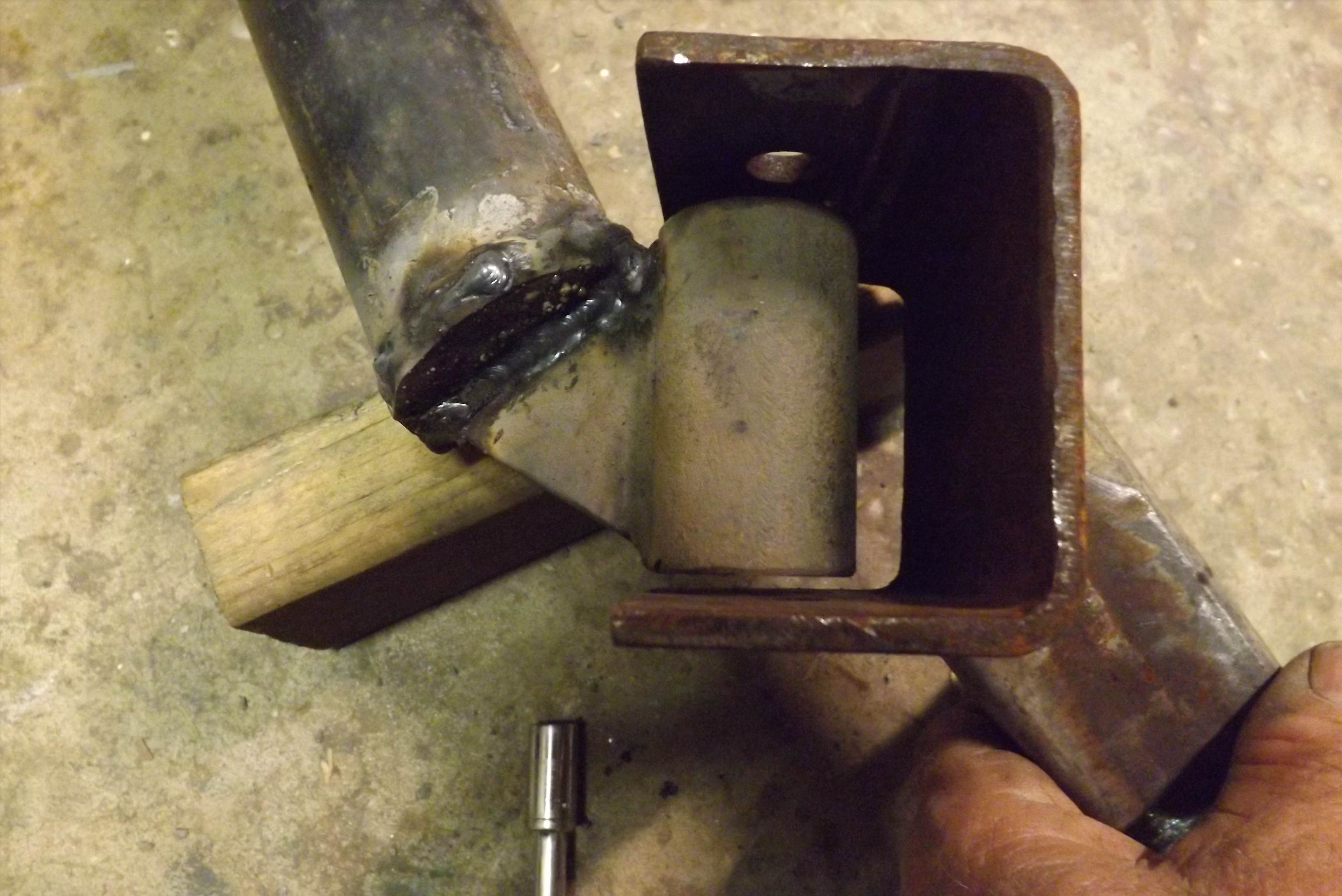
the view of the finished fork from above. a simple right angle set up
the accuracy of the fork is checked by eye for parrallelism
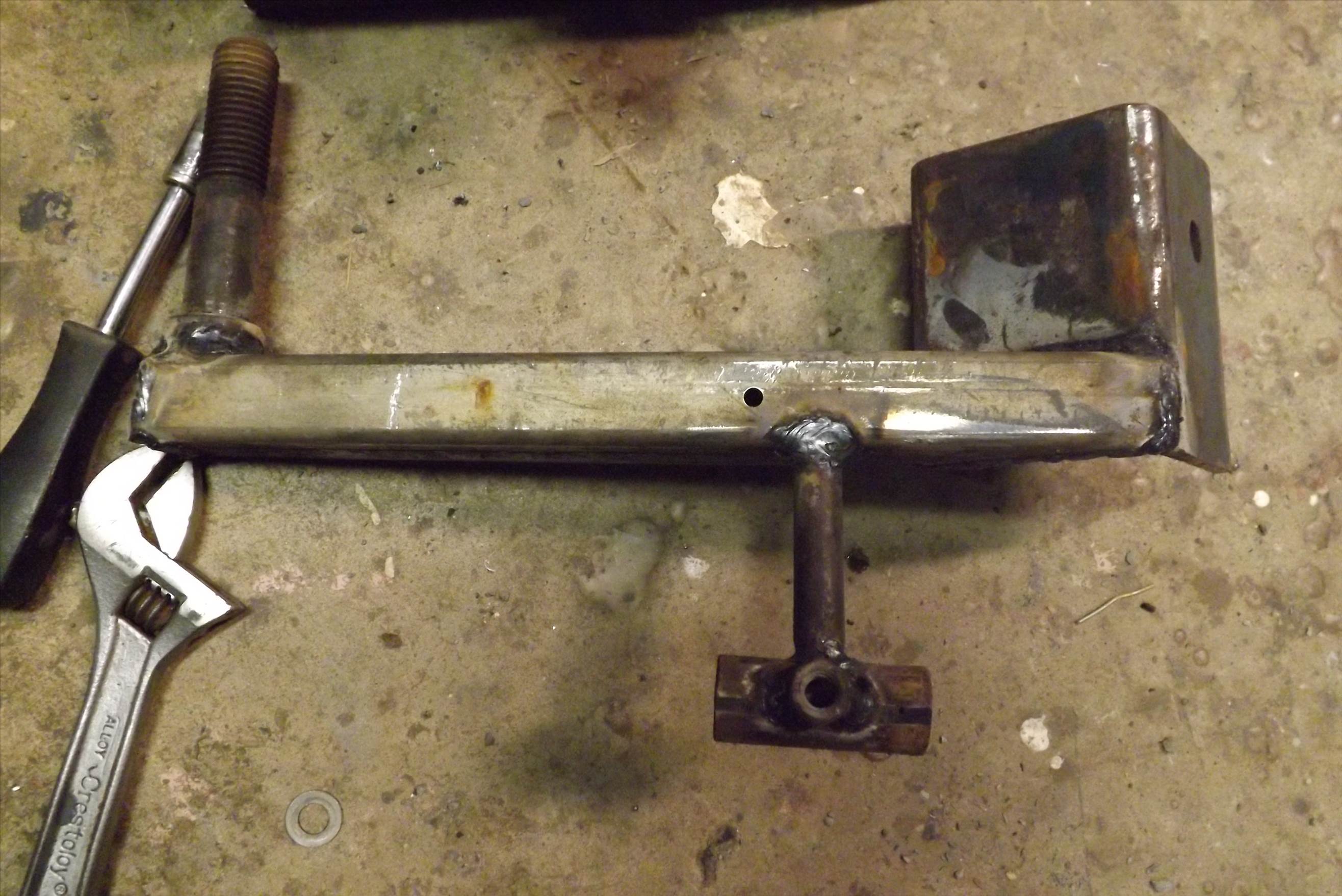
the pivot setup for the steering. 2 nylon bushes will be added later. I like nylon bushes on the steering as they absorb vibration , when tightened just right they dont wear out or allow the steering to flop around. I prefer a steering that will stop where you put it and not fall over

plan and measurement coming soon as time permits
all is going to plan, a few delays to build 2 bikes, and rebuild a friend's popup camper, but back on track today.
popped out this morning for a 25km scratch race (3rd last) the got home to a ready sheddy go situation.
todays plan was to get the steering pedal rail fitted , then weld the chassis into a frame where the wheel positions can be set and the angles set ready to make the rear axles. . the length of the front end and hence the mast position has been set at1070 mm from the centre of front wheel.
I use this measure when comparing class5's as it is the easiest place to measure. distance has been copied from my last 5's best performing combination.heres the plans for the fork and front beam set up


WARNING drawings not to scale!!!!!!!!
a closer view of how it will line up when assembled

and a view of the steering pedal rail.

tthis will allow adjustment for steering length of about 400mm so kids and can jump in between races.
frame is now welded in the frame ready to accept stub axles
got my boogie on today. the big challenge now is to get the alignment spot on before building the cranked rear axles firstly, I set up my one and only wheel and set it up in a block with a 10 degree layover.
with the axles fitted i can then MEASURE the width of the yacht without the wheels. I measured 180mm as the amount to allow for the wheels with an axle height at 315mm. thats assuming 26"x75mm rims running 26x2.5 maxxis hookworms,layed over at 10degrees.
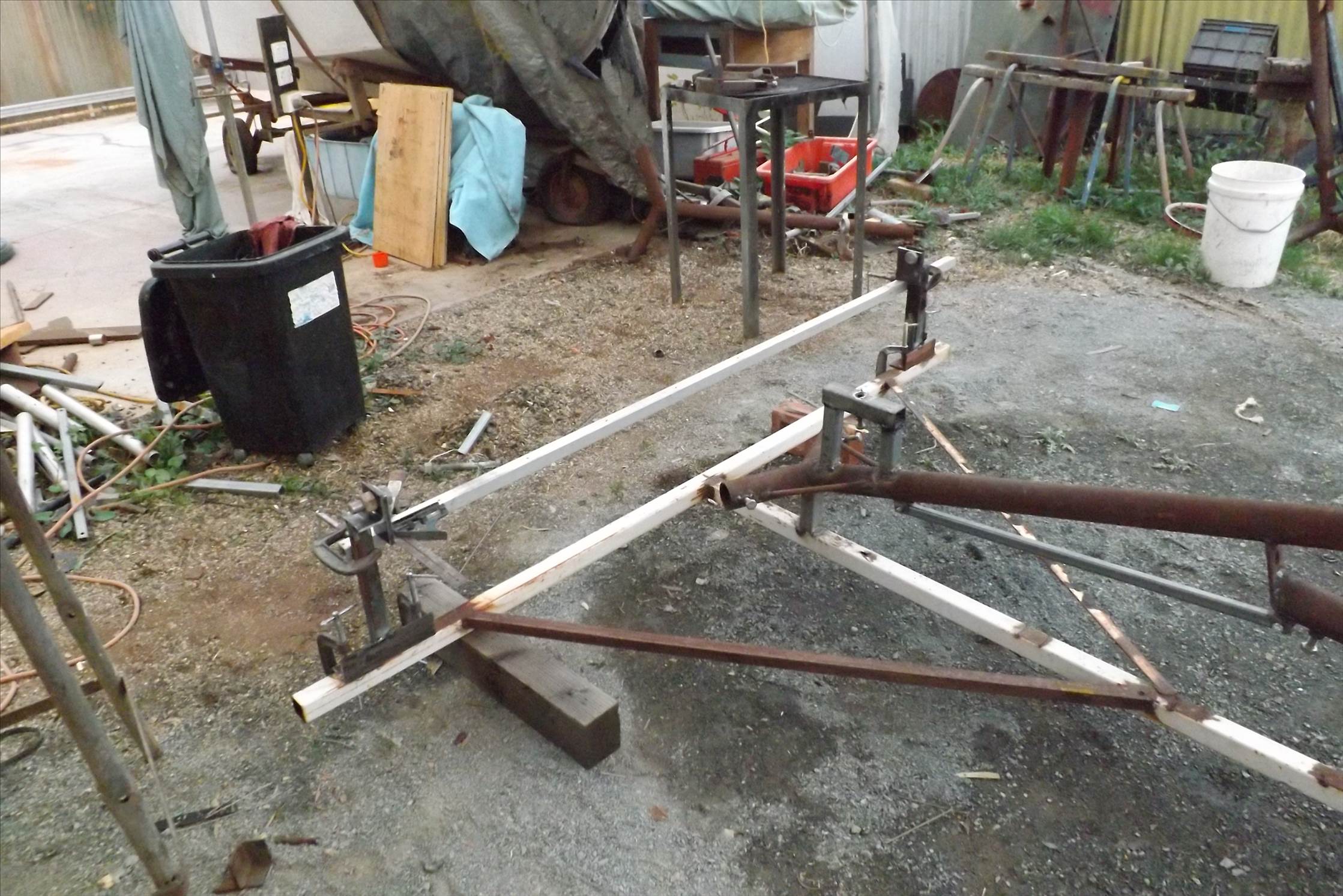
Ive built 2 stands to hold the 2 axle mounting plates in the correct place in the building jig
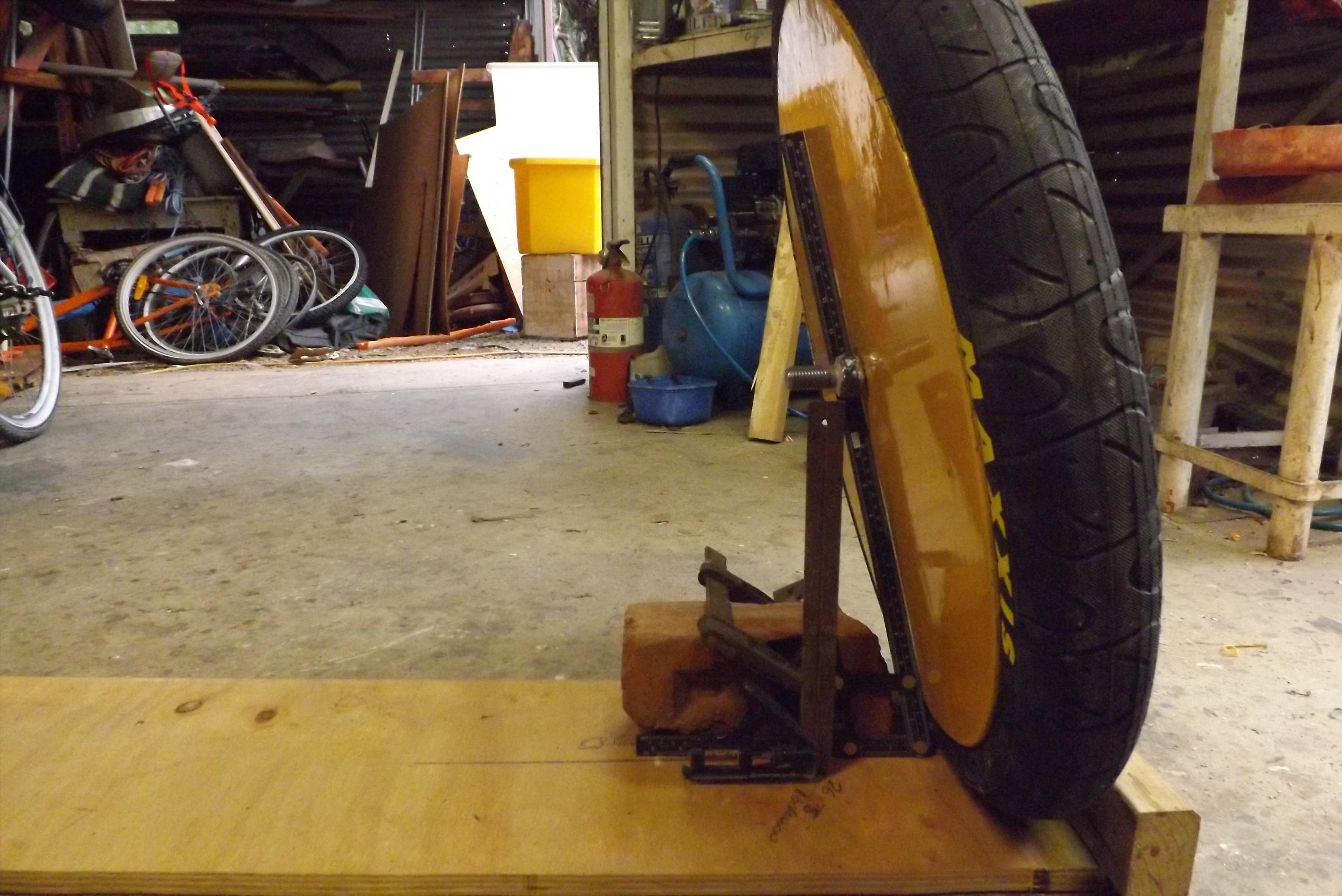
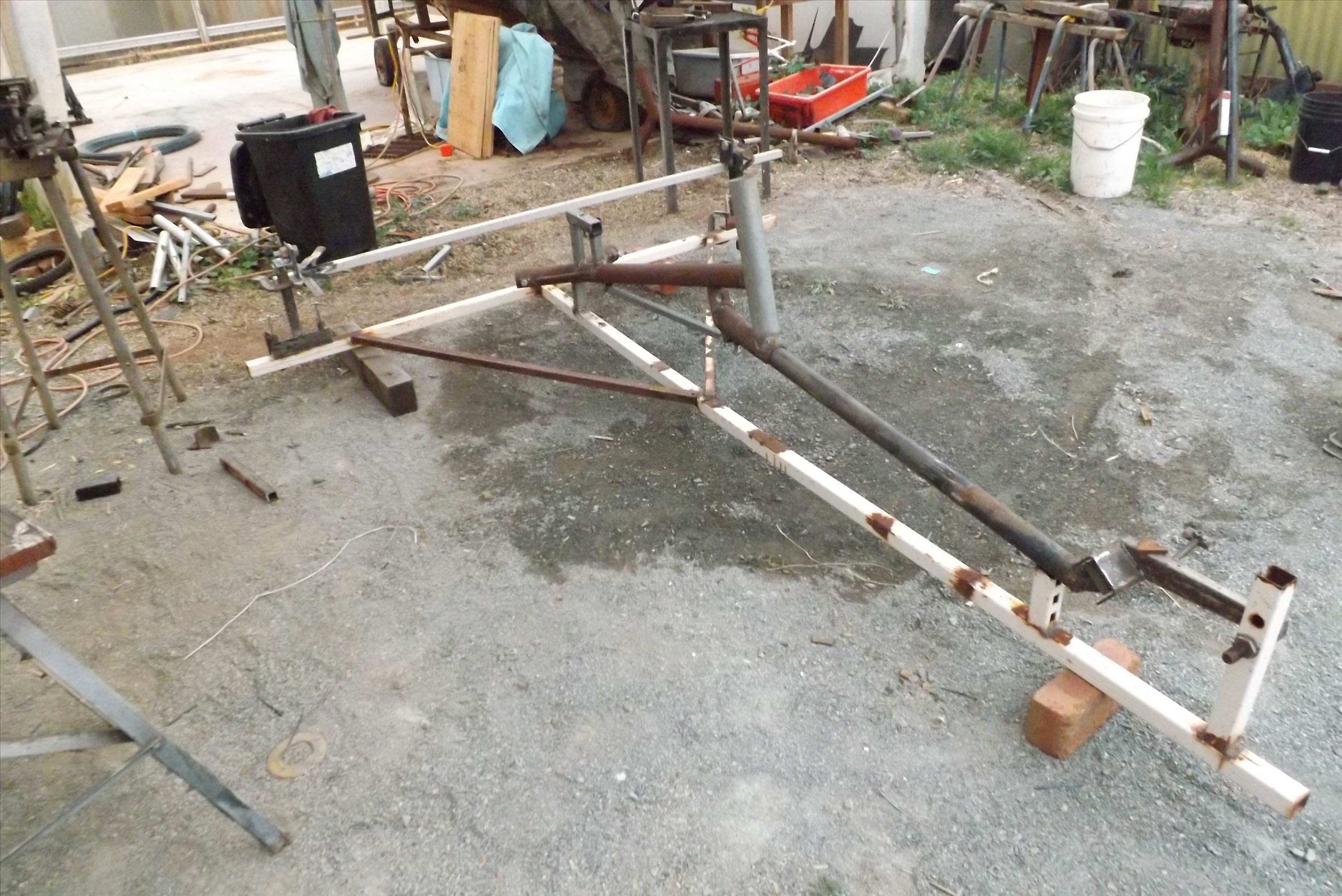
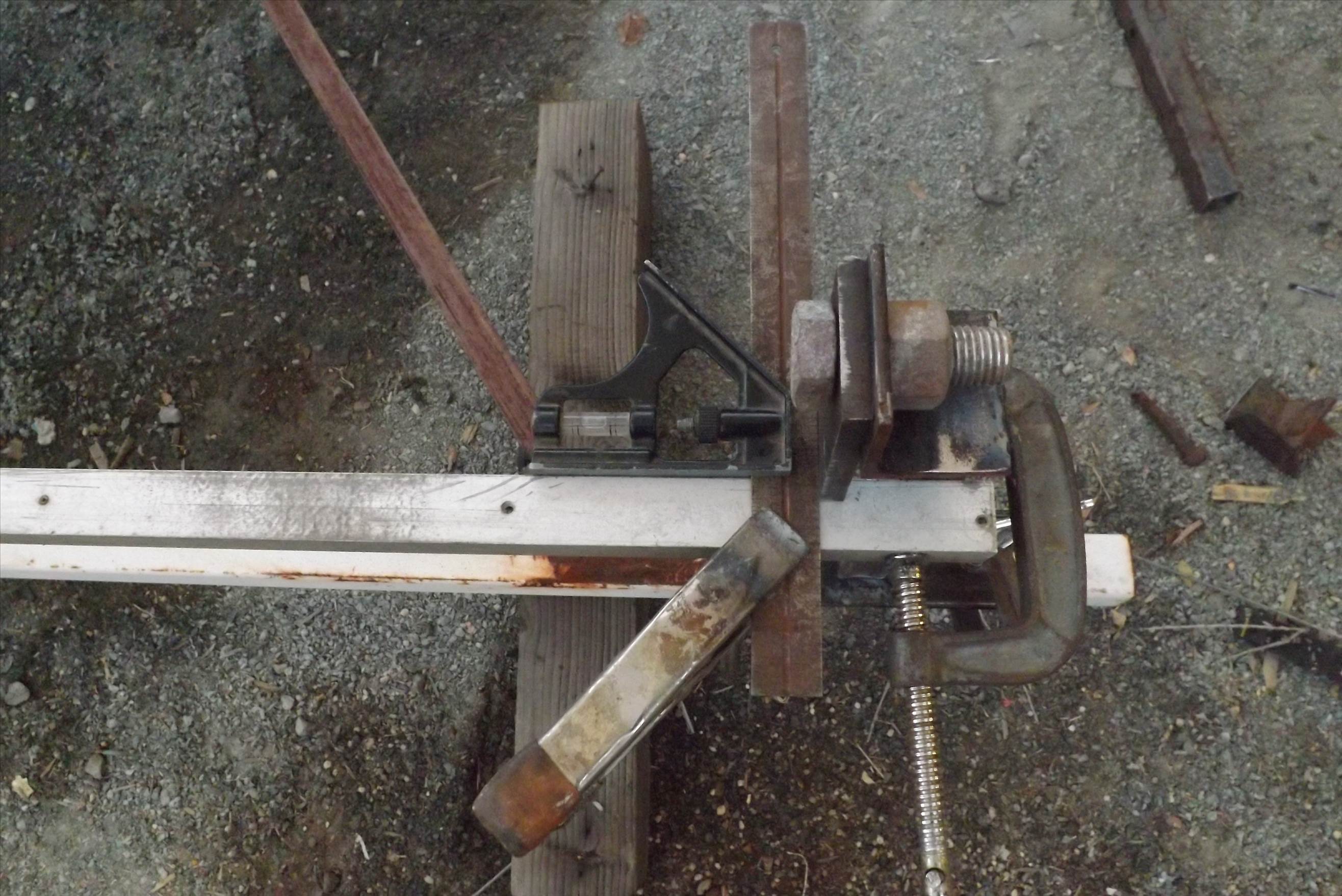
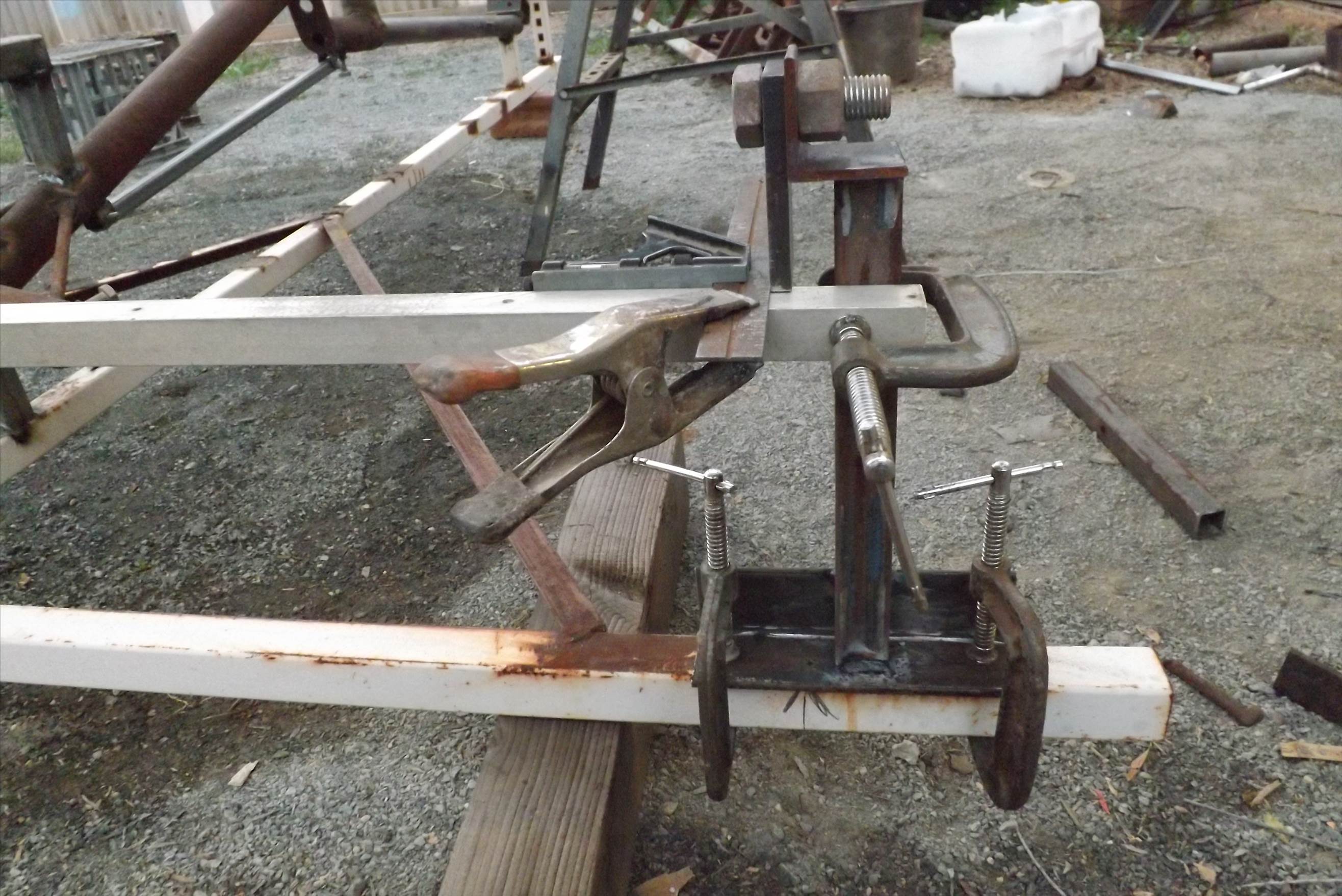
the photo above shows the rear axle positioning and alignment setup. doing it full size should make life easy and REPEATABLE. theres offen alot of discussion about toe in or toe out. I keep the alignment parallel.
my theory is this. when i fitted a set ofhookworms on my wheels i had parallel alignment. on lefroy the tyres polished with use becoming very smooth but not really wearing.
the first sail on walyungup gravel was often hairy so you had to throw the yacht around to rough them up again.
that set of tyres fitted in 2011 were still on the yacht and with plenty of tread in 2015 and the yacht performing better than ever.
i suspect that by building a yacht that can flex through all dimensions the wheels simply self align as the surface changes
more pics of the aligning system. feel free to discuss this one
Looking fantastic Paul!!!!
Axles are very time consuming to build and get right and I like your approach Paul.
I got sick of making different axles and going through the entire process from scratch each time so came up with a fully adjustable jig for my T frames.
It does square and round axles with different chassis dummies at the base and the centre fixture.
The centre holder clamps the pipe or square tube as well. The top gold one clamps the 20mm axle.

The nice thing about it is the entire axle can be fabricated up and welded fully (to have the welds pull it out of alignment) and I only have to true it at the last connection of the axle bolt to get it exact.

The holes are for plug welding in the internal doublers to reinforce the axle The doubler is fully welded at it’s joint and then inserted into the 2 bevelled axle pieces, the external joint and the 8mm holes are then welded.
My last job is I tack the axle bolt in using the "digital angle gauge", and refit both complete axles to the yacht and slip the wheels on.
These Digital gauges are invaluable and seldom a week goes by that I don't use mine for some job. They are accurate to 0.1 of a degree and can be calibrated to 0 degrees on any surface. The digital readout even inverts when you go past 90 degrees.
http://www.ebay.com.au/itm/Digital-Inclinometer-Angle-Gauge-Meter-Protractor-C1-/131533928308?pt=LH_DefaultDomain_15&hash=item1ea0087774
I bolt the axles in fully, doing up any pinch or location bolts and then load the yacht with my body weight in "exercise dumbbells" to do the final alignment.
My final check is easier done when the shed is a bit darker around sunset.
I use a cheap $12 pen shaped “kids green lazer pointer”.
www.ebay.com.au/itm/3PCS-Green-Purple-blue-Red-Laser-Pointer-Light-Pen-Beam-Laser-High-Power-/361244198926?pt=LH_DefaultDomain_15&hash=item541bd5080e
This is an Australian distributor as they cant be imported from overseas.
I set up a roofing square clamped upright (using welding positioning magnets attached to it) at the marked out width of the tyres from the yachts centre line, at axle height (This can be calculated from the jig setting) onto the cement floor and as far out the front of the yacht as possible to increase the accuracy.
I shine the laser past the edge of the square at the marked axle height and you can clearly see where the pinpoint beam, hits both back and front sidewalls of the rear tyre just above the axle nut.
By moving the laser left and right at the correct height, you can work out what correction to the axle is required.
Because the axle is just tacked in with 4 very hot small tacks of weld, a smack with a sharp cold chisel and hammer on top of a tack will stretch it and allow enough movement in the opposite/desired direction.
When I'm happy, I can then remove everything, weld evenly around the axle mounting point fully welding it up without any distortion.
I then go out and try and destroy them sailing.
As I explained last time , my rear axles are built up from smaller sections , saving my longer lengths for future projects. this time my longest section is just over 500mm.
firstly Ive cut the 2 pieces that will slot into the frame 2 pieces of LTK60 core tube, . the inside is cut at 20degreesso that it wont rotate when sailing. the outer end has been cut square to make it easier to accept the outer section from the axle mount plate

the tween axle is then cut ,fitted and welded. heres a pic of the end plates that take the axle stubs. I drilled the 20mm hole first the left the plate unfinished until after its been welded

heres the finished axles looking a bit stuka like
drawings to follow

heres the flash lookig steering pedals only 9 pieces of steel to make this work, so much for simplicity

meanwhile the seat/pod is starting to take shape. a bit of beast of bermingham , and a bit of my own favourite shapes. narrowest foot well ive made yet, 320mm

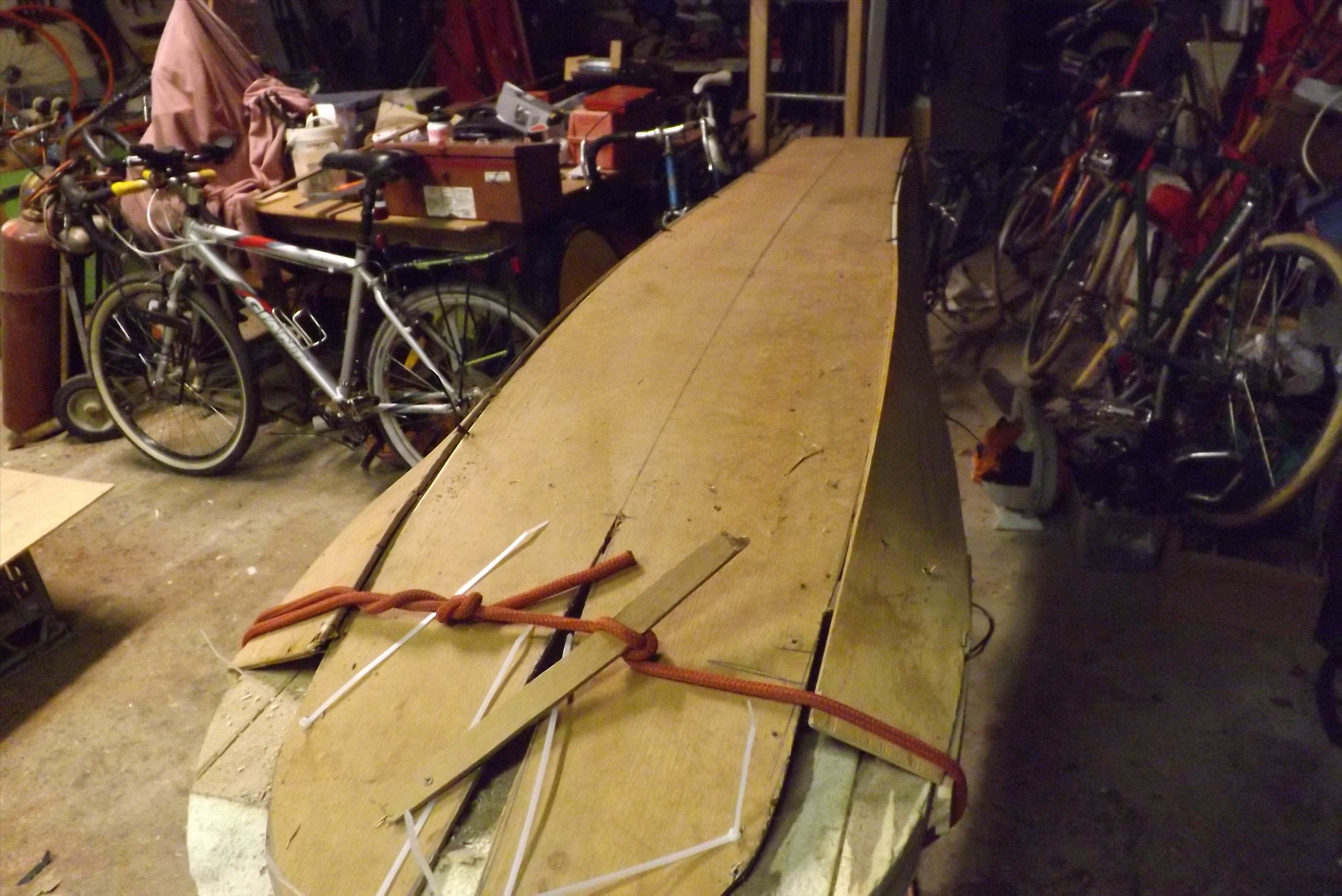
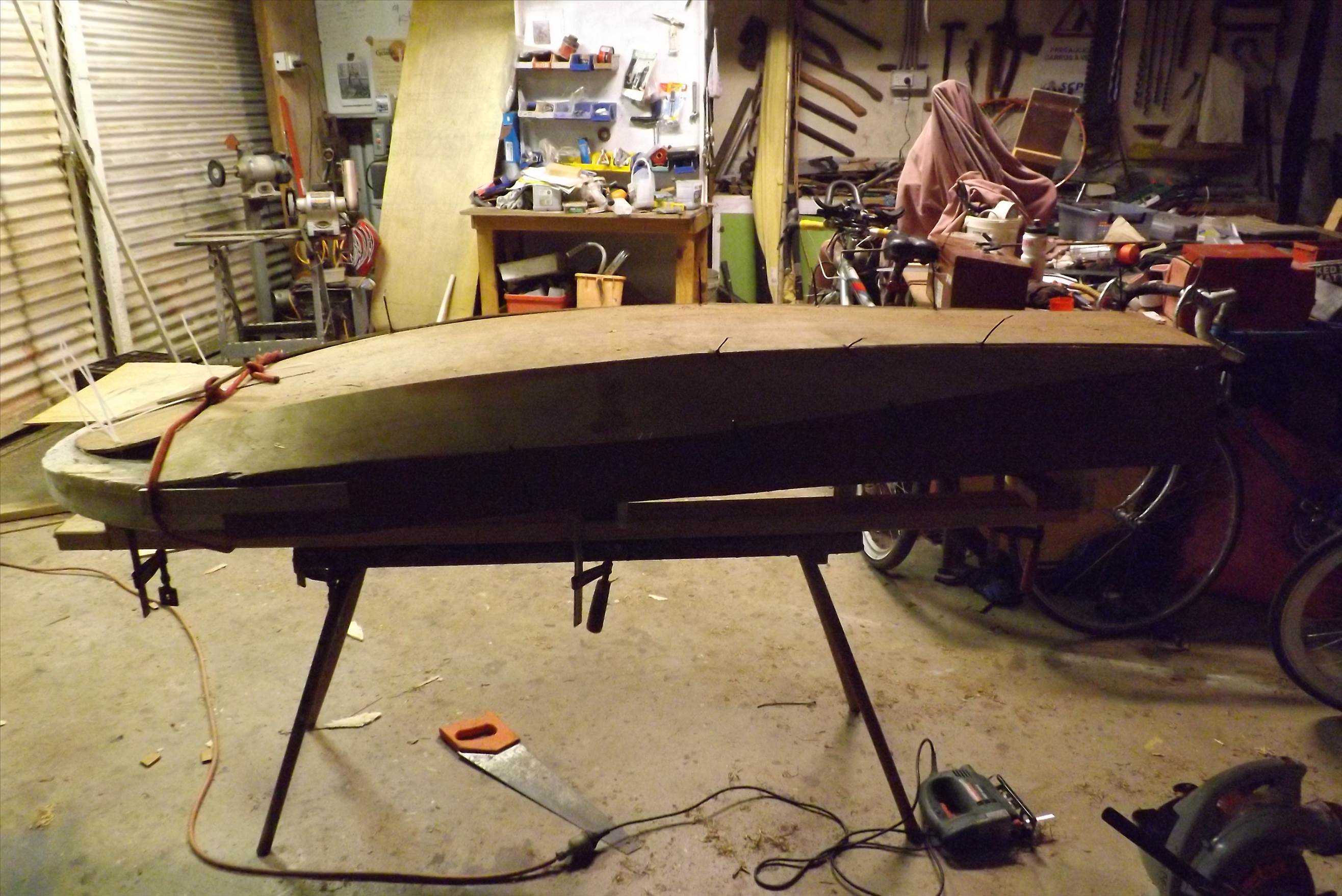
some subtle shapes starting to happen. the back has a mass of clamps and a spanish windlass to hold it in shape plus a big block of polyeurathane foam for when the wood wont bend
bucket load of glassing this week. seat is coming along, almost out of the building jig, just need some poly foam and imagination to sort the rear.
meanwhile I had some takers for a wheel building tutorial . Ben boulder and mr crocket are whipping little 16" fronties, and sylk is working on his 26" fatties. sorry for lack of pics. tommorrow
on another note Ive started stockpiling 20" and 24" rims to build some alternate fatties. All the australian bike manufacturers are advertising fatbikes in thier 2015/16 catelogues with 20x4" tyres and 24x4" tyres. my local avanti dealer, who also does malvern star is looking into supplies of tyres. the bikes in the catelogues has just the right tread pattern

heres the seat progress, the rear is too rounded for plywood so Ive built up the shape from polyeurathne foam with 2 layers of gyprock bog . then i wa and PVA th shape then 2 layers of shopped strand and poly resin

the brown layer you can see is peel ply , a thin nylon material that is smoothed over the wet resin/glass and left till after curing . then its peeled off leaving a great finish

the back still isnt high enough after all the foam and bog had been hacked away, so ive glued in some polyeurathane blocks with polyeurathane glue. the trick is to wet the blocks first ,so the glue foams up and fills any gaps. this has now been glassed over on the outside then carved on the inside the glassed on the inside. all sems complicated and slow ,but the finish should be worth it as the shape is looking great
stripped off the building frames tonight and sat the chassis in for the first time. theres still a bucket of work to do. off to esperance this weekend to pick up some carbon for the wheels. then rip out a 50km round the town bike race whilst chook cooks snags at bunning on every lap
started on the nose by building up some blocks of foam. im using polystyrene,so i will need to coat itwith some acrylic paint so the resin doesnt dissolve it
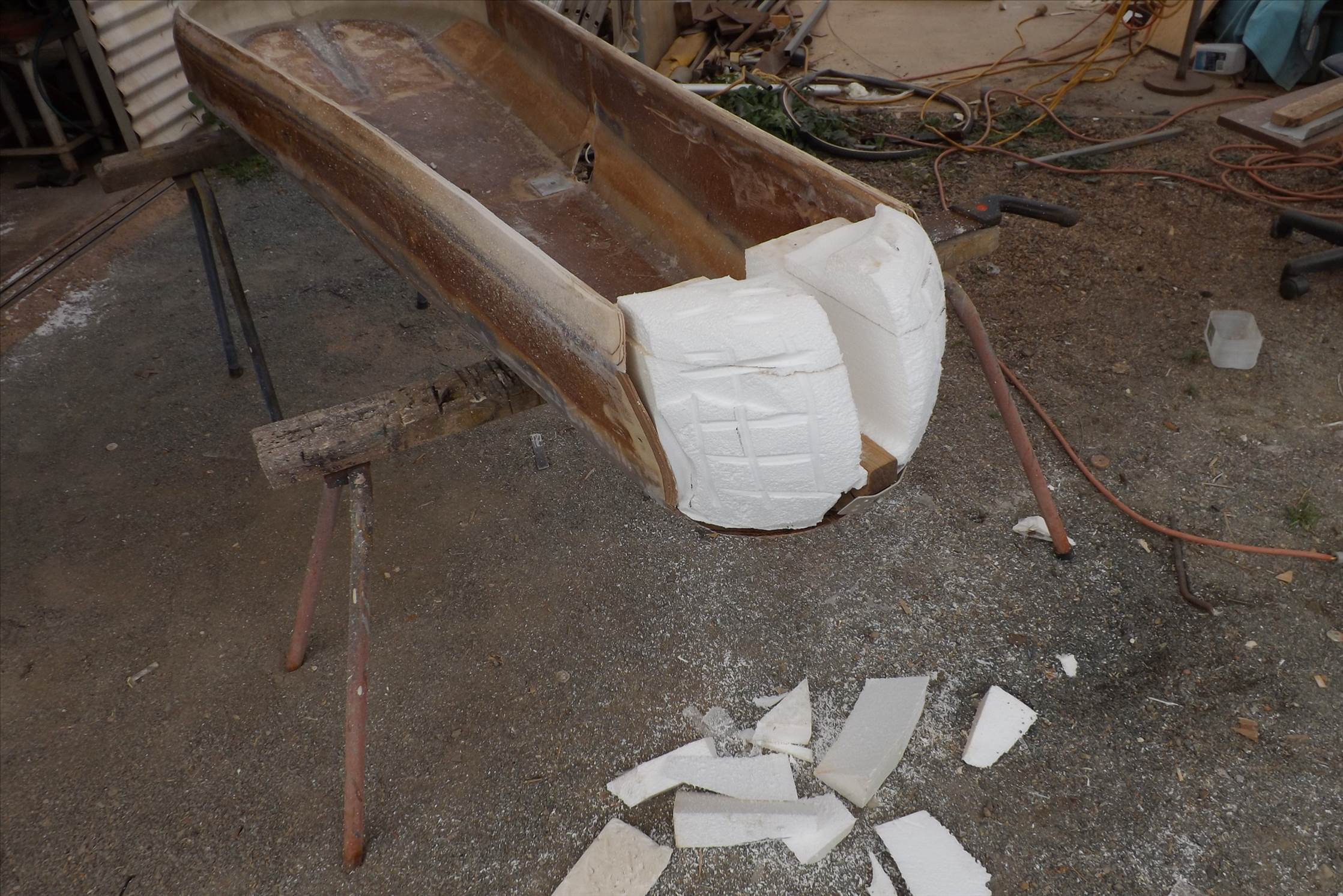
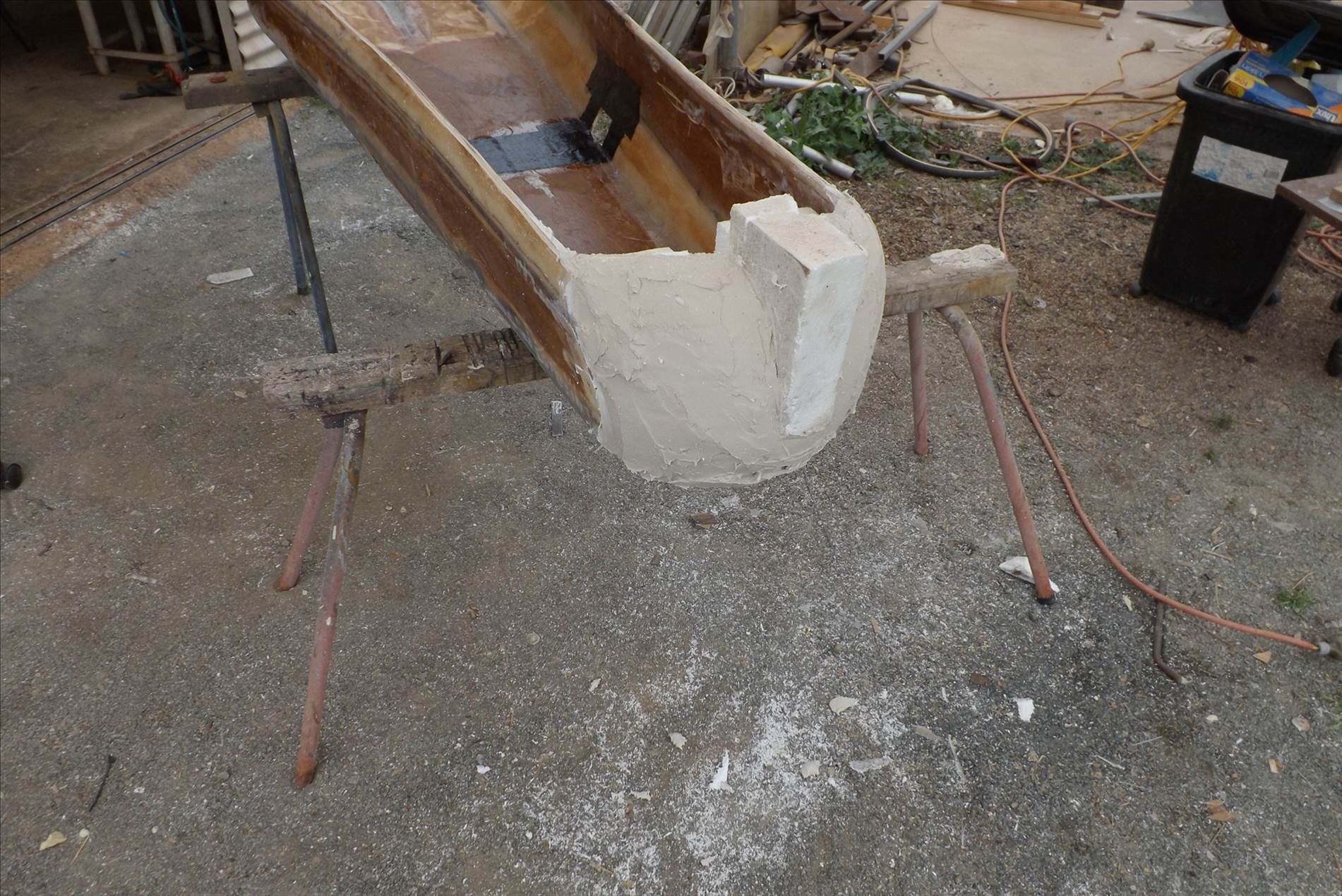
first coat of bog is on drying time is rather slow so a series of thin coats rather than a big blob. notice the first of the carbon patches going onto the axle exit holes
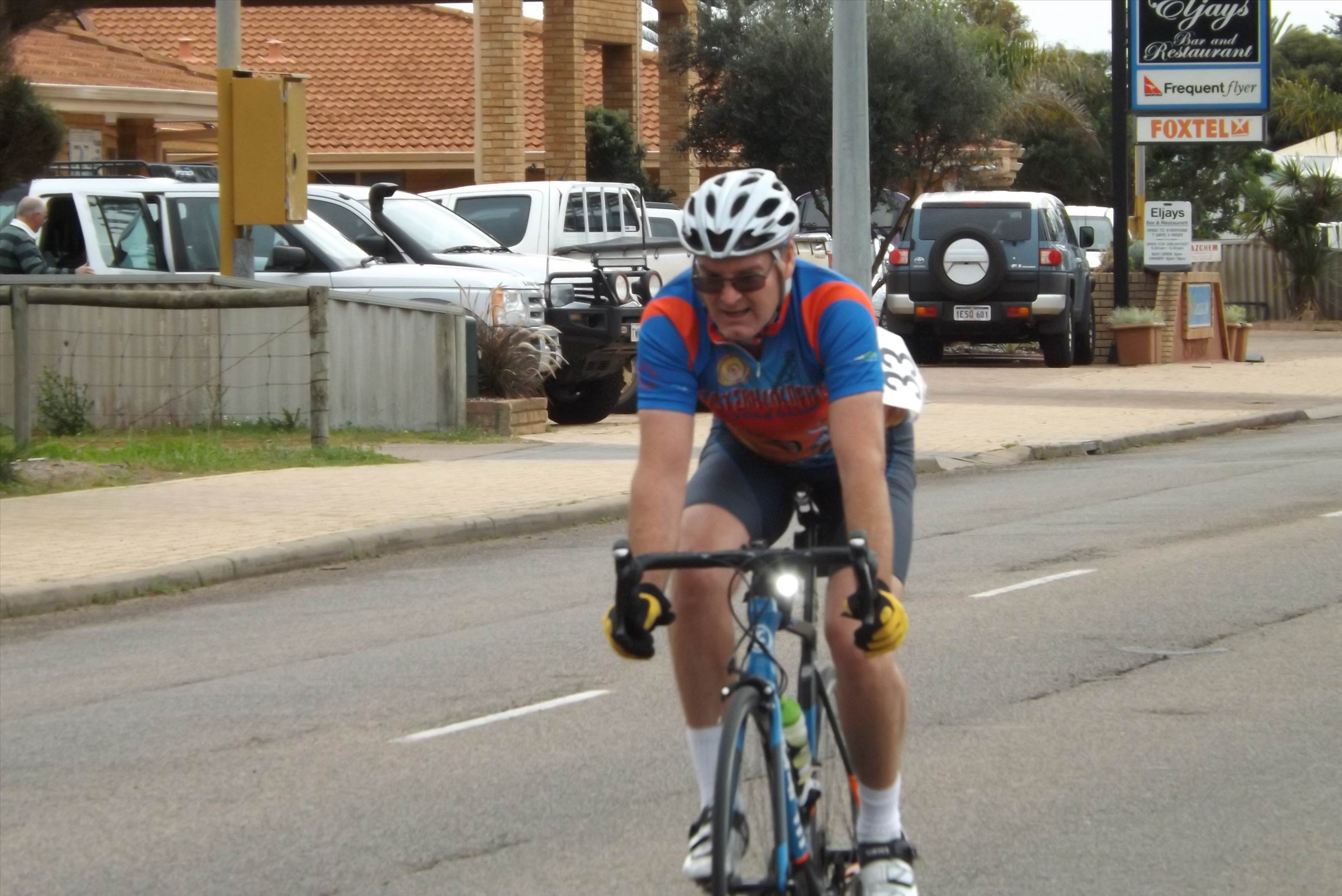
now i need to toughen up the rimbut this cold weatheris making for slow progress, which also explains this image of a struggling 50+ lycra clad bloke who should probably stick to being an awesome landsailor,cos he sure aint an awesome cyclist
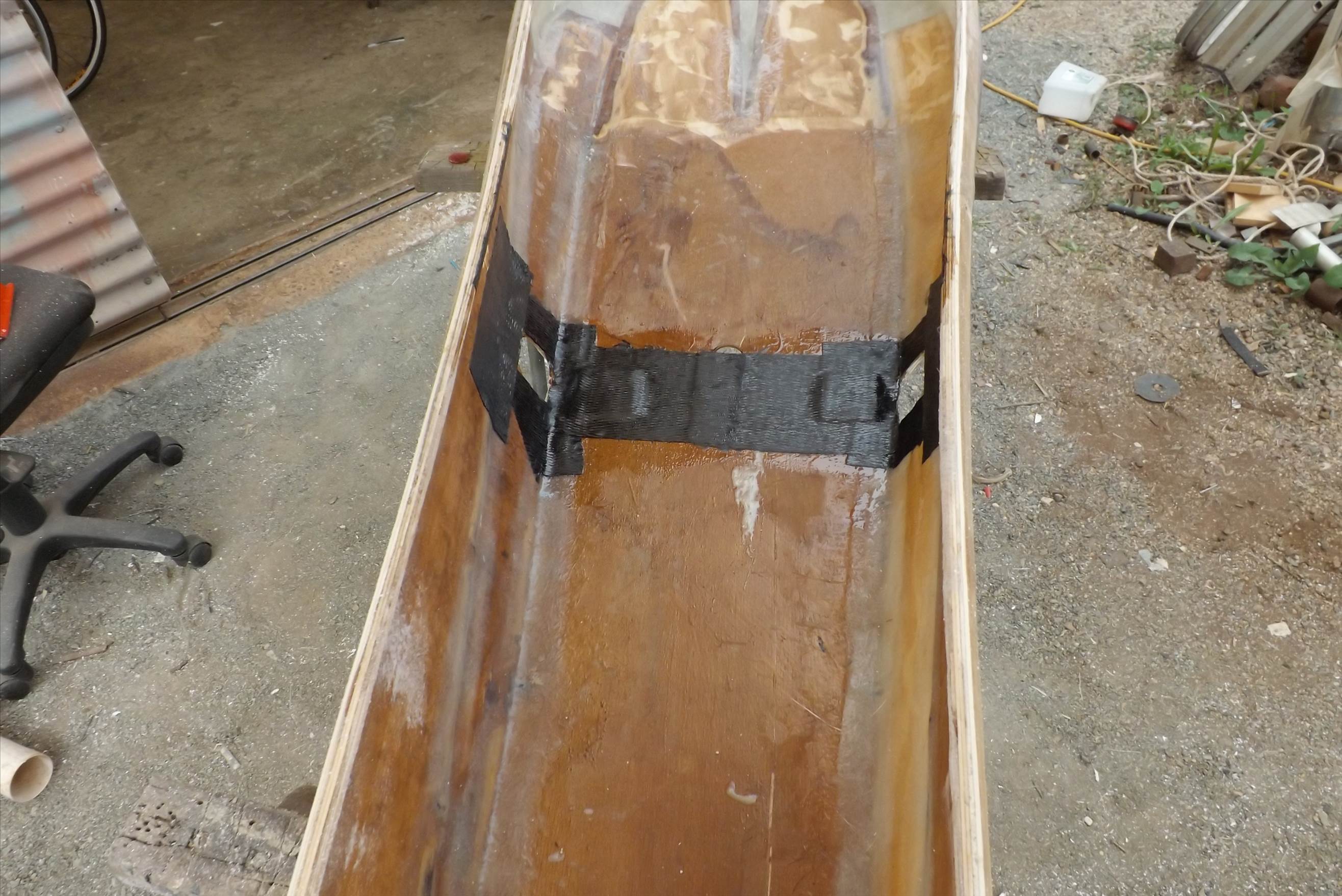
slowly getting there. main thing achived this week was to cap the top edge of the seat with some carbon tow(like a rope)
this has toughened up the edge and left it smootrh nose is progressing, but i ran out of chopped strand
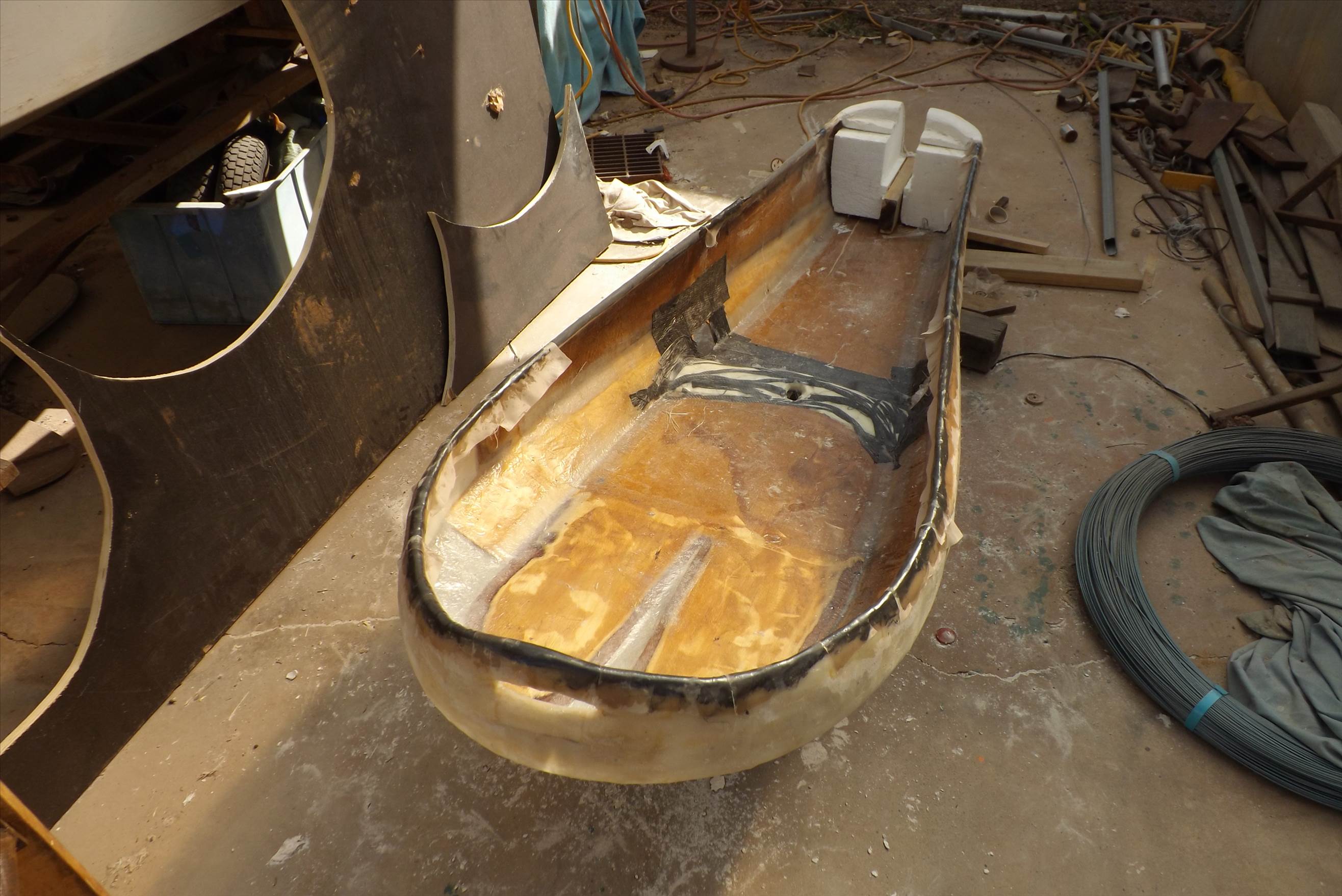
I needed to finish re-inforcing the the seat mount area and had an idea to weave some carbon into a tough cloth so I built a little loom and started weaving little did i realize i was making a massively heavy cloth, after making half of the sheet i stopped and put it aside in case I need to glue 2 large trucks together!


Select to expand quotelandyacht said..
I needed to finish re-inforcing the the seat mount area and had an idea to weave some carbon into a tough cloth so I built a little loom and started weaving little did i realize i was making a massively heavy cloth, after making half of the sheet i stopped and put it aside in case I need to glue 2 large trucks together!
That is one hell of a bath mat !!!!!
that roll of carbon just keeps on coming up with great ideas, like a carbon reinforced nose on the seat

a 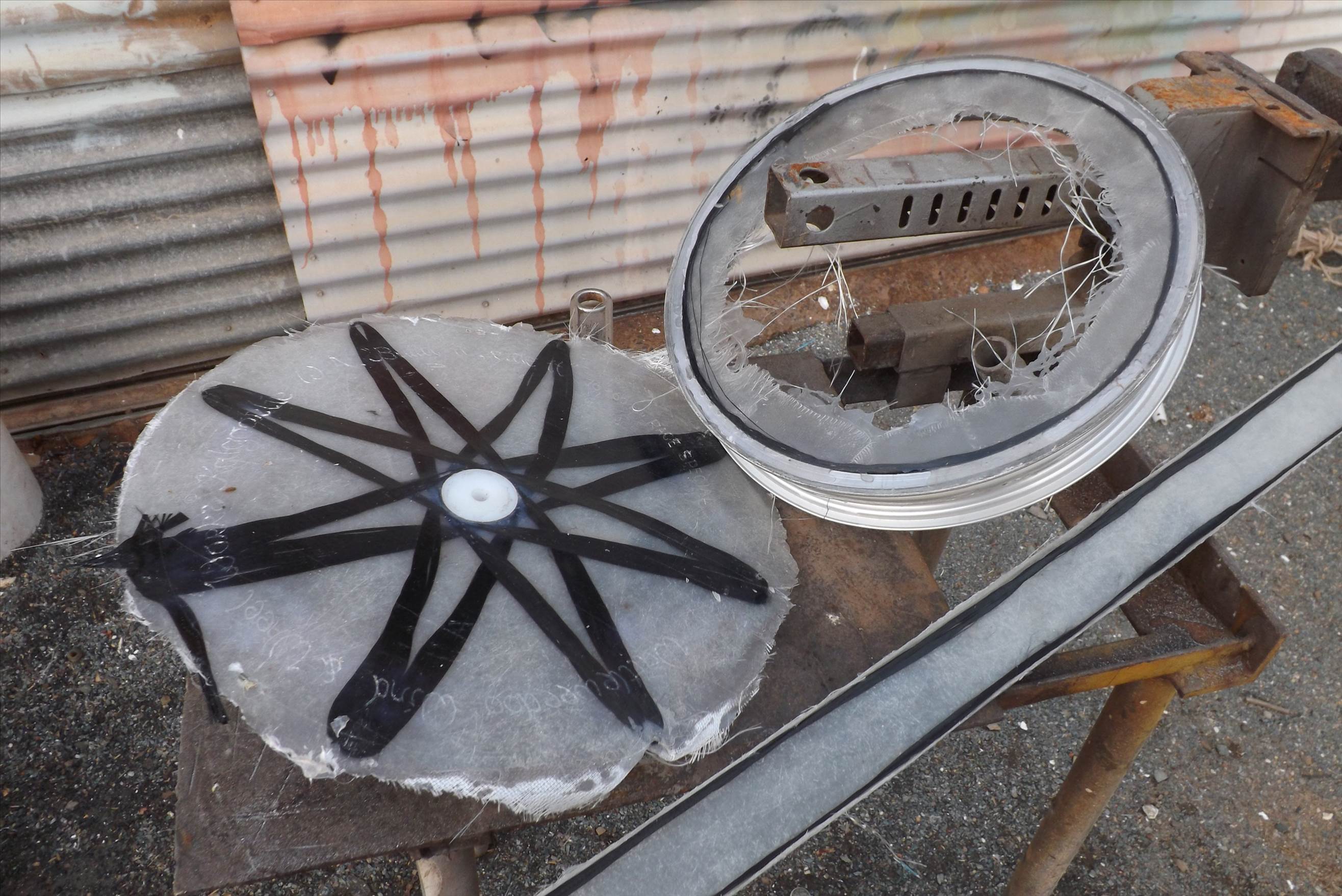
and carbon reinforced wheel discsand even carbon reinforced spokes and a little touch on the rims. the carbon wraps around the bearing housing instead of packing with cotton flock
finished that little wheel on friday. rather pleased with the result, particularly the weight. previous wheel was a tad heavy as im a bit rusty and was lumping in at 1.38kg new wheel the new experiment slips in like a pixie footstep at 852gms

ive started on and finished a 26" version which is looking interesting the first disc off the new mold was rather a wobble board unit , but wobble boards are not really popular these days.
the wheeel is gonna be light though.
a bit of an update on tyres. recently we were discussing 3" tyres athat are now appearing on cheaper bike shop bikes. My local shop made some enquires and seem to have got ahead of the manufacturers. the supplier havent really given the thought to replacement tyres but have assured the shop that tyres will become available within the next 6 months . will keep you updated
heres that 26x75mm . i wont tell you the weight. instead you tell me . there is a prize to be given out at lefroy so research what my wheels have weighed in the pastand have a calculated guess. prize can be posted internationally so dont be shy
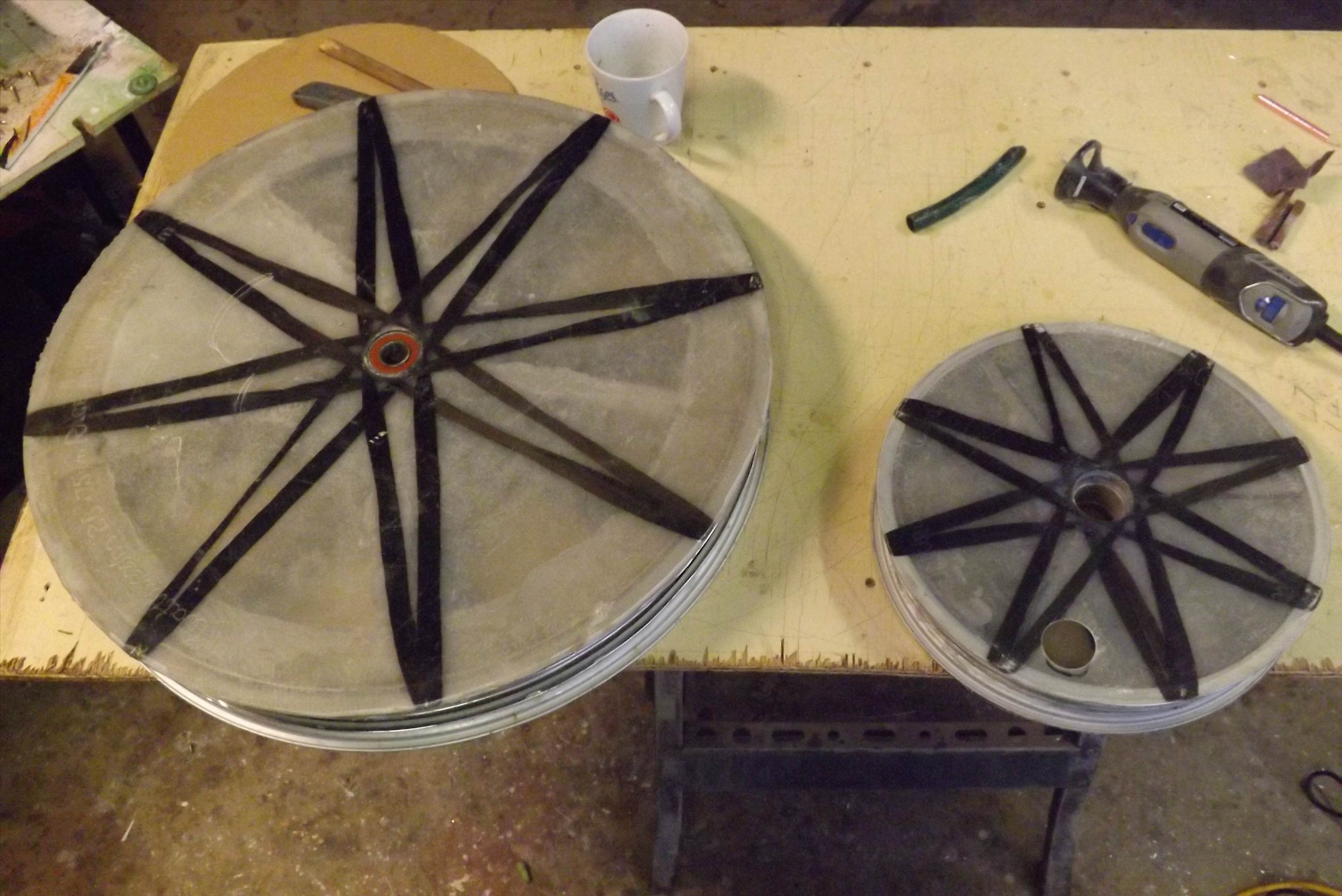
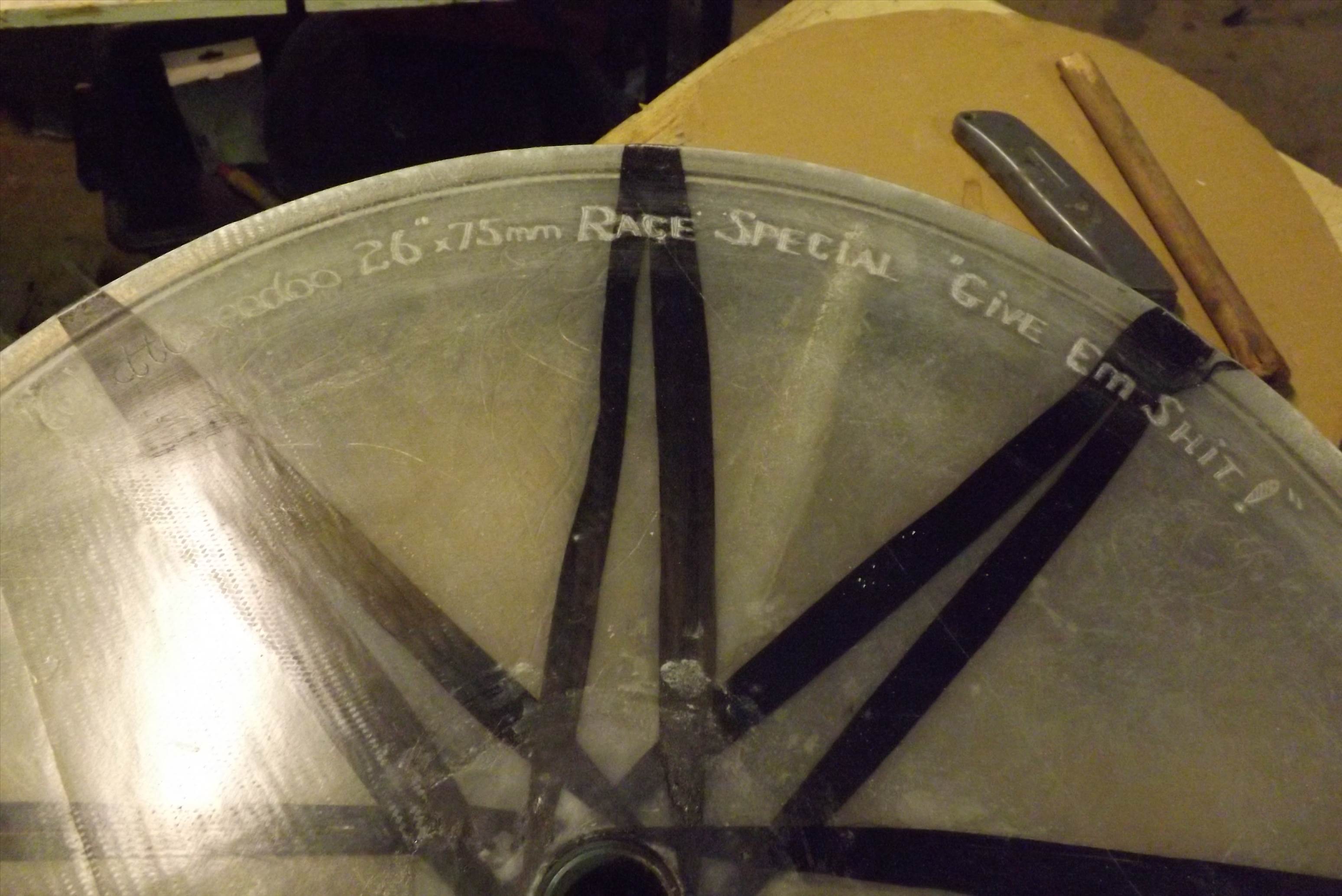
Carbon wheel version ,looking great ,but only saved300gms on overall weight. before you get excited ,there is $100+ worth of carbon in the wheel
please dont get too close during a race
no guesses on the weights at all? , the prize is a good one

Paul, how can you and I not connect each other, we never worked about it before so why change our habbit, take all fun out of it
wheel all completed,and the chassis has come back into the shed to fit the pod. the steering and sheet post needed a little tweek to true them then i was able to fit the seat and wheels. the twist in the seat has diddappeared and its all nice and trued up. ground clearance of 75mm feels happy , nice springy feel to the chassis /wheel combo
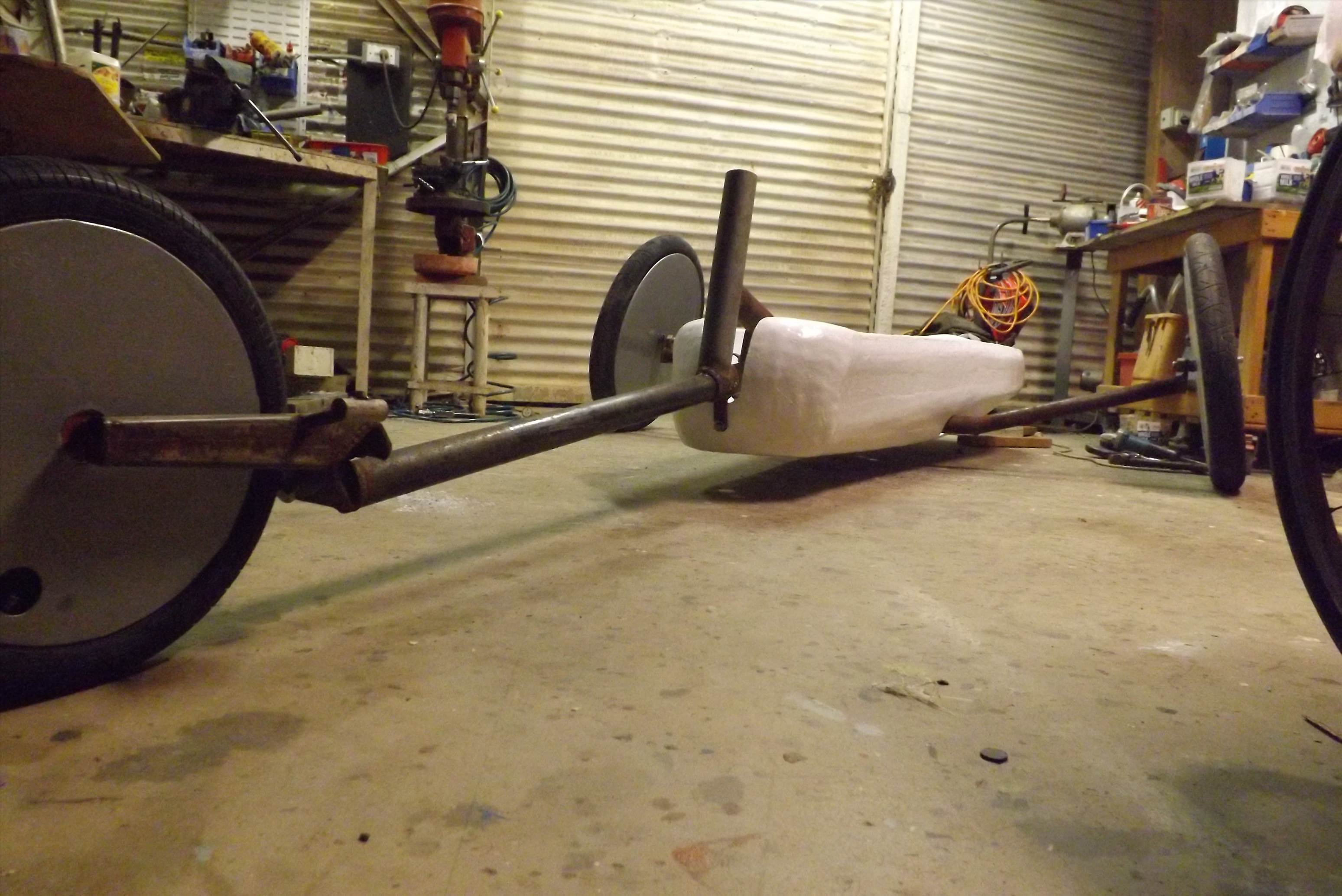
I must be slipping in my old age as the yacht is almost 40mm underlength

seems like clean lines and a narrow pod but in reality its really wide. BUT Ive got the weight position just nice. you can lift the front wheel by sticking your arm out behind your head initial mast rake is bang on 12degrees
like its supposed to be. next job is to get some artwork on the pod and clean up chassis and paint it all ready to rig. at ythis rate fist sail will be in battle against Victa 
Love that seat looks smooth and comfortable. Love the clean lines of the design and build.


