


Giant XTC Kids bike.
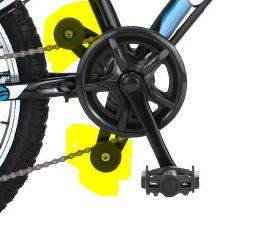
Anyone know what these are called and how to adjust them?
There is a 7speed derailleur on the back, just not sure how the chain guides(?) are supposed to be set on the front.
I am not sure if this will help...But I shall have a go. My explanation is based on (1). The bike has more than one front chain guide, and (2). Multiple chain sprockets at the back.
The front chain guide moves sideway when you pull on the level which possibly be on the handle-bar. The sideway pressure will force the chain off to the sprocket from the current one to the adjacent one. Please note that you don't ever pull the level while the sprocket is not moving. If you did, it will cause damage to the chain guide and also potentially damage the chain.
The back sprockets work in very similar way. It has a spring tensioner which takes up the slack when you go from a larger sprocket to a smaller one. That way, the chain is always tight on whichever sprocket. You mentioned it has 7 speeds. Can I assume that it has 7 sprockets ? If so, there is another thing you need to be aware of. You should never run the bigger/biggest front sprocket with the biggest back sprocket. Why ? Because it will create a lot of friction on the chain as it now has a sharper angle between the front and back. In my experience, I would use the large front with the smaller 3, and the smaller front with the larger 3. I did have 5 sprockets at the back.
Please note that unless you have a set of unusual sprockets, you should not need to worry about the alignments as bikes are very standardised. If the sprockets are way out of alignment, then may be the frame had suffered some traumatic events 
How do you test your alignment? Lay the bike on its handle bar and seat. Crank the bike up and shift the gear levels. Check to see if the chain or sprockets are creating abnormal noises. As I said, don't ever muck around with the gear level while the bike is stationary.
I hope that is what you are looking for 
Hmmm, so there's no front gears, just the single sprocket?
If so my guess is the guides are there to stop the chain pulling sideways on the sprocket when the rear derailieur is at both extremes. I'd set the guides so they are in line with front and rear sprockets when the rear gear is halfway, my maths says that's 4th gear.
OH and by the way, there's no such thing as "off topic" in "shooting the breeze". That's why it's here, for random questions/comments about anything.
Select to expand quotedecrepit said..
there's no such thing as "off topic" in "shooting the breeze". That's why it's here, for random questions/comments about anything.
Yes, no question is too hard. We are cheap and nasty 
From what remember... those chain guides on the front chain wheel are non adjustable....Unless you can loosen the bolt and just slide them towards the chain wheel. Don't put them too close as they sap power. Adjust them so they only have slight amount of pressure on the chain when in the highest gear....They are just there to help prevent the chain from coming off while the bike is being ridden fast on rough ground in a high gear as this is when the bike will suffer the most chain slap.
I used to set up the bottom guide a lot higher so the chain wouldn't come off the bottom of the chainring. Chain would go upwards slightly before heading down to the rear mech. This set up is how I used to run DH bikes back in the 90's/early 2000's - probably more to look good than add function on a kids bike.
Thanks all for the input guys
Dropped into a shop to get a freewheel removal socket** and spoke to the guy.
He said they usually just get taken off anyway.
Looks like this one has had a hit and the whole boomerang is twisted around the bottom bracket, making the top roller way too tight and the bottom roller miles away from the chain. Apparently you need to take the bottom bracket out to get to it properly
**Already dropped $60 in tools as nothing I've already acquired in 25 years would fit. 
Had to remove the freewheel and cassette as the rear hub had water in it - you cant get to the wheel bearings without taking the freewheel off.
So far I've had every bloody component apart, bar the head and bottom bracket. Yes, even the freewheel is in about 30 pieces at the moment. 
Get a second hand one she said,
You can fix it up she said,
Boys birthday in 3 days.


Select to expand quoterod_bunny said..
Get a second hand one she said,
You can fix it up she said,
Boys birthday in 3 days.
Well, it's great she has such faith in you.
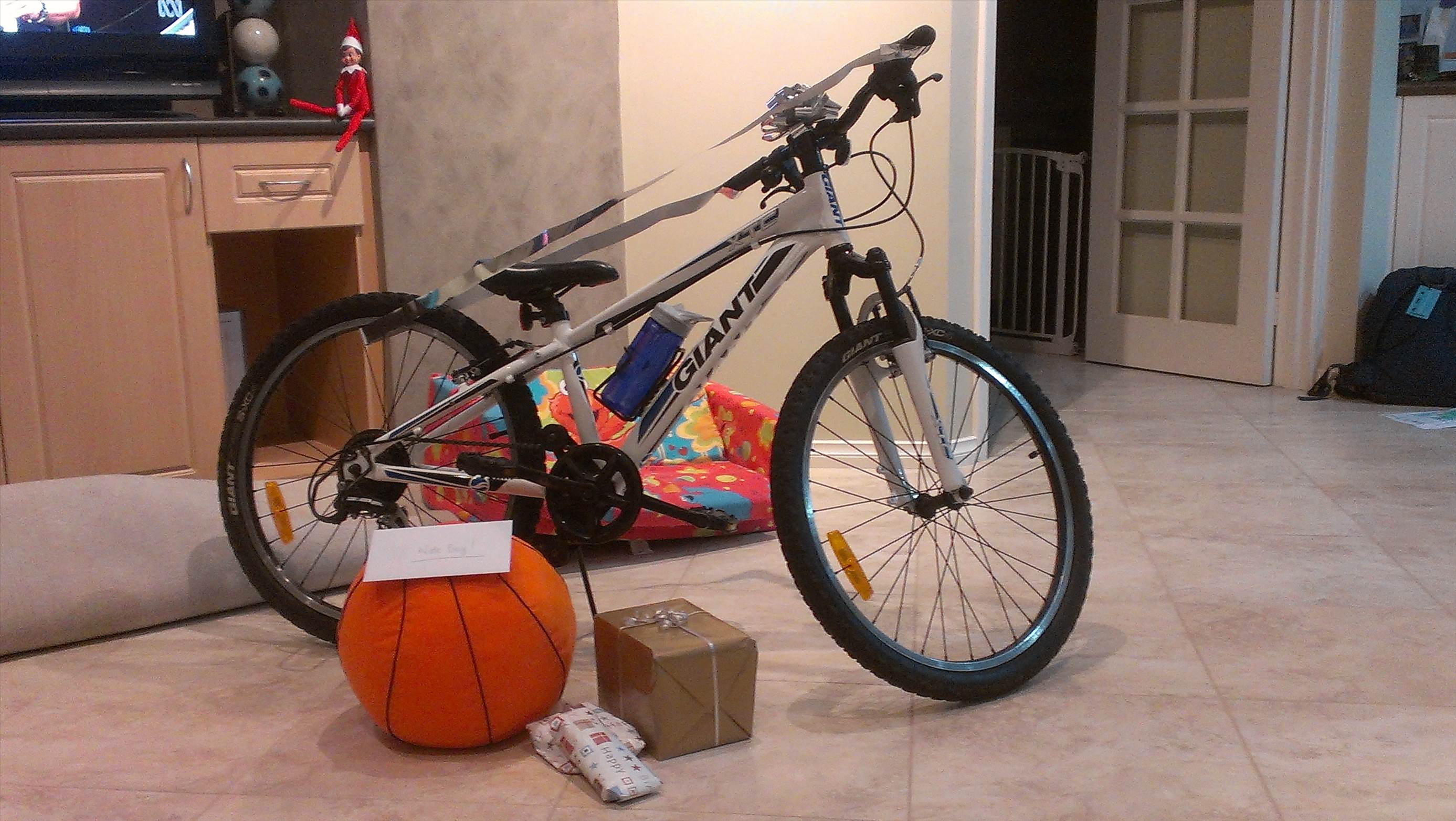
Done.
Boy is stoked 
If anyone is interested... there are 70 loose ball bearings in a Suntour freewheel hub. don't ask me how I know.
Select to expand quotecrakas said..
From what remember... those chain guides on the front chain wheel are non adjustable....Unless you can loosen the bolt and just slide them towards the chain wheel. Don't put them too close as they sap power. Adjust them so they only have slight amount of pressure on the chain when in the highest gear....They are just there to help prevent the chain from coming off while the bike is being ridden fast on rough ground in a high gear as this is when the bike will suffer the most chain slap.
what he said.
most offroad bikes with more than 1 chainring at the front have a derailleur to hold the chain on ,but with rough ground and 1 ring at the front the guides just help keep chain on during chain slap
Select to expand quoterod_bunny said..

Done.
Boy is stoked
If anyone is interested... there are 70 loose ball bearings in a Suntour freewheel hub. don't ask me how I know.
fixed! awesome. now you have the knowledge to maintain the bike properly. you'll be collecting in no time . N+1 rule applies
Select to expand quoterod_bunny said..
Done.
Boy is stoked
If anyone is interested... there are 70 loose ball bearings in a Suntour freewheel hub. don't ask me how I know.
You're Elf on a Shelf needs and injection of creativity
Select to expand quoteChris6791 said..
rod_bunny said..
Done.
Boy is stoked
If anyone is interested... there are 70 loose ball bearings in a Suntour freewheel hub. don't ask me how I know.
You're Elf on a Shelf needs and injection of creativity
He was making sure the bike was still there in the morning.


